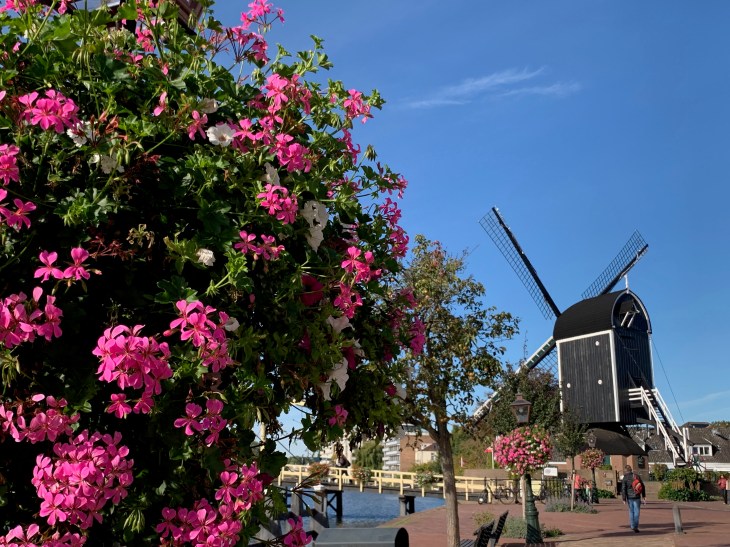
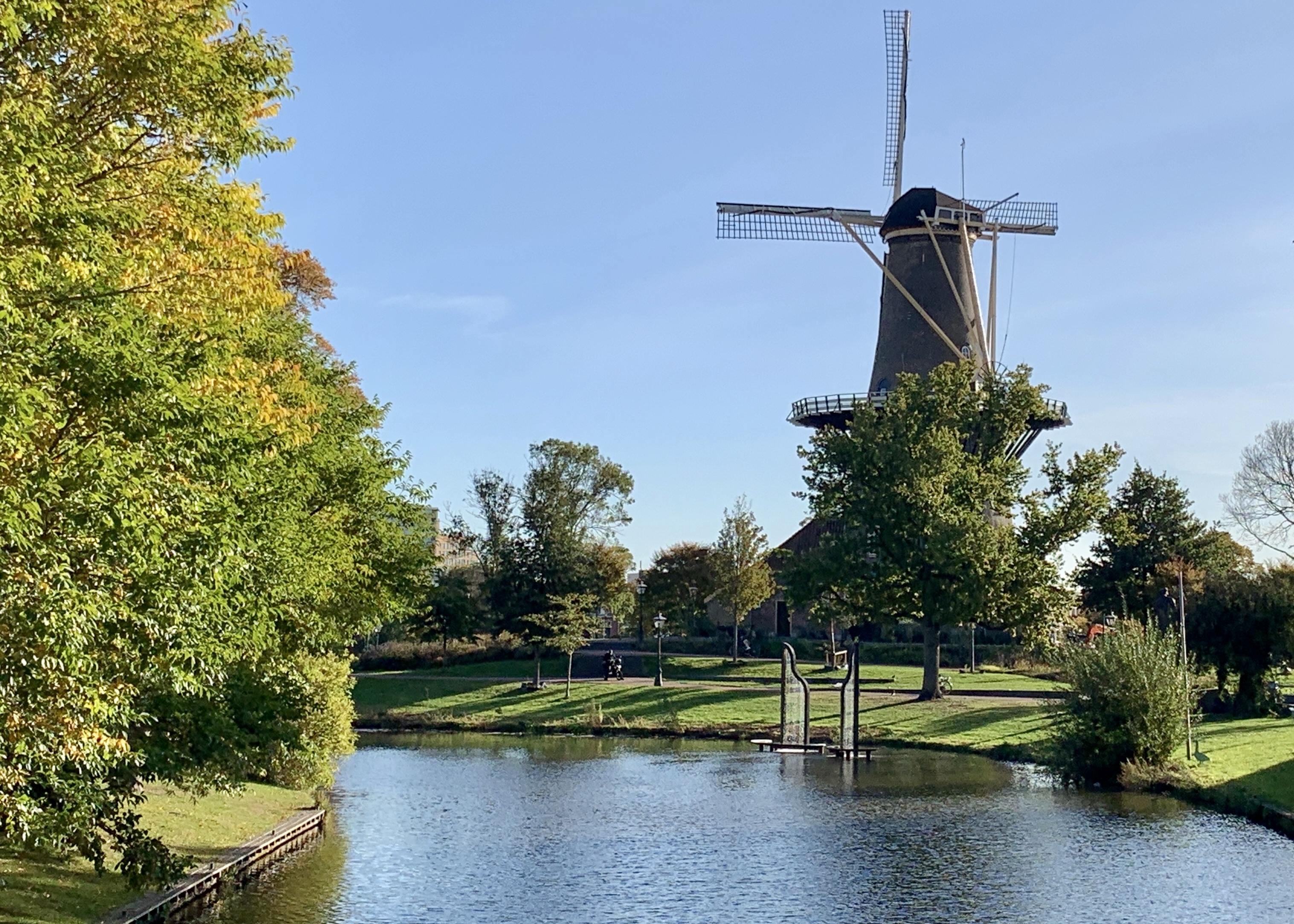
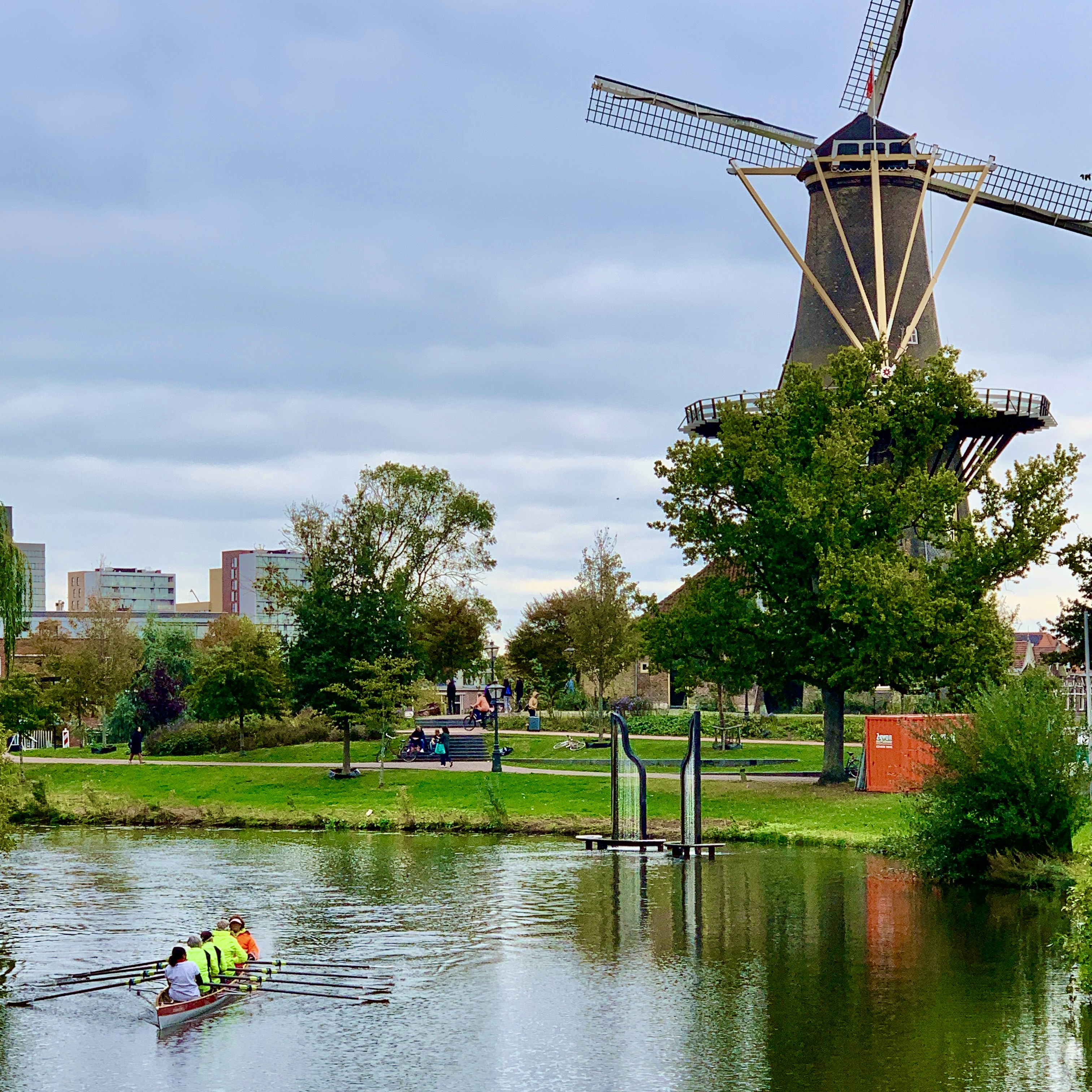
Our thinking was if it’s good enough for the wunderkind Rembrandt, it’s good enough for us. So, on our recent trip to the Netherlands we based ourselves in the delightful university town of Leiden. As luck would have it, we had a view of a working, 18th Century windmill right outside our hotel window. An uncommon occurrence for a city-center hotel … but that’s the Netherlands for you. These slow-turning giants are scattered all over the countryside and are the undisputed Dutch icon. And why is that?
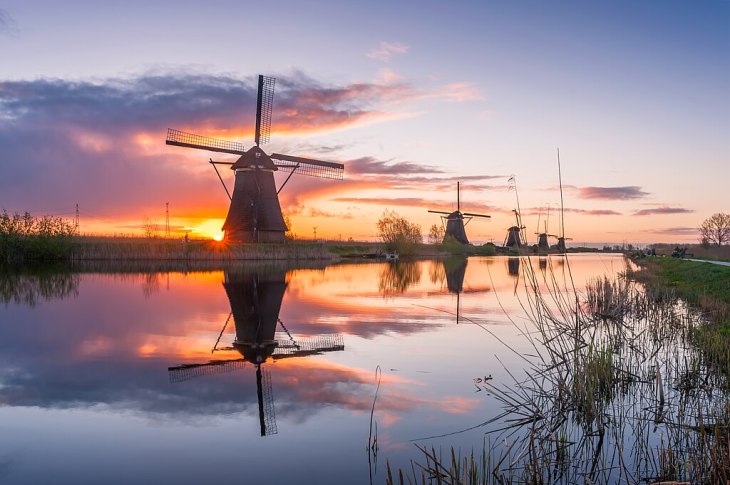
Thanks to very flat land, few trees, and close proximity to the stormy North Sea, the Netherlands is one of the most consistently windy places in Europe. With such a readily available source of free power, it only took a bit of ingenuity to make the windmill the industrial powerhouse of the Dutch Golden Age.
It’s estimated that there are 1,200 historic mills spread across the flat countryside today. This sounds impressive but what’s more amazing is that at their peak in the 19th Century there were approximately 12,000 windmills in the country.
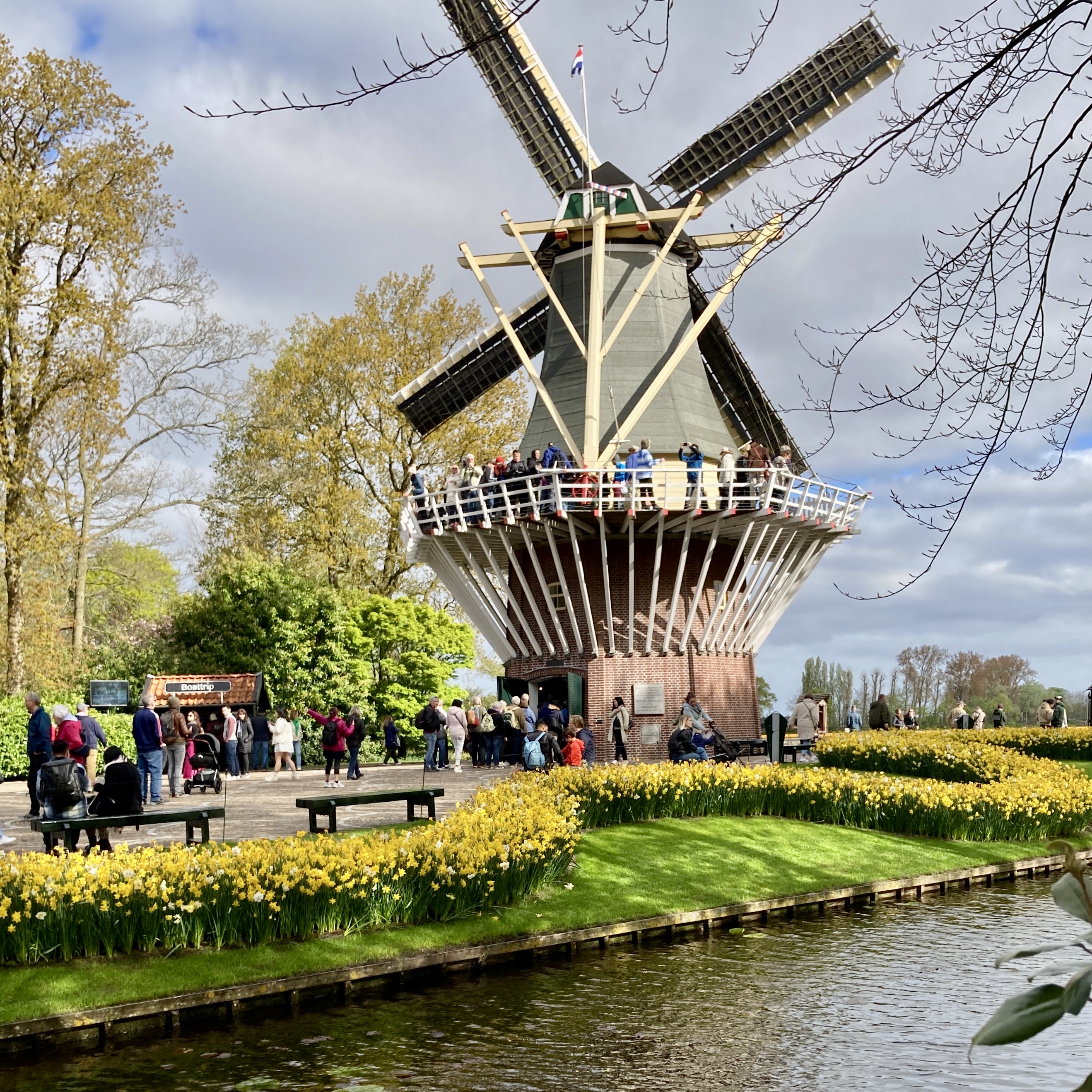
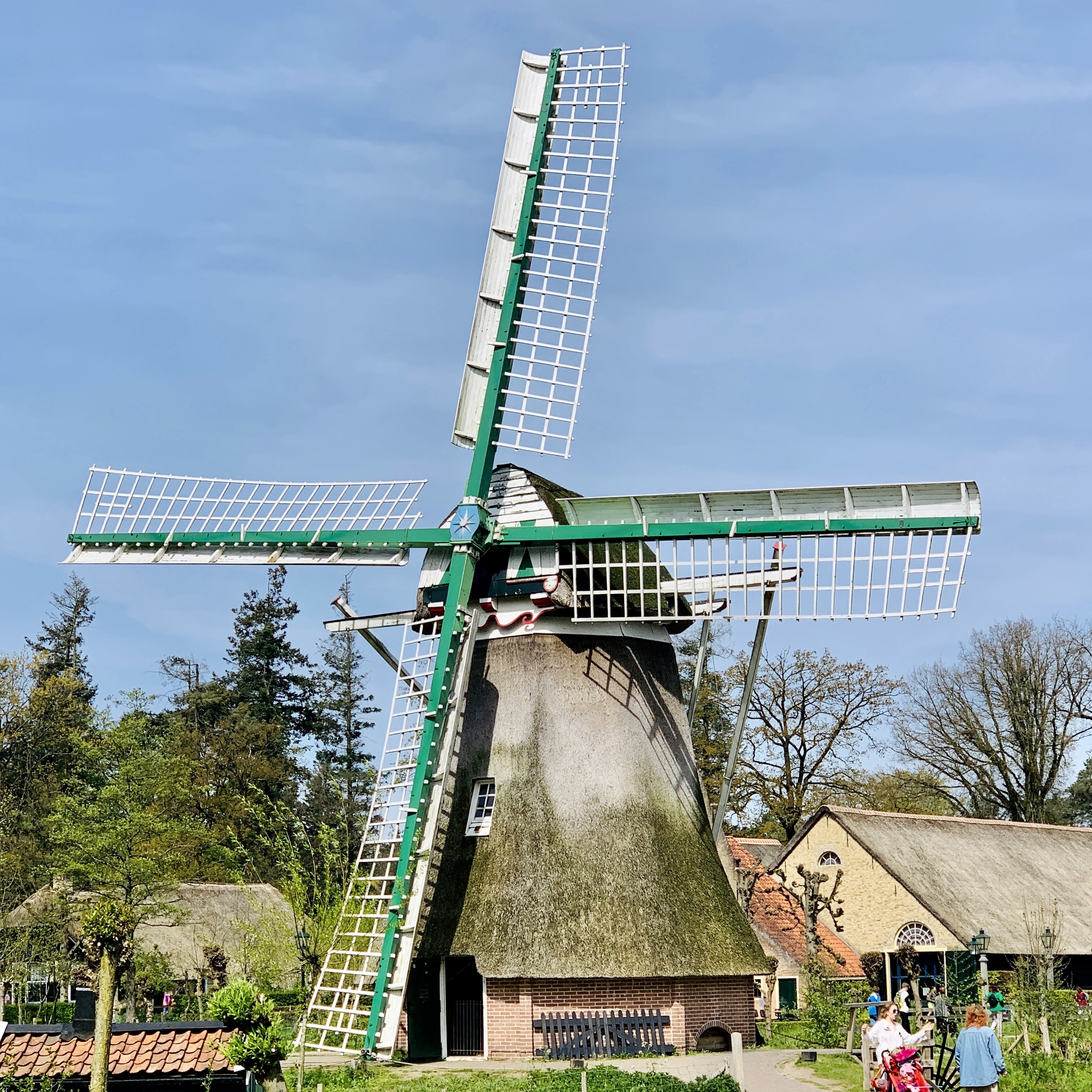
Early in its history the most critical role of the Dutch windmill was land reclamation. Because so much of the low-country landscape is actually below sea level, dikes were built around marshes and lakes. The windmills pumped water off these polders to create valuable food and income-producing farmland. But water management was just the beginning.
With a virtually free source of energy, it was only a matter of time before savvy business people were building mini wind-powered factories: grinding grain, sawing timber, making paint pigments, and even processing paper, cocoa, and spices.
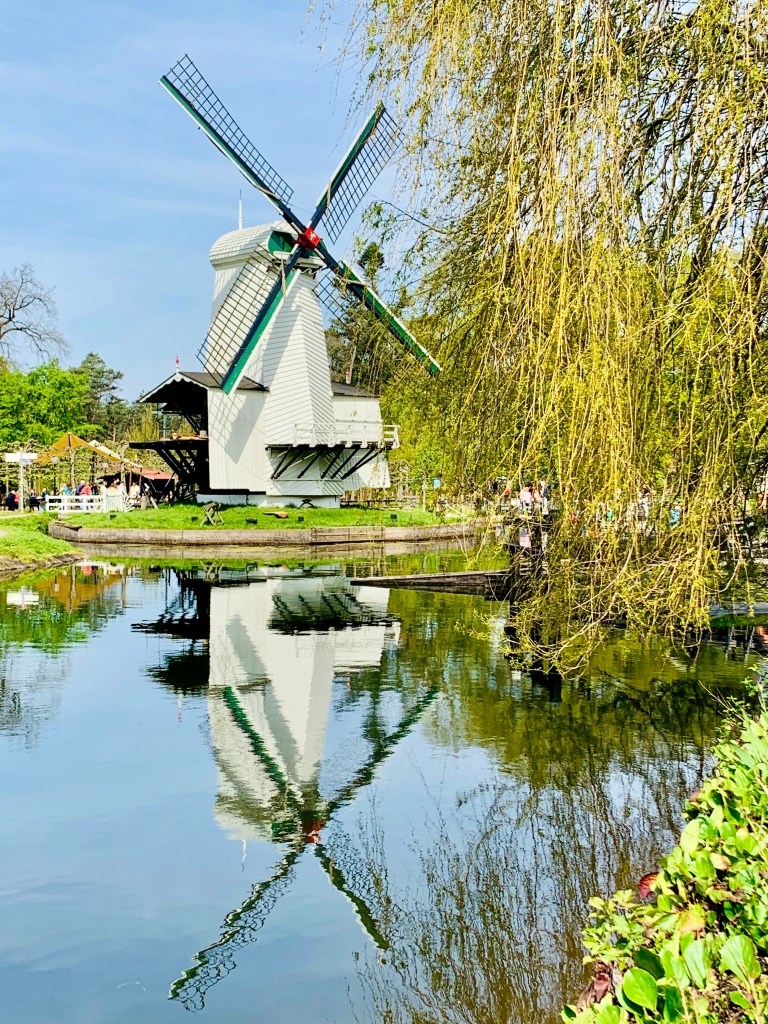
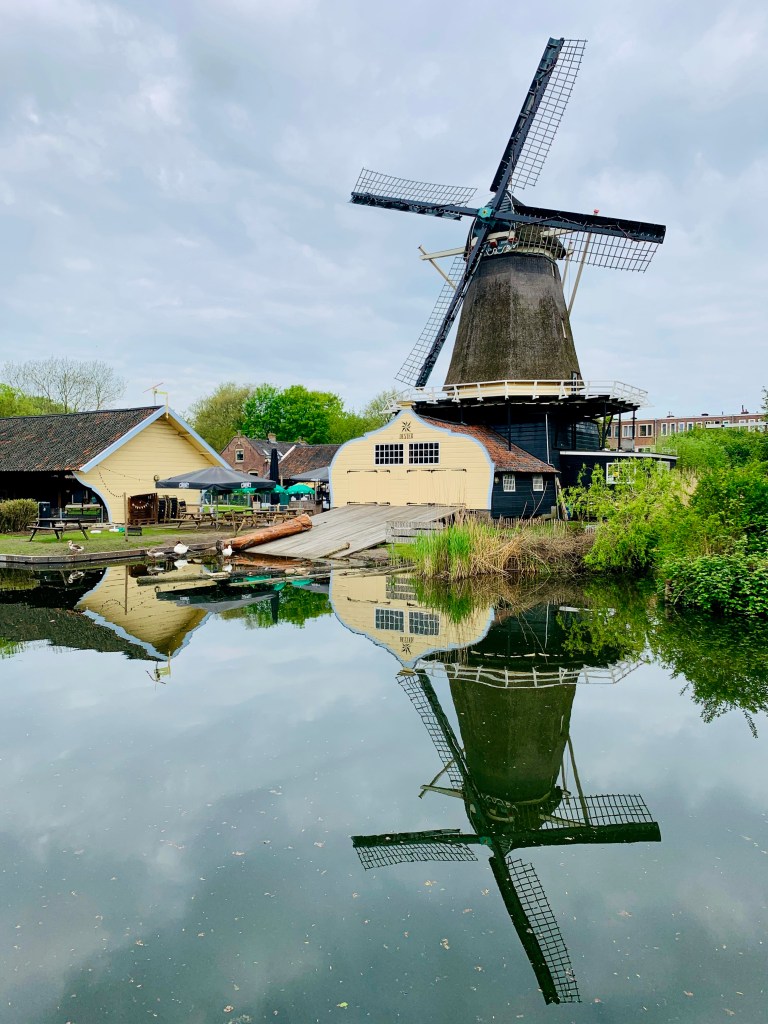
It’s hard to imagine today’s peaceful, grass-carpeted landscape once humming with 12,000 active windmills, but leave it to the down-to-earth Dutch to take full advantage of the technology. The canvas sails even doubled as a long distance communication system. Sails stopped in certain positions meant different things: sails stopped at “one o’clock”t meant a celebration, eleven o’clock signaled a death or funeral, and certain positions warned locals of impending Nazi raids during WWII.
And as might be expected with such a widespread technology, many windmill-related idioms became a part of the language. A few of my favorites are:
“Met molentjes lopen”
“To walk with little mills”
Meaning: To be acting crazy
“Wie het eerst komt, die het eerst maalt”
“Who comes first, grinds first”
Meaning: First come, first served
“Dat geeft geen meel in de zak”
“That puts no flour in the bag”
Meaning: The effort is useless
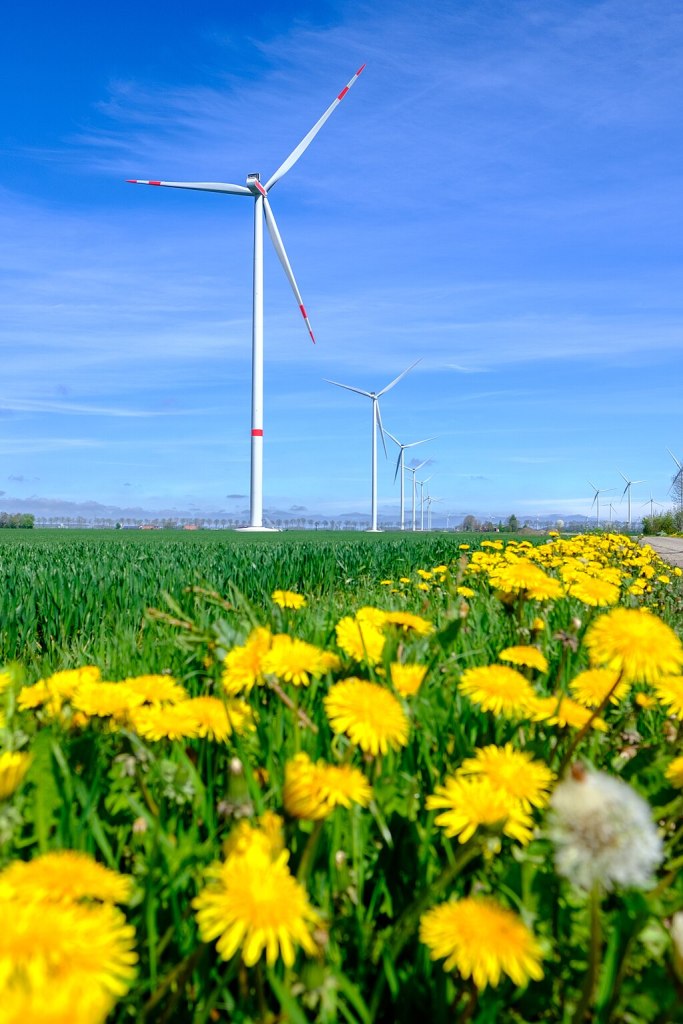
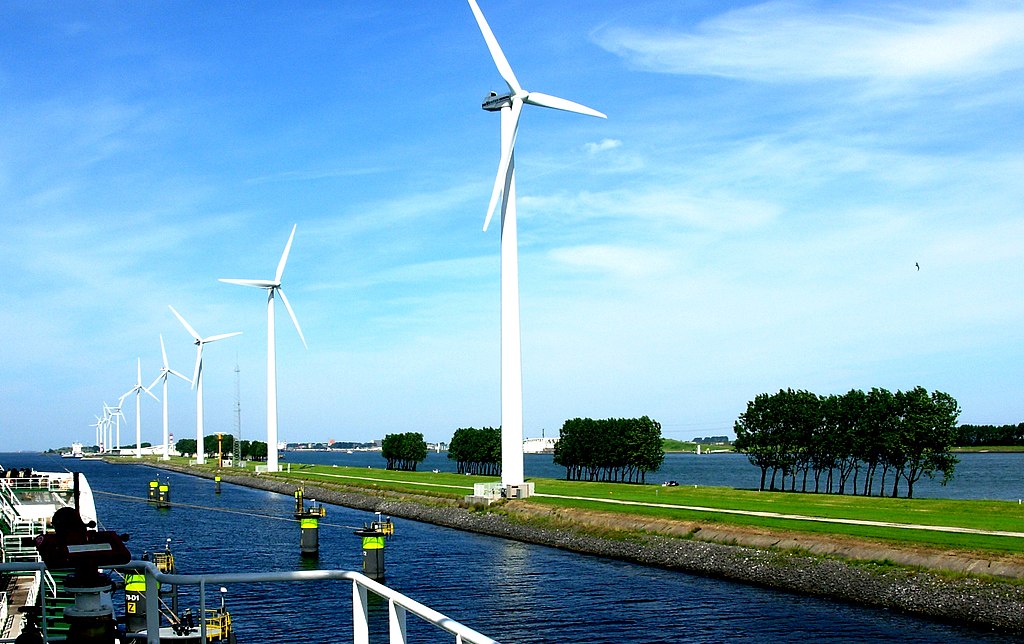
Wind technology is deeply rooted in Dutch history and culture, and this tradition of harnessing the breeze continues today. Jump on any train in any direction and you’re guaranteed to see sleek, white, state-of-the-art turbines slowly spinning on the horizon. These iconic windmills, old and new, leave little doubt that the Dutch, in the past, present, and future, are masters of the wind.
As I watched that 18th-century mill spin outside my window in Leiden, it was easy to see why these structures are so beloved. They are more than just beautiful photo ops; they are monuments to Dutch resilience and ingenuity. Whether it’s a historic wooden mill or a towering modern turbine, the Dutch spirit remains the same: always looking for a way to turn a stiff breeze into progress.
Happy Trails,
James & Terri
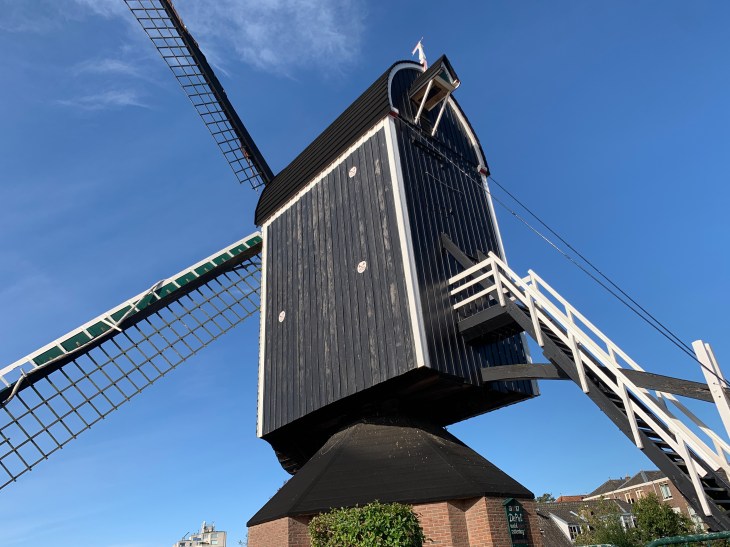
Photo Credits: 2. Dmytro Balkhovitin 9. Hardscarf 10. Tutku Çetinel

 GALLIVANCE
Thanks for the information. They are a very symbolic aspect of the Netherlands and beautiful to behold xx
Jo, until researching and thinking about this post, I hadn’t really thought how often windmills just seem to pop up in the countryside in the Low Countries. Now I know the history. ~James
I love a Dutch windmill, they really are part of the culture and country’s history.
Hannah, over the years I’ve spent lots of time in the Netherlands, but I must admit that I’ve taken the windmills for granted … just a part of the landscape that’s always there. However, when I had a few days to watch the daily operation of the historic windmill in Leiden, it raised all sorts of interesting questions which lead to this post. You know, grist for the blogging mill … pun intended. 🙂 James
I love windmills –
Beth, the Netherlands is the place for you then. Very cool. ~James
My home was Amsterdam for a short while. When the Dutch learned I was Canadian, I was treated with such affection. Canadian forces liberated Holland and the Dutch never forget this. I was obsessed with the windmills. They looked like another world.
Virginia, in my corporate days I spent quite a lot of time in the Netherlands, and we lived in Amsterdam for a while as well. In all those years, I have never been anything but welcomed with open arms. It’s one of our favorite places in Europe, and we visit almost every time we cross the pond. That’s a long-winded explanation for why I hold the Dutch in such high regard. My Dutch friends (that were old enough to remember) told some harrowing tales about the war years, and you’re right that their memory is long, for both good and bad. No matter how many times we go, we come away each time with good memories. ~James
Who doesn’t love a historic windmill? I’m glad you enjoyed your time in Holland. Did you visit the Kinderdijk as well? For me that was a windmill highlight in the Netherlands. These folks also know how to sail – more wind knowledge put to good use. 🙂
Liesbet, for some reason we’ve never been to Kinderdijk. The photos look wonderful, and it’s mecca for windmill lovers. After this post, it’s on our list.
I’ve never sailed in the Netherlands, but I can imagine the Dutch know how to handle a set of sails. I did spend a month on a science research boat in the North Sea which had a Dutch crew, and I can tell you these guys were totally at home on the water. ~James
Dutch windmills were among the first things I learned about the country when I was little. My parents called them with the Dutch name, windmolen. It’s nice to learn more about its history and significance through your post.
Bama, it’s interesting to hear of your childhood exposure to windmills in Indonesia, and your parents teaching you the Dutch name. I’d never thought about it, but did the Dutch export their windmill tech to Indonesia? Of course, windmills are all about letting the wind do the work, and with all that free, forced labor in your country maybe they didn’t need the wind. This is a cruel thought, but wouldn’t be unheard of in the European colonies. James
I don’t think there were Dutch windmills in Indonesia, at least not that I’m aware of. Probably because of its equatorial location, the winds in Indonesia are not as strong as in the Netherlands. But you also made a good point about the cheap labor.
I was fascinated by the windmills in Holland when we visited. Just about every town has at least one. We stayed in a small town out in the countryside and it had two working windmills. We bought bread made from the grain milled at one of them. Delicious!
Darlene, one of the windmill stories that didn’t make the post was that I toured one of these working, all-wood, historical windmills – don’t remember exactly where it was. It was a very windy day, and I crawled up and down the ladders into the very innards of the mill. With all the knocks, creaks, and the whoosh of the rapidly turning blades, I was forever smitten. And isn’t it funny how much better that mill-ground grain tastes? ~James
How cool that you got to do that! And that bread was very good.