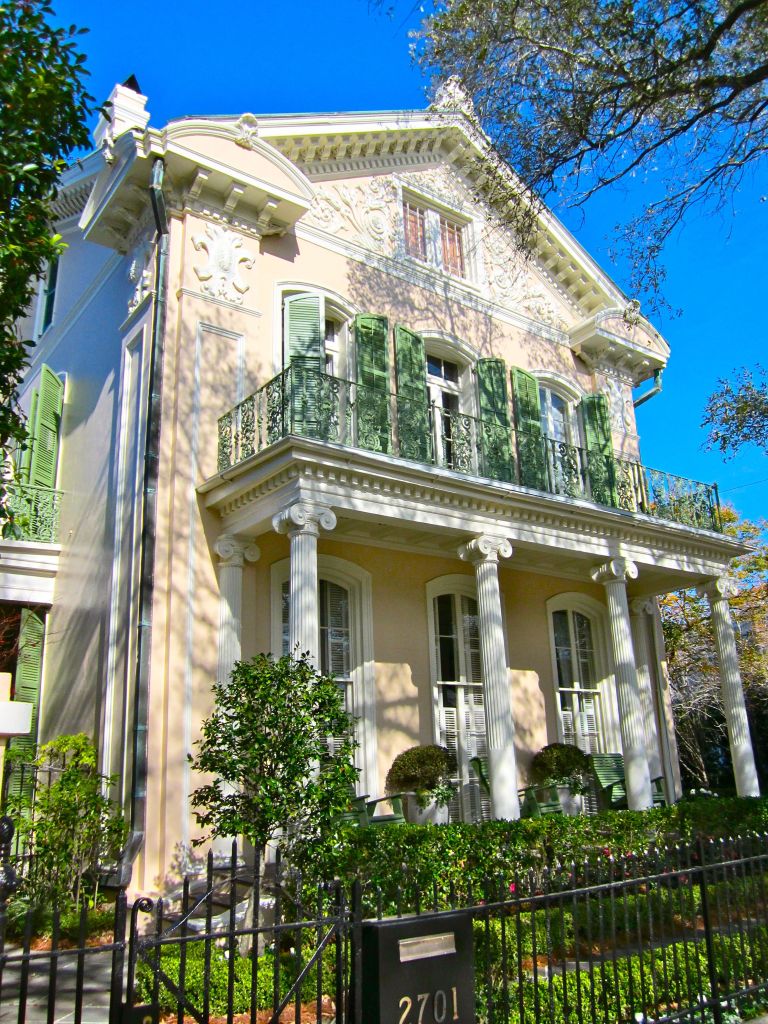
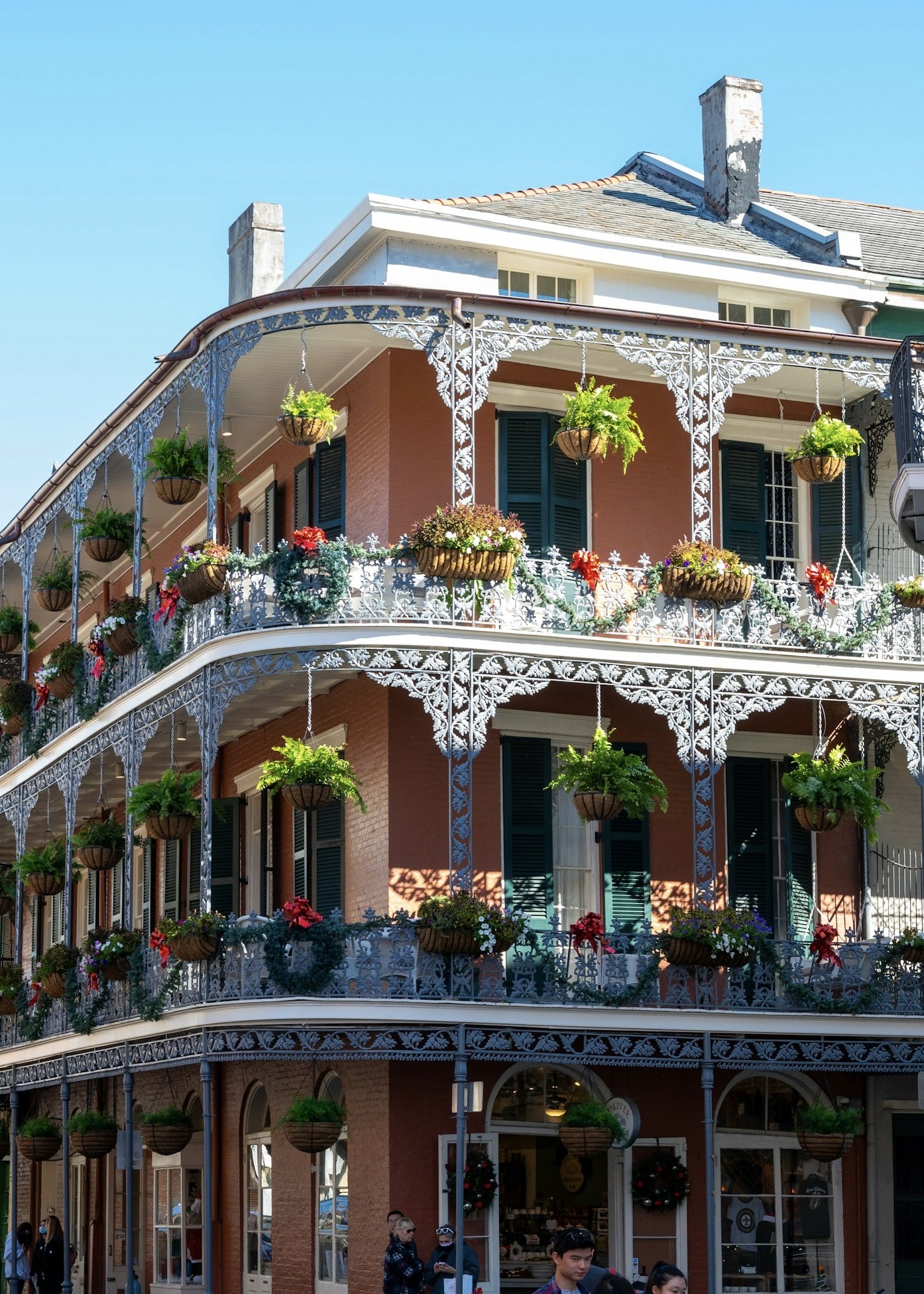
It was the early 19th century and New Orleans was about to be invaded. President Thomas Jefferson had just scored big at the Napoleonic fire sale and signed the agreement for the Louisiana Purchase. Viewed as one of the best real estate deals of all time, it effectively doubled the size of the United States at a cost of five cents per acre. This legal land grab opened the floodgates to Americans flocking to this Mississippi River city for a new home and their piece of the economic pie.
As you can imagine, this invasion didn’t sit well with the entrenched French, Spanish, and African Creole citizens. Deep-seated resentment flared as these long-term Creole residents vowed to protect their ancestral homes and culture from the perceived intrusion of late-to-the-party strangers. As retribution, they wouldn’t allow Americans to live in the French Quarter. Out of this conflict a lush residential area was developed upriver, and the Garden District was born.
THE GARDEN DISTRICT
From an architectural standpoint, the French Quarter and Garden District looked like totally different cities, and in fact, they were. The Garden District was part of the city of Lafayette, until it was incorporated into New Orleans in 1852.
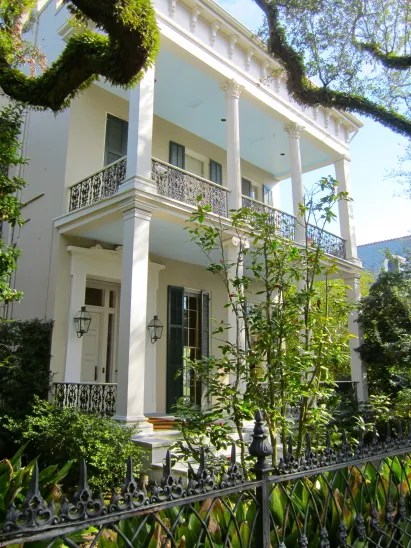
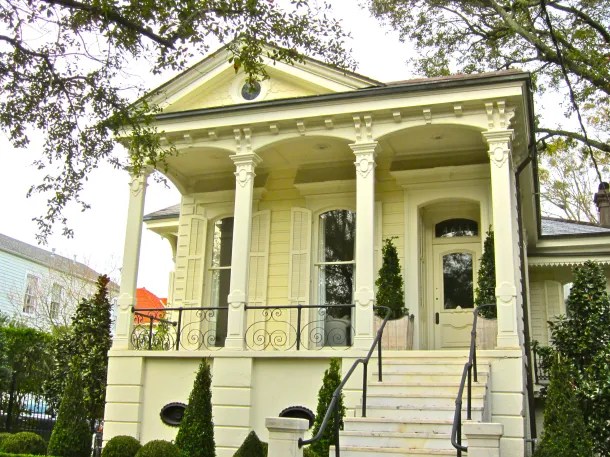
For the emigrant Americans the Garden District was essentially a clean slate. With a free hand they imported popular new architectural styles, and built the type of homes they preferred. Greek Revival was trendy, and in a nod to the climate the raised cottage was also in vogue. Grand entrances were also all the rage.
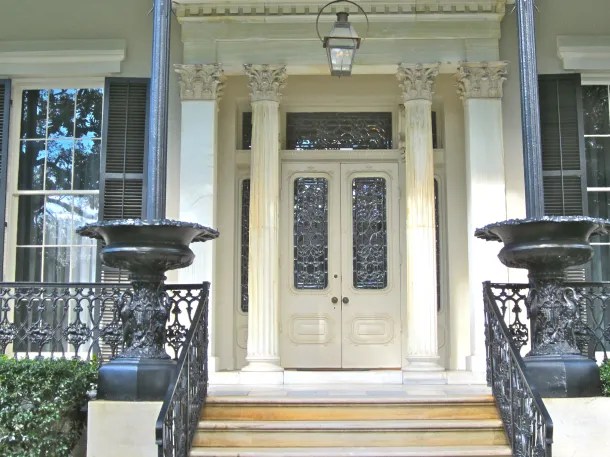
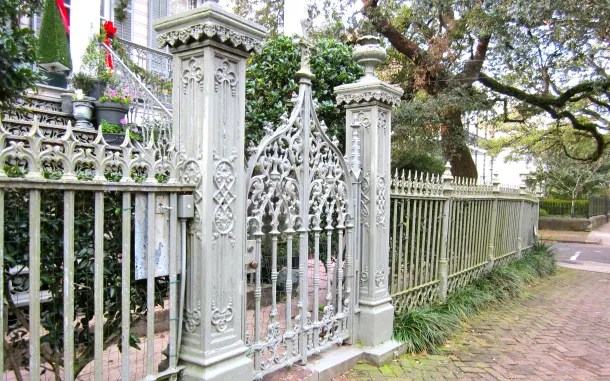
Attractive, meticulously maintained English-style gardens surrounded by intricate, wrought iron fences and gates were de rigueur.
THE FRENCH QUARTER
On the other hand, down the Mississippi River, the well-established Vieux Carré had generations of influence from French and Spanish Colonial architects who cut their teeth in the hot, steamy tropics.
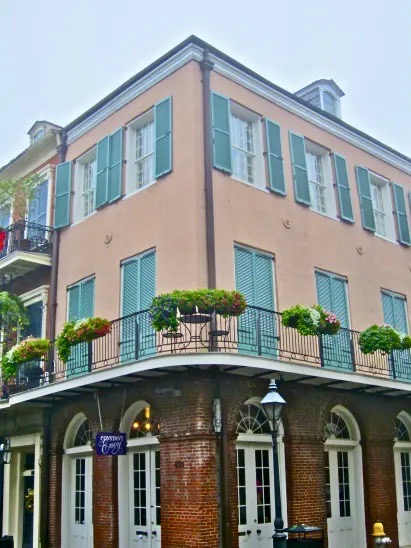
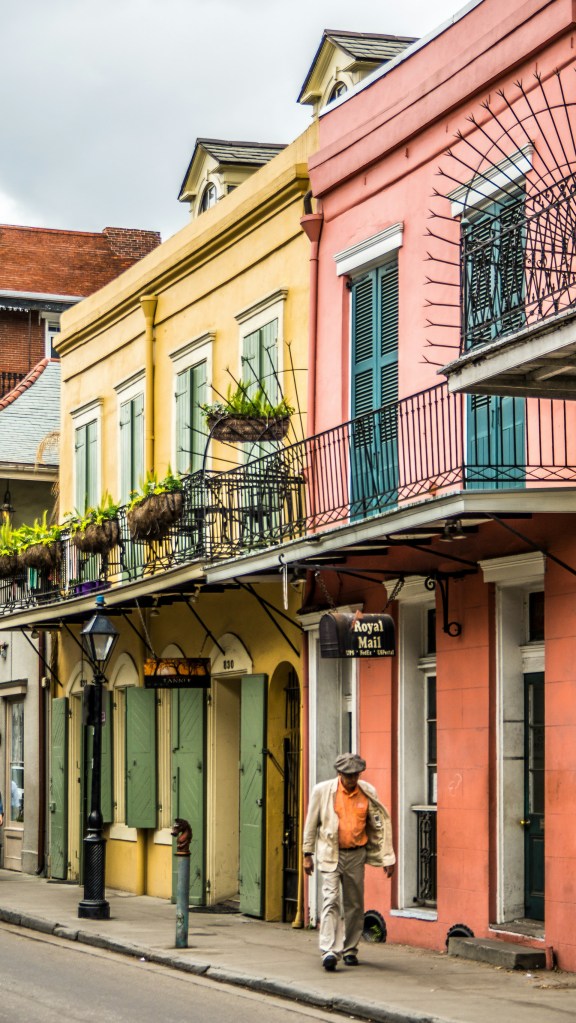
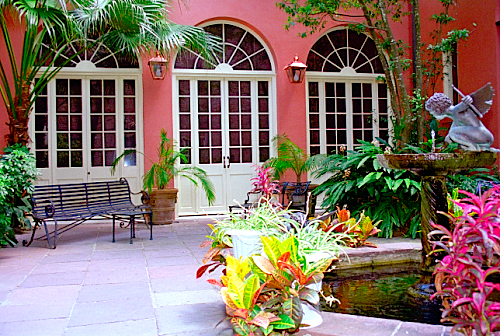
The wealthy preferred thick-walled villas surrounding small, private Mediterranean-style courtyards with a cooling fountain. Creoles from the Caribbean Islands, built raised cottages to help escape disease-carrying mosquitoes and flood waters, while African craftsmen influenced the design of the shotgun houses.
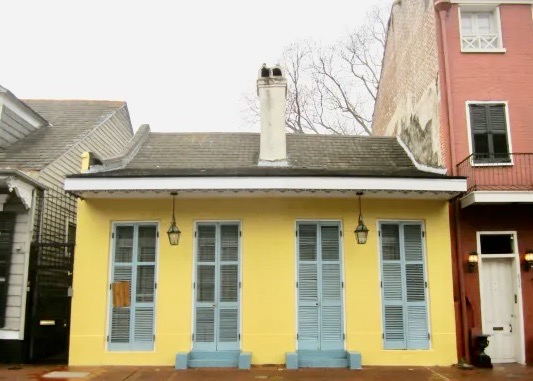
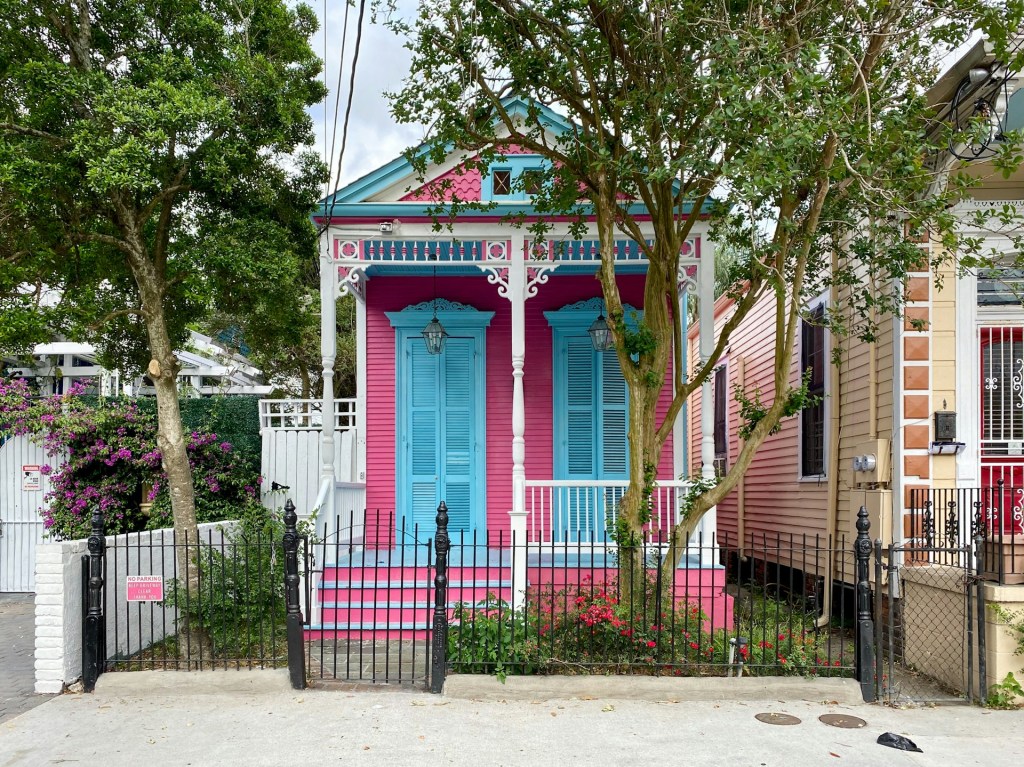
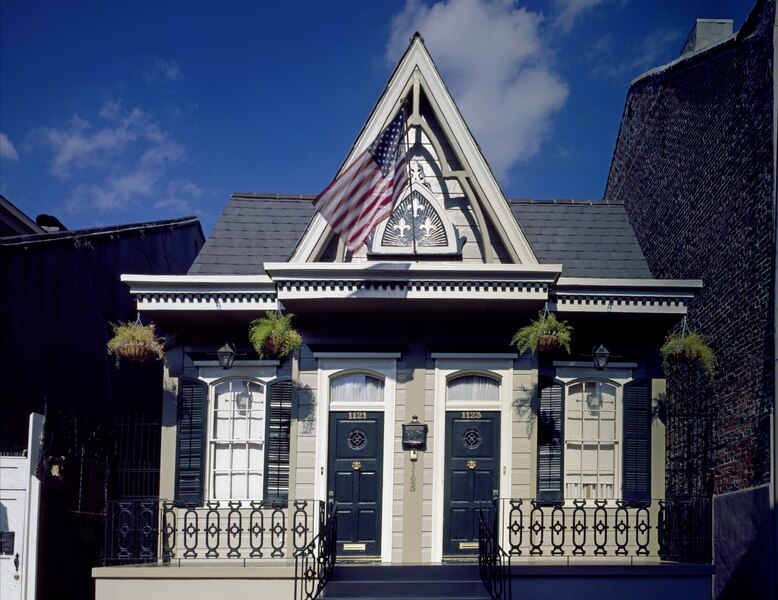
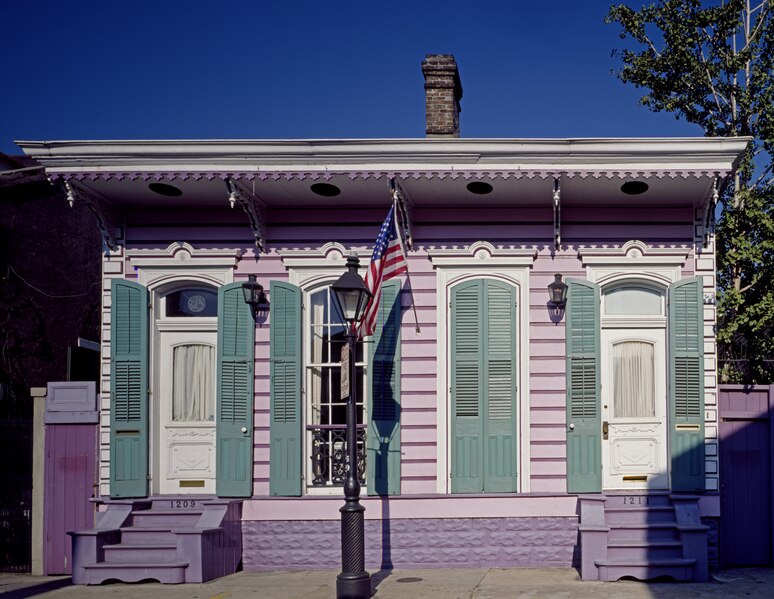
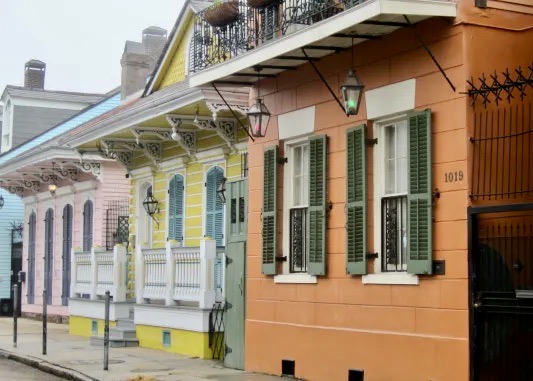
Mardi Gras 2026 is only a few days away, and if you’re hoping to escape the winter deep freeze by venturing down to The Big Easy, we say Laissez les bons temps rouler! But between cocktails and chants of “Hey mister, throw me something!” we encourage you to make New Orleans’ delightfully different architecture part of your fun.
Happy Trails,
James & Terri

Photo Credits: 2. Stella He 8. Arun Kuchibhotla 9. David Ohmer 11. Josh Doguet

 GALLIVANCE
We’ve seen those areas but had no idea about how the Garden District came to be. It sort of reinforces my thought that the U.S. is not a “melting pot” but rather a wonderful “stew.”
Ray, as you know, rivers were the interstate highways for early explorers, and for that matter indigenous Americans. So any cities that were established along these rivers have a long, complicated, and usually interesting history. New Orleans certainly fits in this category. Hope you are well and staying warm. ~James
Interesting history! I think I prefer the smaller, colorful houses over the stately, grandiose ones. 🙂 Happy Mardi Gras/carnival, you two!!
Liesbet, we love the architectural history and details of the grand places, but like you we prefer small and colorful. In fact, we lived in one of these small “shotgun” duplexes on the edge of the Garden District and it was very cool. In case you don’t know, the origin of “shotgun” style means, from front to back the rooms are all in a row, and the saying is that if you fired a shotgun in the front of the house, it wouldn’t hit anything all the way through. Also, sometimes they add a single, second floor room on the rear of the house and they call it a “camelback.” TMI I know, but we love New Orleans houses. 🙂 ~James
James, your brain is full of interesting tidbits and I love it!
Liesbet, are you guys still in Portugal, and does Portugal celebrate carnival?
Hi James,
After four days in Lisbon, we drove to southern Spain to stay with a friend for a couple of weeks. On a visit to Cadiz, I could some prep regarding carnival. I think every country in Western Europe celebrates carnival. I know Belgium does.
Fascinating account and lovely photographs. Like most people who have never been to New Orleans, New Orleans has been to me, through music, literature and more. from Jazz and Blues to James Lee Burke and all our inner Mardi Gras.
Shane, New Orleans was founded by the French in the early 1700s, and then controlled by the Spanish, and most recently the US. In all this time in addition to the colonial influences, enslaved Africans and Creoles have been a huge part of the culture, and have also made an oversized contribution to the gumbo that is New Orleans. This is particularly true when it comes to music. It’s a complex history, but certainly an interesting one. ~James
Thanks James, it is certainly a richly varied history, something of a crossroads in the ‘New World’. Maybe I’ll get to visit sometime.
Thanks for this informative post about the history of New Orleans. I’ve been to New Orleans several times and never knew this about the Garden District.
Beth, with its grand old houses, centuries-old oak trees, clattering streetcars, and wrought iron fences, the Garden District is one of my favorite parts of NOLA. We lived in a shotgun duplex and could walk up Valence Street to catch the streetcar down to the quarter. It was a special time. ~James
If you’d shown me these photos without any context and asked for the houses’ location, I would have guessed Galveston: right down to the Mardi Gras decorations. The first indication that they might be in NOLA and not Galveston is the abundance of iron railings. Historically, Galveston mimicked those railings as well as the general architectural forms of New Orleans houses, but sitting almost literally on the edge of the Gulf, the iron had to go. Salt spray made them impractical, and now many of the historic houses are known for their wooden gingerbread trim.
I’ve spent most of my Louisiana time in Cajun country, and never have been to New Orleans, save for one memorable trip with my parents while I still was in high school. My dad was a great Dixieland jazz fan, and we did it all: Preservation Hall, Pete Fountain’s, and so on. We were lucky enough to see Sweet Emma at Preservation Hall, and I drank my first hurricane at some club. Since I was well under age, my dad ordered it and gave it to me (to my mother’s chagrin). It was a memorable visit.
Linda, as always you write wonderful, meaningful comments. It’s so engaging.
I can believe the lack of wrought iron in Galveston. We lived at St. Augustine beach and were a couple of blocks from the ocean. We learned very quickly about salt and rust. We had to replace the cookie sheets stored in our cabinets almost yearly because of the rust – definitely not on the beach-living postcard. Also, we lived in Texas twice, and I’ve never been to Galveston. I definitely need to get down there, if for no other reason than to see the historic houses. And thanks for the link to the galveston website. ~James
I would love to visit New Orleans one day. Thanks for the fabulous photos and interesting history. It appears to be a very colourful city. xo
Darlene, New Orleans has always been colorful. I’m not sure if it’s the influence from the Caribbean or the Mardi Gras festivities that have always been such a big part of the culture. There aren’t many places in America where you could get by with painting your multi-million dollar house pink. It would be a scandal. But this is the sort of thing that’s expected in New Orleans. ~James
During Mardi Gras, it is the most magical place to be. As a tour guide, I was trained that the reason the houses are up to the banquette is because of Spanish building codes after the great fires of 1788 and 1794. These codes also required flat roofs and on-property water (which contributed to yellow fever epidemics in pursuant decades).
Thanks for the info about 18th century building codes. As a trained tour guide you’re obviously better informed than I am. With NOLA’s 300 year history I’m sure there’s lots to learn as a tour guide. I’ll have to do a bit of research and check into a post revision. I seem to remember reading that the initial site of New Orleans was in a bend in the river that was the largest piece of high ground, so buildings needed to be close together. Thanks for the informative input. ~James
I’m not a huge fan of New Orleans in person, but the photos of both types of houses are lovely! Your mini-history also explains why I thought Cartagena looked and felt so similar to New Orleans (probably more vice versa).
Lexie, that’s an excellent point that I’d never thought of. They share the Spanish colonial as well as Afro-Caribbean influence for sure. And then there’s the weather as well. I’ve always been a believer that hot, humid climates slow the pace of life … in a good way. ~James
Really enjoyed your take on New Orleans as a living architectural mosaic, I loved how you explained the story behind the French Quarter and the Garden District, and how those competing cultural influences shaped the city’s unique look. Your photos of the houses are lovely 🙂
Thanks Hannah. “Architectural Mosaic” is a good phrase. New Orleans is unique in its history, but I suspect there are other cities around the world that have different building styles represented by groups that didn’t necessarily agree, for whatever reason. The old Jewish Quarters scattered around Europe come to mind as well as Dutch Colonial areas in Indonesia. Interesting to consider. ~James
I wasn’t aware of this chapter of the history of New Orleans, and it’s really interesting to learn about how the Garden District came to be. I saw in your reply to Hannah that you mentioned about Dutch colonial houses in Indonesia. Many of them were built in the Indies style that was an ingenious adaptation to the tropical climate. I personally think they’re pretty, but more importantly, they also tend to be more energy-efficient than a lot of modern houses.
Bama, I had to look for photos of Indie style, and I agree that it is attractive and certainly comfortable and efficient for the tropics. We lived on the coast in Florida for a few years, so we understand the need for buildings that work well with heat, sun, and humidity. Some people just run the air con constantly, but that gets depressing for me after a while. I always feel the need to get outside, even if it takes a bit of adjustment. There’s nothing like a comfy chair on a shady porch with a fan overhead. ~James
There’s something charming about French & Spanish colonial architecture.
Obviously, their very presence in most tropical climates in the first place meant pain &/or displacement for another people, however, their beauty cannot be denied.
I remember the surprise at seeing Casa de Fierro, the Iron House in Iquitos, Peru (complete with urban legend that it was designed by Gustav Eiffel), and wondering how many backs were broken hauling all of the pieces so that such a building could be re-assembled in the depths of the Amazon jungle!
Thanks again for another great post!
Chris, hundreds of years later it’s easier to minimize the oppressive nature of all colonial powers, and only look at the progressive improvements to the native cultures that resulted. In many cases, architecture is one of these synthesized improvements. However, by its very definition, the colonizing power is imposing its will on a less powerful culture. Having said that, as you say there certainly is a charm to these colonial Caribbean buildings. ~James