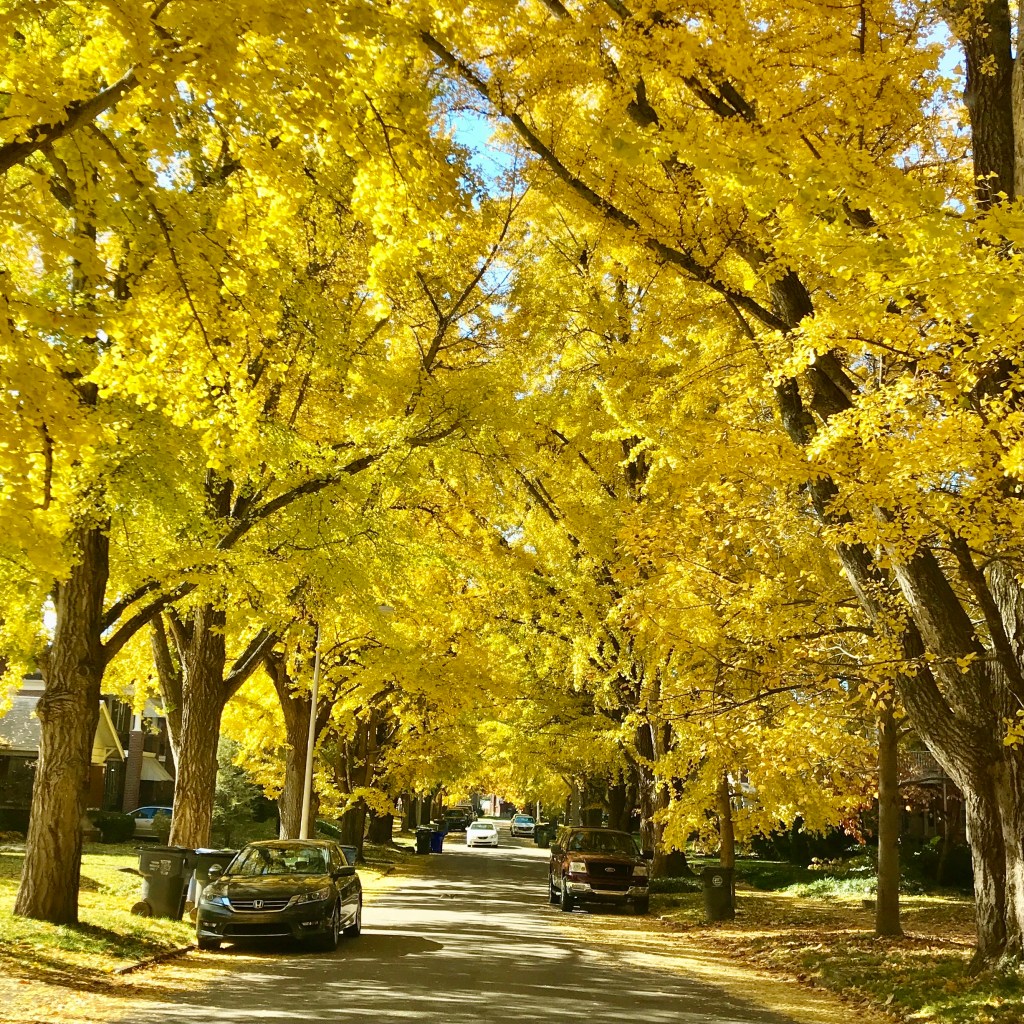
One of the things that we love about our street is its peace and quiet. Neighbors relax on porches, dog walkers wander through, and kids on trainer bikes wobble down the sidewalk. But for the next couple of weeks our tranquil, one-block, urban backwater will be a frenzy of selfies, family photoshoots, wedding photographers, and even TV reporter live shots. And what’s all this commotion about? It’s a golden opportunity to stroll down a street lined with brilliant, yellow living fossils, aka autumn ginkgo trees.
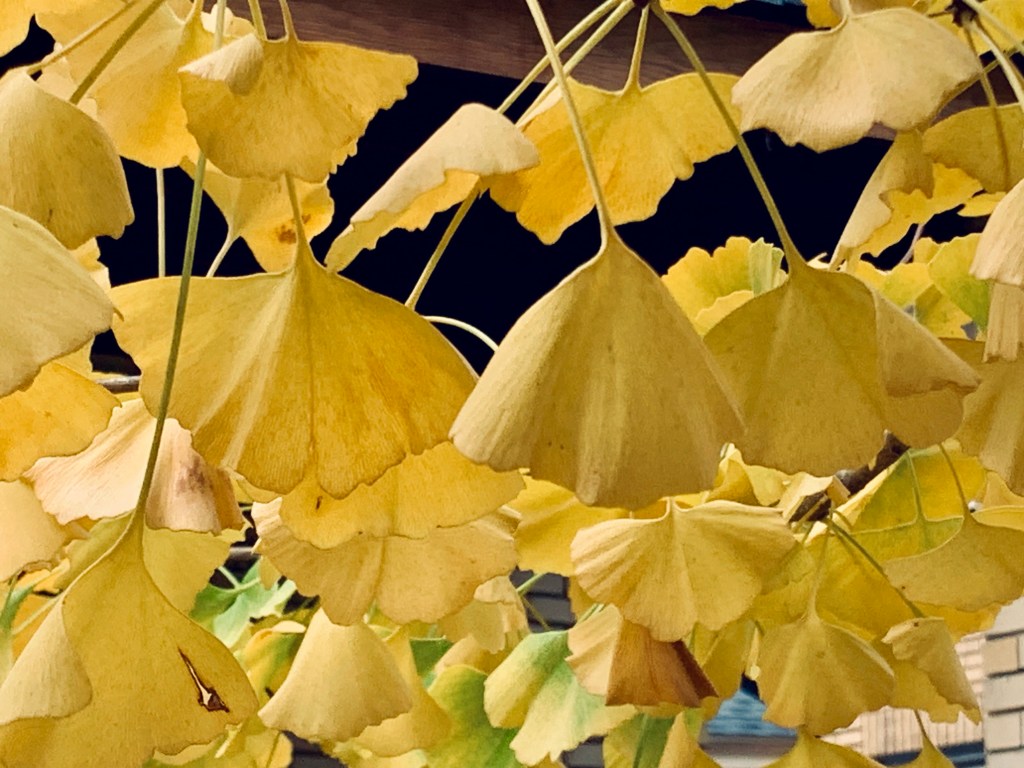
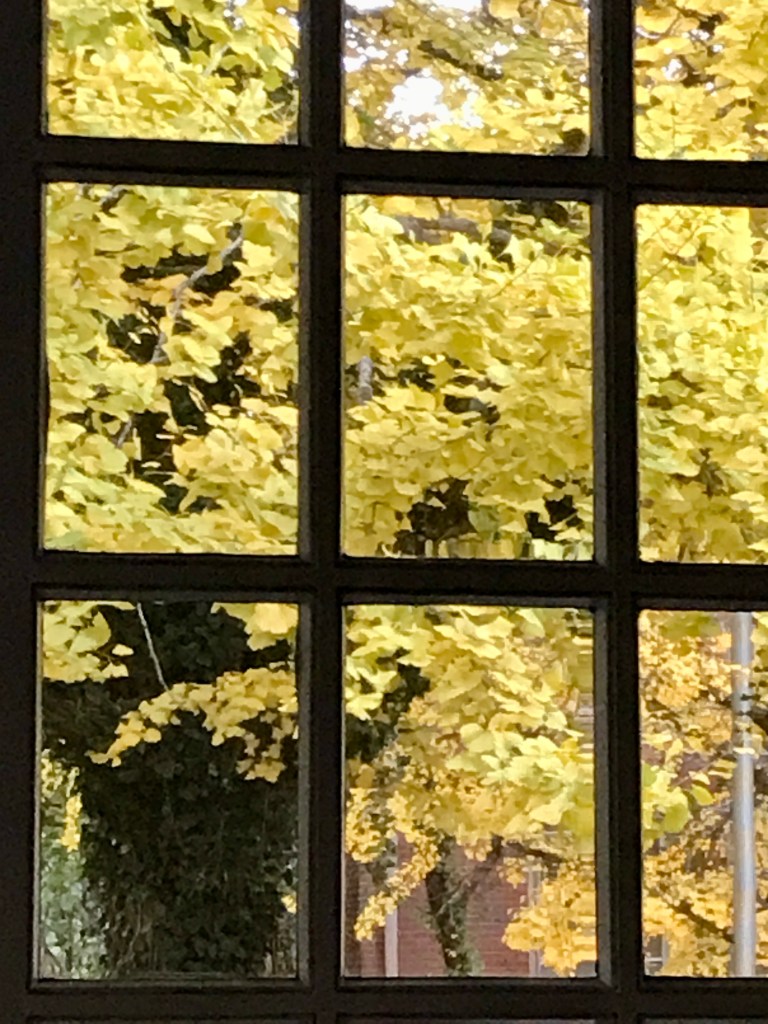
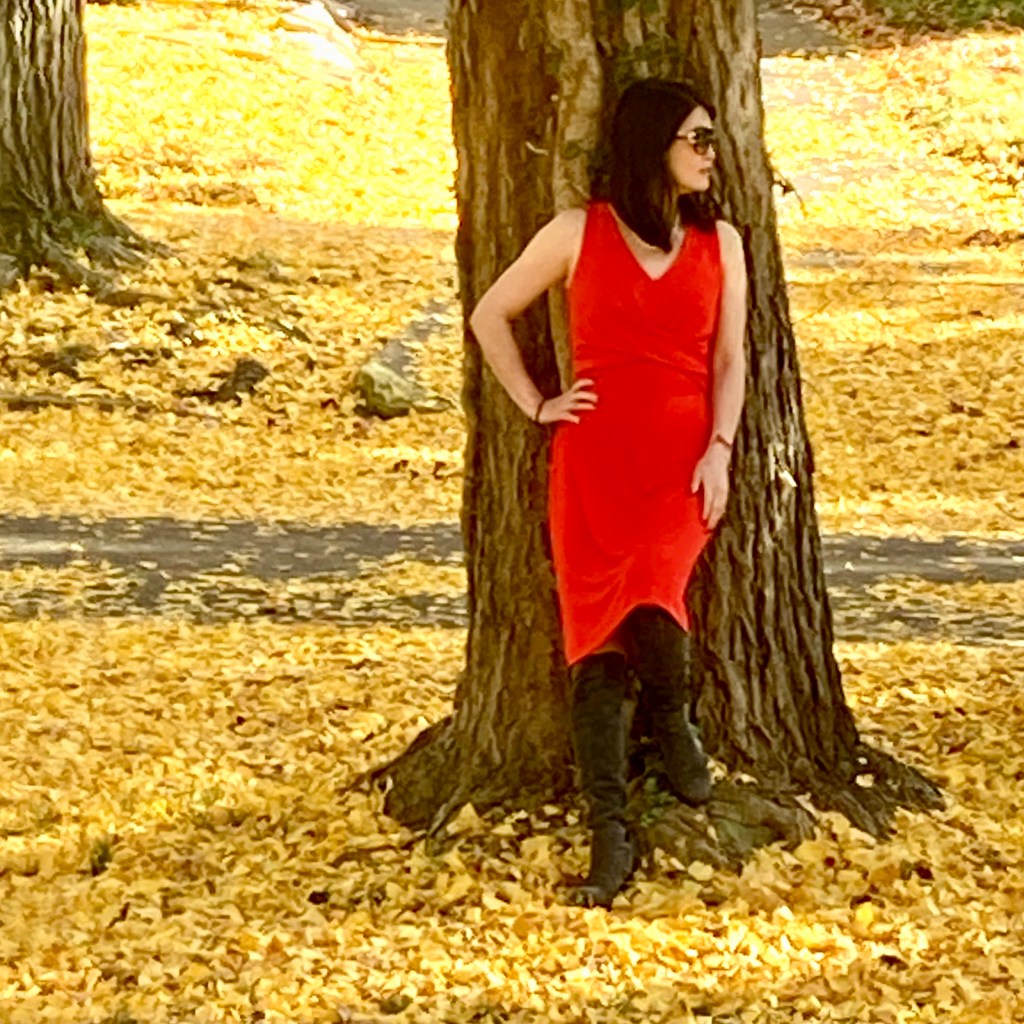
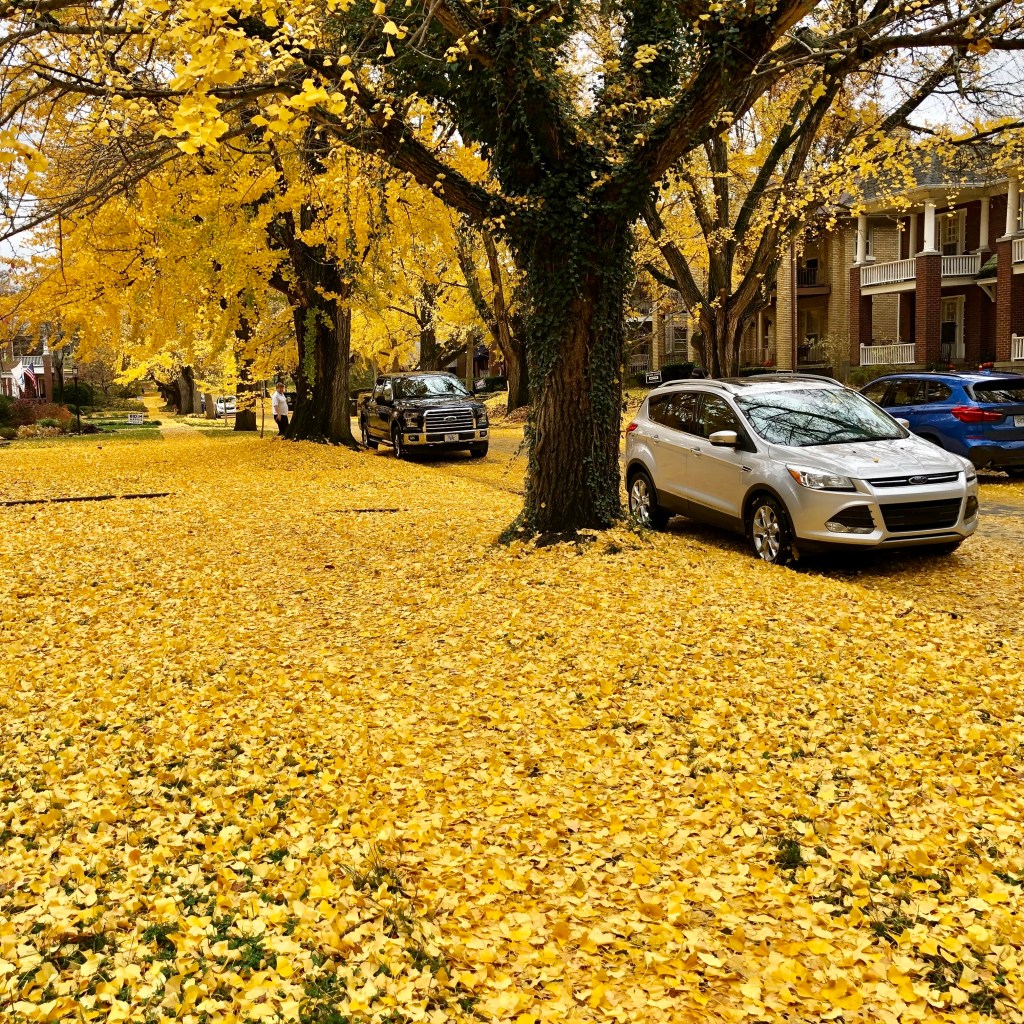
We’re not quite sure how or when they were planted, but our street is lined with towering ginkgo trees from end to end. And while dinosaurs and their stony bones get all the attention, the leafy ginkgos on our street have ancestors that stretch back to the Jurassic Age as well. According to Peter Crane, dean of the Yale School of Forestry, the ginkgo is an “oddity in nature because it’s a single species with no known living relatives; a living fossil that has been essentially unchanged for more than 200 million years.”
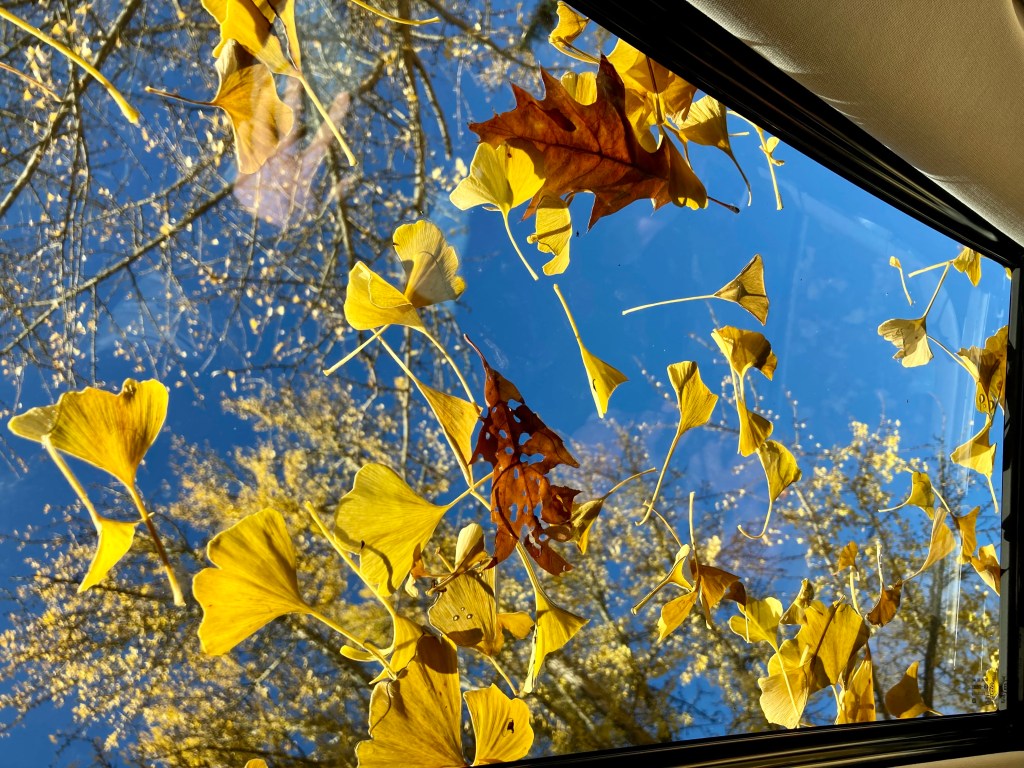
Ginkgos are remarkably resilient, and their insect and disease resistence has made them a popular urban tree. An extreme example of their toughness is a collection of 170 trees growing about one mile from ground zero of the Hiroshima bomb in Japan. Everything within the blast radius was killed, but the charred trunks of these trees were soon healthy again … and still stand today.
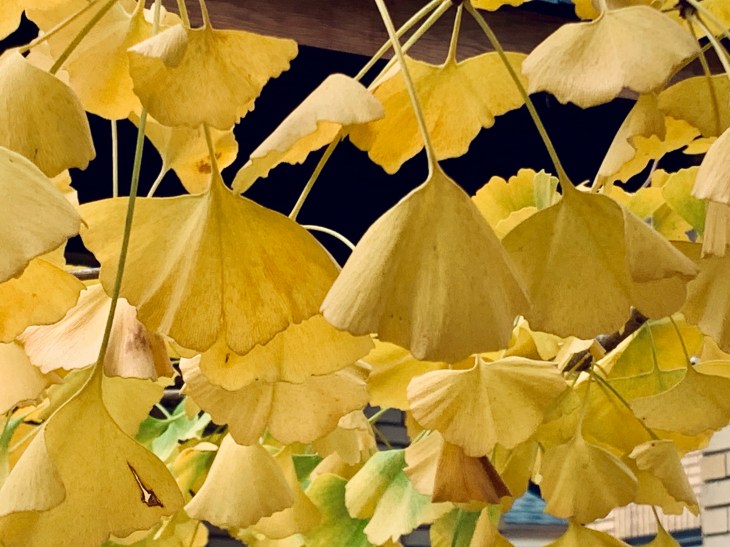
In addition to their beauty, both the ginkgo leaves and nuts have been prized for centuries for their reputed medical properties. Not all medical experts agree, but the dietary supplements are advertised to improve everything from blood to memory disorders.
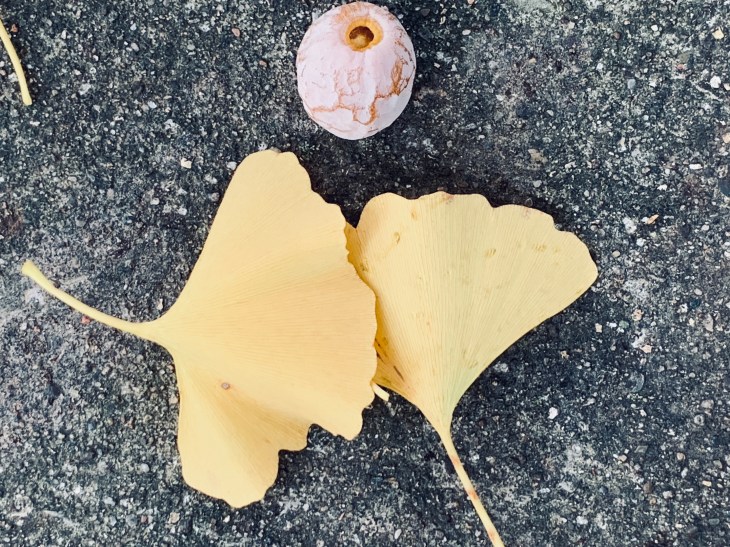
Given its beauty and hardiness you may be wondering why these unique and elegant trees aren’t in every garden. Well, that would be the dreadful smell of the berries. Thus far I’ve painted a rosy picture, and done nothing but sing the praises of the ginkgo. But be forewarned, there’s a male and female version, and in the late summer and early autumn the female produces supremely stinky berries in prodigious amounts. The soft, fleshy berries contain butanoic acid which smells, on its best days, like a cross between dog poop and vomit.


But don’t get me wrong, we love our ginkgo trees, and the annual flood of lookie-loos and photographers is great fun to watch. The crowds are just starting to trickle in, but once the word goes out on the leaf-peeper telegraph things will start to jump. And it’s gotten so popular that beginning this year, the golden shower even has a T shirt. Now if our tree were only a berryless male.
Happy Autumn,
James & Terri
“Every fall, this stunning street transforms into a scene that’s as warm and inviting as it is suggestive, with leaves fluttering down in a shower of gold that covers everything (and everyone) in its path. If you’re brave enough to stroll beneath the branches of Catalpa Road, don’t be surprised if you find yourself laughing as those golden leaves come raining down on you. It’s almost like nature has a sense of humor, giving you a gentle, leafy nudge with a wink and a knowing smile.” —KYforKY.com
Last updated December 27, 2025

 GALLIVANCE
What fascinating and beautiful trees (except for the smell, I guess! Ha!)!
Anita, we grumble about the smell sometimes, but the trees make the street such a lovely place to live we don’t complain too much. ~James
What a lovely tribute to the ginkgo!
They’re a unique tree and a real standout when the autumn arrives. Do you have them in your part of the world? ~James
Not that I’ve seen. Maybe in Botanic gardens xx
How amazing! Such colourful and resilient sounding trees, though the stench of the berries doesn’t sound quite so appealing. Enjoy your Autumn!
Miriam, to use a cliche, “There’s no free lunch” which is true of the gingko and their berries. But we’ve gotten our berry cleanup routine down, and given the shade of summer and the fantastic autumn color, it’s worth the effort. ~James
We don’t have many (maybe none) gingko trees in Australia. I’ll have to investigate.
Peggy, I’ve never actually investigated the distribution of the gingko worldwide, but given Australia’s separation from the earth’s other landmasses throughout geologic history, I’m not surprised. Thanks for bringing this point up as it will send me down a geeky rabbit hole to find out. 🙂 ~James
We start some new travels tomorrow, so I will leave you to go down the rabbit holes. Antartica and south Atlantic here we come.
Sounds interesting Peggy. I hope the weather cooperates. Bon Voyage!
Wow, what a beautiful sight. When we lived in IL we had a ginkgo tree in our backyard. I always loved the unique leaves but had no idea of its resilience or history. Thanks for enlightening me and sharing their lovely autumn leaves.
Ingrid, regarding the resilience of the gingko, one thing that I didn’t mention (too geeky I guess) is that the gingkos survived the meteorite that wiped out the dinosaurs. And compared to that climactic disaster, Hiroshima was a firecracker. Now that’s a tough tree. ~James
You have taught us another interesting lesson; I had no idea about these trees.
Preferring not to drive in a straight line nor to take Interstates, we pass your way going to and from Nashville. We were last in Lex in October. Looking ahead to next year, approximately when do the trees turn?
Ray, the gingko’s routine seems to change a bit from year to year, but in general, they start to turn yellow during the month of November. But then, there was the year that we had an early, hard freeze and the leaves fell on November 8, and they were totally green! Interesting trees to watch. ~James
ooh, beautiful. my very favorite tree
I agree Beth, if we could just skip the berries. 🙂 ~James
Thanks for the spectacular photos and fascinating information! Where is this?
Marilyn, all of these photos were taken in front of our apartment in Lexington, KY. ~James
Hmmm, you had me ready to run out and plant one util you mentioned dog poop and vomit, James and Terri. Now, I will just admire your photos. Our fall leaves have been beautiful here as well. The trees are approaching leafless now, however. I, for one, love to walk in the woods when the wind is gently blowing, sending down a shower of gold, red and yellow! -Curt
Curt, I feel the same way. Last week I took a bike ride on a long Ohio rail trail and there was a gentle shower of leaves on the entire ride. It’s a magic feel. ~James
What beautiful photos! I had no idea gingko trees grew in the US. Don’t envy you the tourists, though.
Kathy, the tourists are really no problem. We can sit on our porch and watch it all unfold. In fact, usually it’s pretty cute. ~James
There I am. Arms outstretched. Palms up. Catching calm, catching peace, capturing small leaves of happiness. Desperately needed inner calm. Thank you for inviting me into your ginko world. Virginia
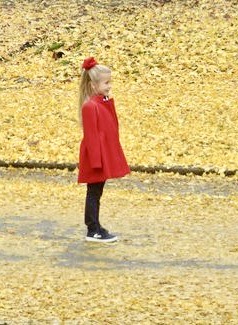
This is a delightful comment Virginia, and it really sets the mood for a rain of yellow leaves. And believe it or not, in some years we’ve seen the leaf fall happen in one day. And when this happens, it really is a constant rain of leaves and everything in the neighborhood gets carpeted with gold. You can sort of see that in one of our photos. ~James
They are gorgeous and certainly paint a beautiful picture. Too bad about the smell but that may add to their longevity!
Darlene, the berries are a real botanical conundrum. Our neighborhood is overrun with squirrels, chipmunks, and even a few crows. And to date, we’ve seen nothing eat these berries. I’ve done a bit of reading about this, and one theory is that there were animals in the past that ate the berries to help with dispersion, but these animals are now extinct. I love this geeky stuff. ~James
Interesting. I’ve had gingko tea which had a bitter taste and a slight odd smell, but it certainly made me feel better. I wonder if they make the tea from the berries.
Leaves I do believe.
How stunning!!! I love it!
Pam, with your interest in science, I thought you might find the gingko interesting. It’s had 200 million years to get its act together and evolution has made it a tough, unique tree. ~James
Fascinating! So beautiful too – lucky you!
Leaves so beautiful, fruit so putrid!
Rebecca, as I said to someone else, the gingko is certainly a botanical oddity. Why would a hardy tree that has survived hundreds of millions of years have juicy berries with seeds that are so unappealing to all animal life. The normal procedure is for animals to eat the fruit, and then disperse the seeds. This is not the case with the gingko. Interesting no?
I heard that in Korea the boiled fruit is used as a hangover cure, but I did not find any evidence online… Strange plant indeed.
Rebecca, the seed inside the berry looks very much like a pistachio. We’ve seen people picking these up, which we encourage. Not sure what they were doing with them, but next time I’ll ask. ~James
That’s very interesting. I hope you do find out what they’re used for…
When I saw those leaves in your photos, I thought they look very similar to maidenhair ferns. And apparently, ginkgo is also known as maidenhair tree! Now I’m really curious about it, well, also about how the berries smell, actually. How lovely that you live in such a beautiful neighborhood!
Bama, in addition to the stinky berries produced by the female tree, apparently certain male trees have the ability to change sex and start producing berries and seeds. I’m totally confused as to why evolution has made the berries so stinky, but nature never wastes energy so there must be a reason. What an intriguing tree. ~James
This is why I love plants. They’re really amazing.
Your mention of the smell reminded me of the (in)famous Titum arum, which smells like rotting flesh when in bloom — leading to a common name of ‘corpse flower.’ That smell is a draw for certain flies and other pollinators that feed on road kill; it’s an aid to pollination! We had one of those at the Houston natural science museum. People lined up for hours to see it, and there was even a live stream that allowed people to watch it in the middle of the night.
But back to the ginko tree. I wondered if it could be found here in Texas, and the answer’s yes. It’s found mostly in the eastern third of the state as specimen trees; there’s nothing so glorious here as your street. Something else caught me about your photos: the fact that the trees are on Catalpa Road. Catalpa is a native tree here in Texas, and when I was a child, my grandparents had a neighbor with a huge catalpa tree; I used to collect its beans for my dolls’ dinner parties!
Yes Linda, we do live on Catalpa Rd, and the fact that there’s a street full of gingkos and only one Catalpa tree is a mystery. Did the catalpas die and get replaced by gingkos? Who knows. However, Terri has some childhood experience with catalpa trees in her youth in Ohio. Apparently she also collected the beans as toys, but her best story is that she and a group of friends collected a red wagon-full of caterpillars, which for some reason, absolutely appalled her Mom. And interestingly, our very young, little-girl neighbors love to put on their tiny gardening gloves and collect the green berries (pre-stink), which we wholeheartedly encourage. ~James
Wow, how absolutely wonderful. I’ve never seen anything like them 😊
Hannah, we’re lucky to live in an area that has beautiful autumn colors, but our street really is a standout. As I said, it really is fun watching visitors and their efforts to get the perfect shots. ~James
TREE-MENDOUS: An aerial view shows a ginkgo tree, estimated to be 800 to 1,000 years old, in Bangye-ri, Wonju, South Korea. ANTHONY WALLACE/ AGENCE FRANCE- PRESSE/ GETTY IMAGES
From today’s Wall Street Journal.
Thanks for the photo Ray. I didn’t realize gingkos lived this long, but given their 200-million year lineage, it shouldn’t surprise me that they can live for centuries. ~James
Wow! This is so similar to our golden shower tree. The only difference is that the Gingko leaves are yellow
Thanks for the comment Constantine and for dropping by the blog. I looked up photos of the golden shower tree, and they do look similar. I’m not sure, but I don’t think gingkoes are tropical. Both trees are amazing though. ~James