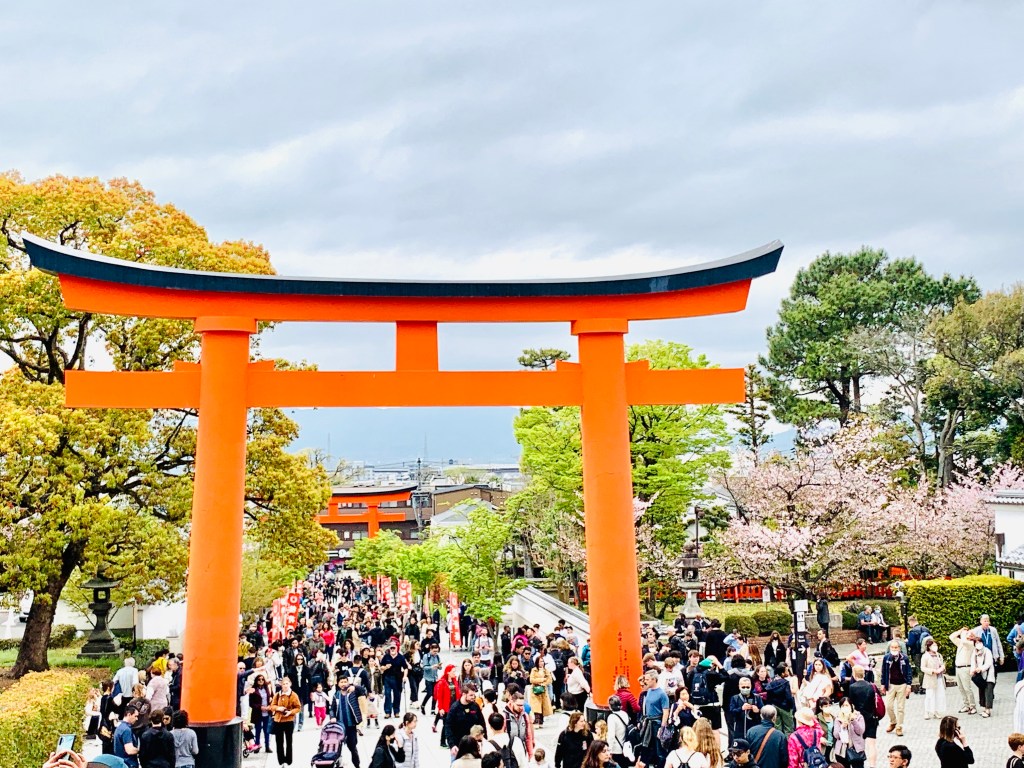
Visiting religious temples and shrines in Asia is always fascinating and educational. Whether Buddhist or Hindu, the symbolic art, intricate architecture, and explosion of colors are a joy to see. And after our recent journey to Japan we can now add Shinto to the list of appealing shrines.
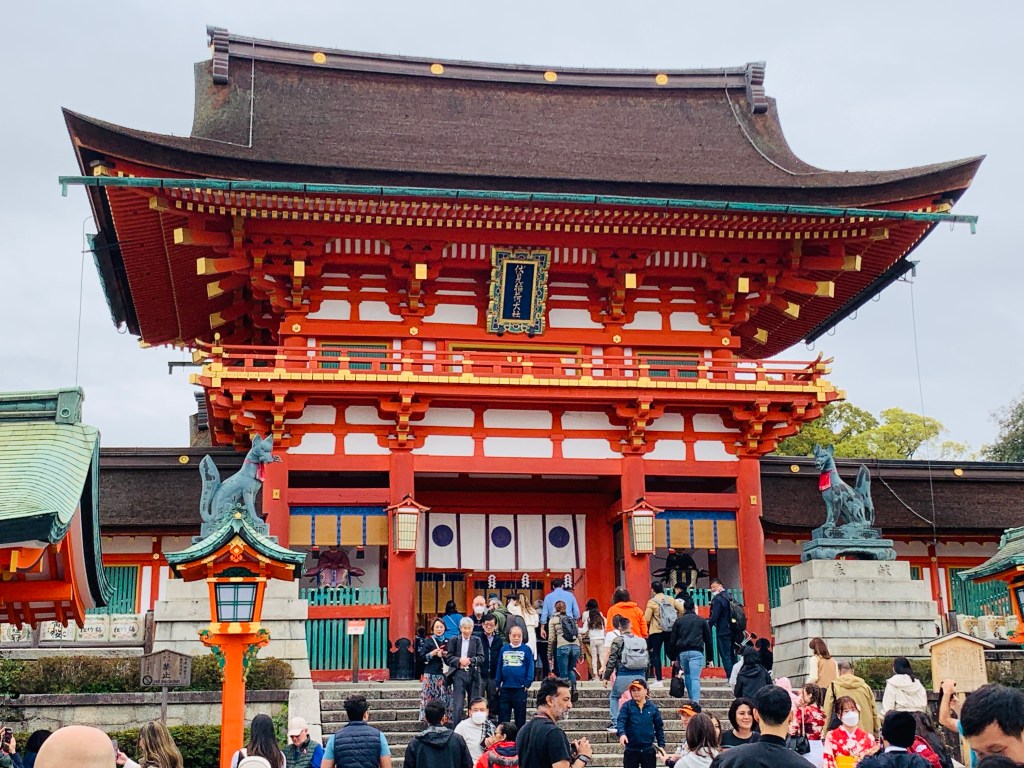
For years I had read about Shinto, and considering that it’s Japan’s largest religion, I knew essentially nothing about it. But a trip to the Fushimi Inari Taisha Shrine just outside Kyoto was an excellent introduction.
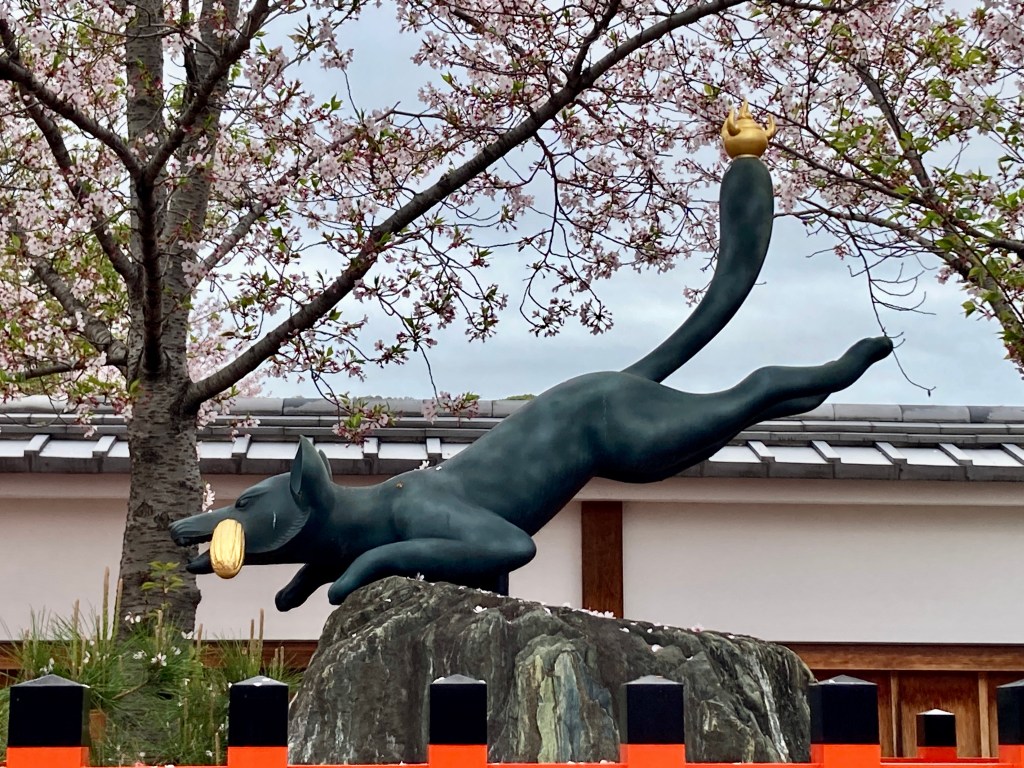
Inari is the Japanese god of rice, and the Fushimi Inari in Kyoto is the most important of several thousand shrines dedicated to the rice god, making it incredibly popular.
Praying and making offerings at the shrine provides “assistance” for the rice harvest as well as the harvest (profits) for business. In addition, the shrine’s location couldn’t be more photogenic, so Japanese photographers, selfie-shooters, tour buses, and tourists flock here.
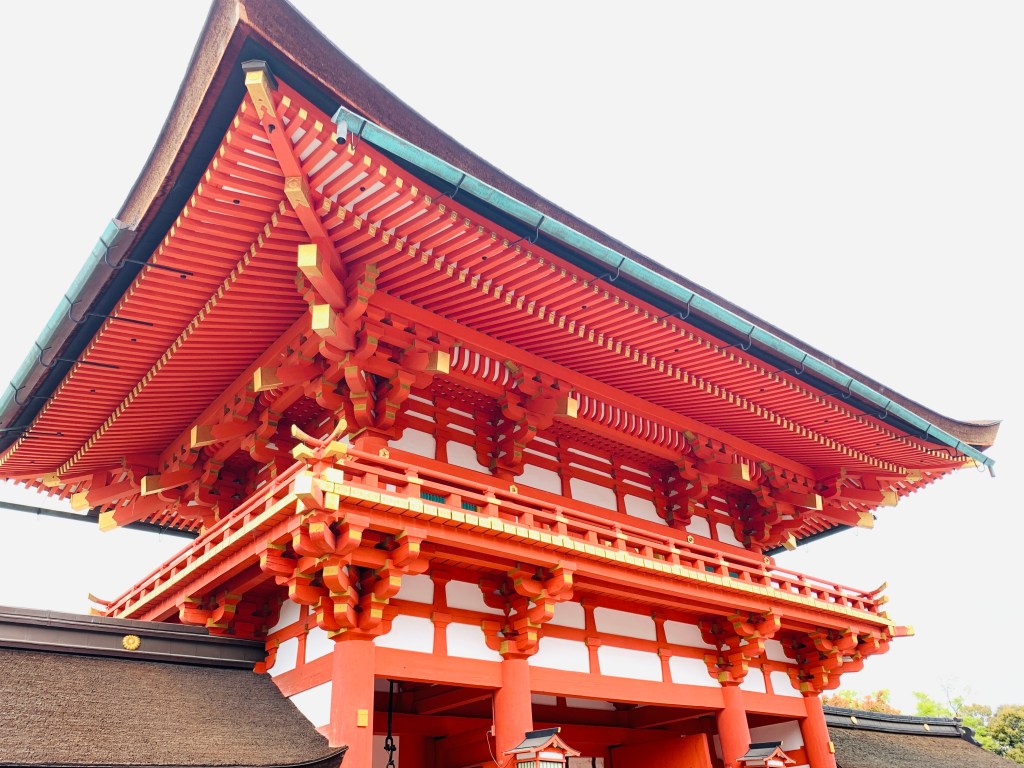
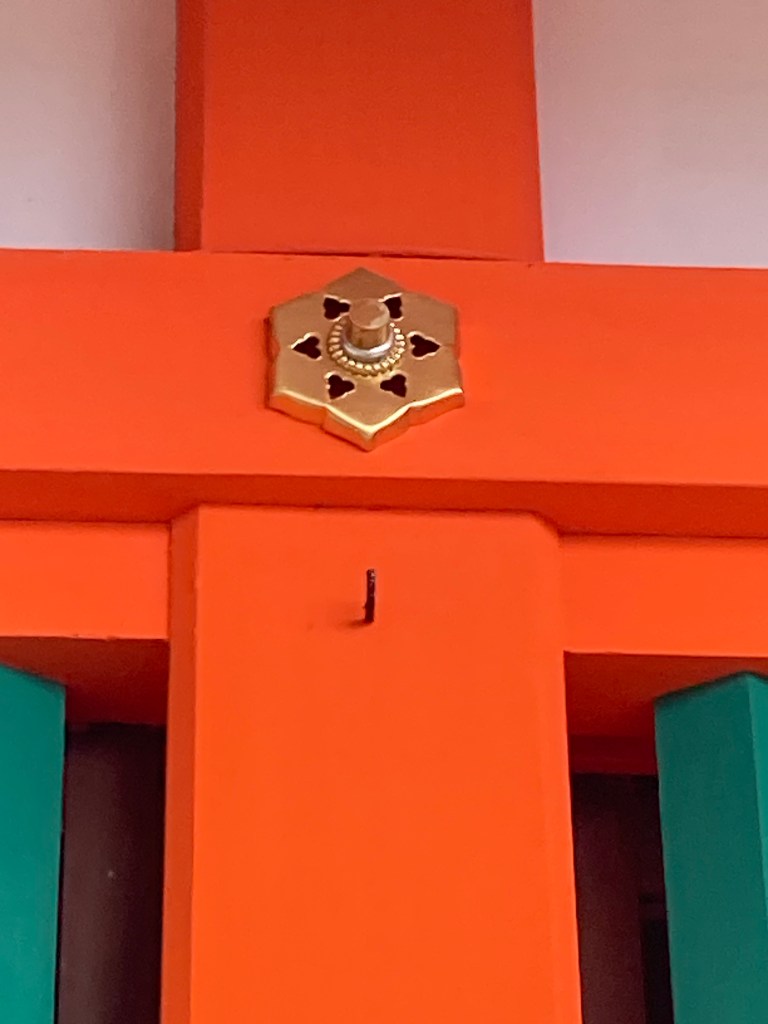
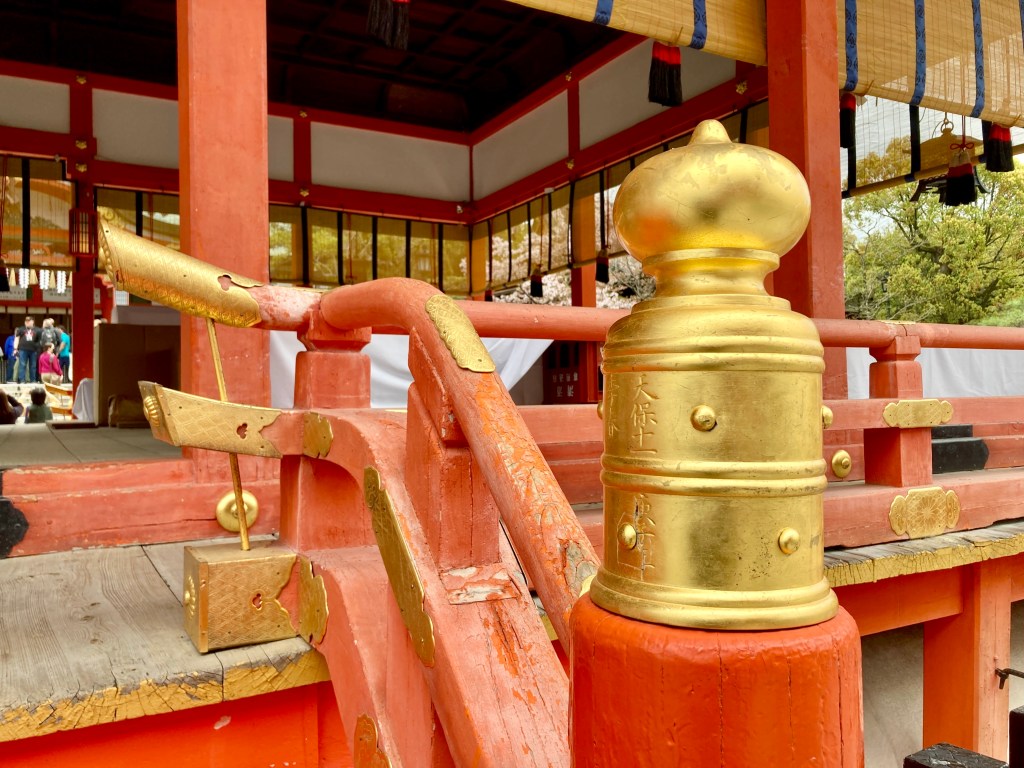
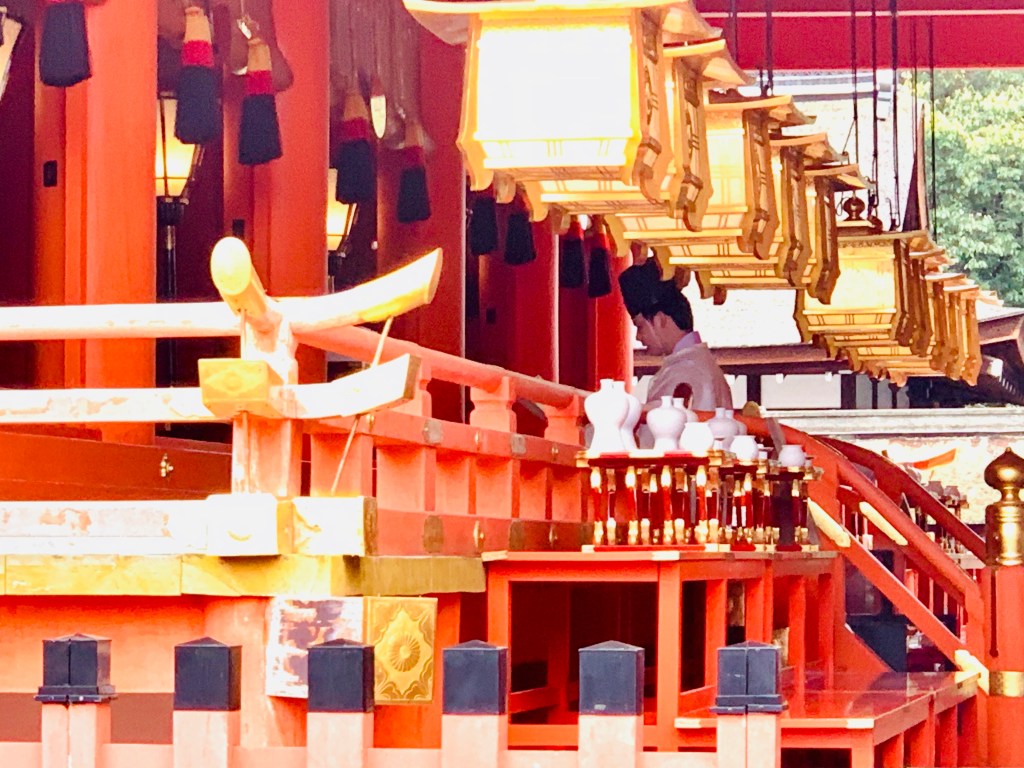
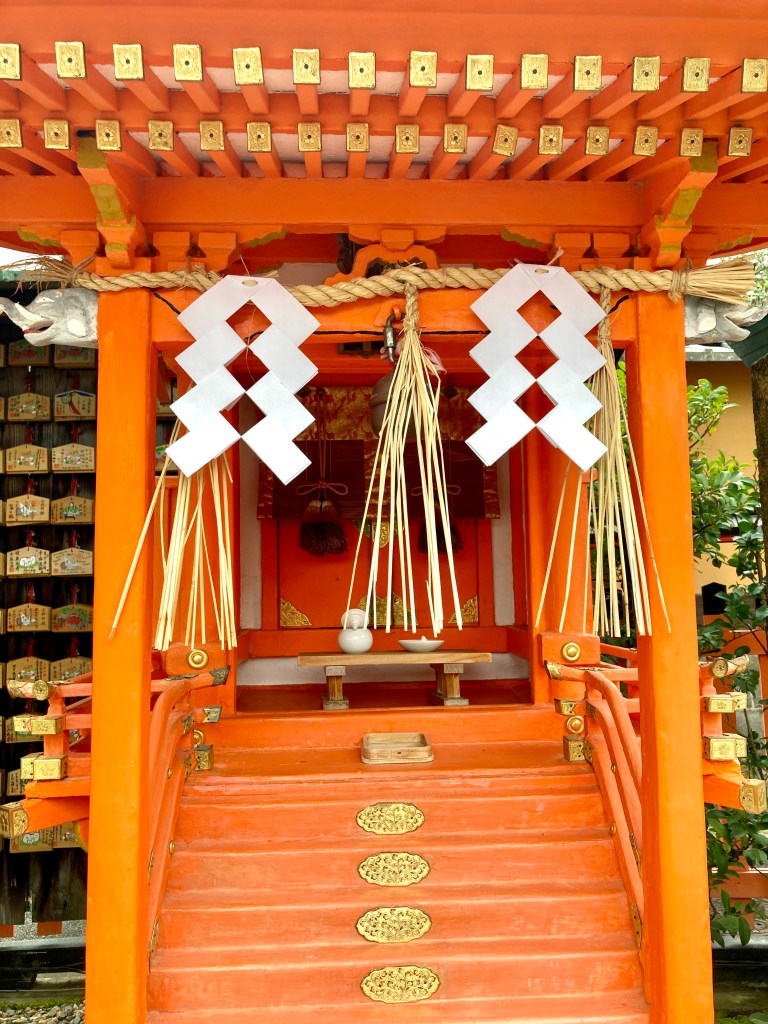
The ornate ceremonial halls dotting the grounds are impressive and unique, but the single thing that makes this shrine so popular and mega-photographed is the huge collection of vermilion torii gates. In Shinto, these iconic gates are important because they mark where shrine visitors leave the earthly world and step onto sacred land … the home of the god.
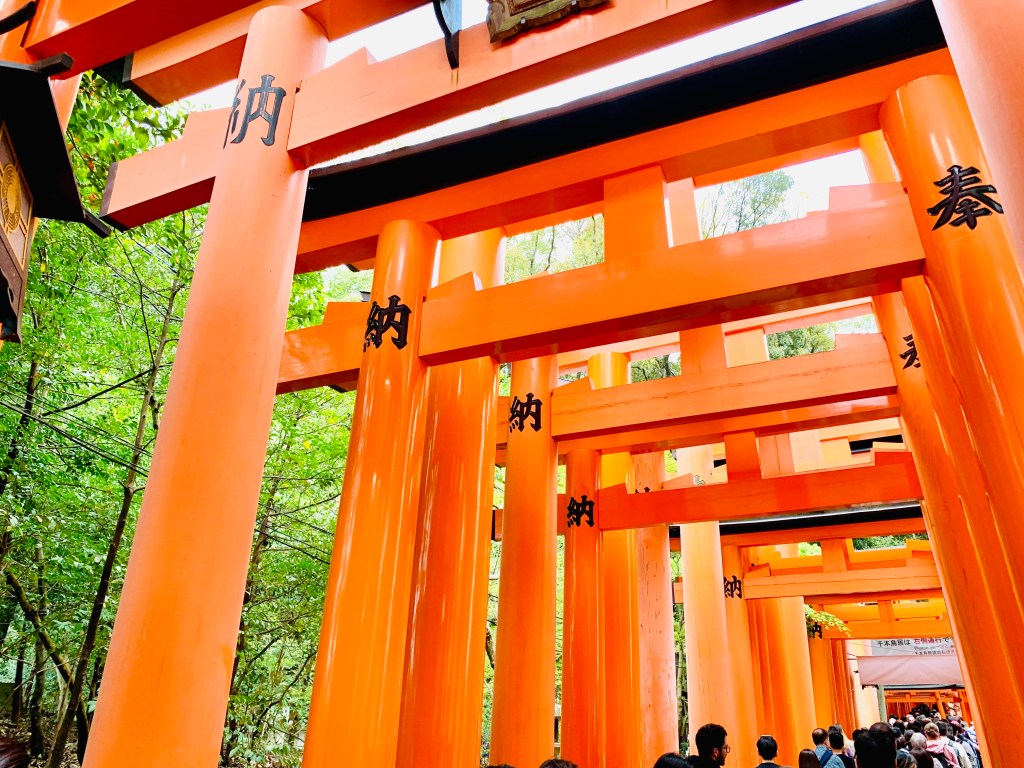
Behind the elaborate hall of offerings and the intricate sanctuary, a torii gate-covered hiking trail meanders through the forest and up the mountainside like an orange-ribbed snake. If you’ve seen photos* of the Fushimi Inari Shrine they were probably taken here in this selfie nirvana. These Senbon Torii (thousands of gates) were financed by donations from companies and individuals hoping to buy favor with the gods. It’s about as jammed with tourists as it gets, but admittedly, way cool. You’ll see nothing like it anywhere else.
As a curious traveler and student of history it’s always gratifying to learn about a religion that’s new to me. And even though I’m not a spiritual person, if I could cherry-pick beliefs which appeal to me, a number of Shinto’s tenets make the list:
- How refreshing to see a religion that focuses on finding harmony with your current surroundings and living your best life in the present; no hoping for paradise or dreading purgatory.
- The faith is rooted in simplicity and beauty with very close links to the natural world.
- Shinto is an optimistic faith. Humans are thought to be fundamentally good, and the problems occur when evil spirits are not appeased.
- I don’t buy into the idea of evil spirits, but there’s a lot to be said for the rest of Shinto philosophy in daily life.
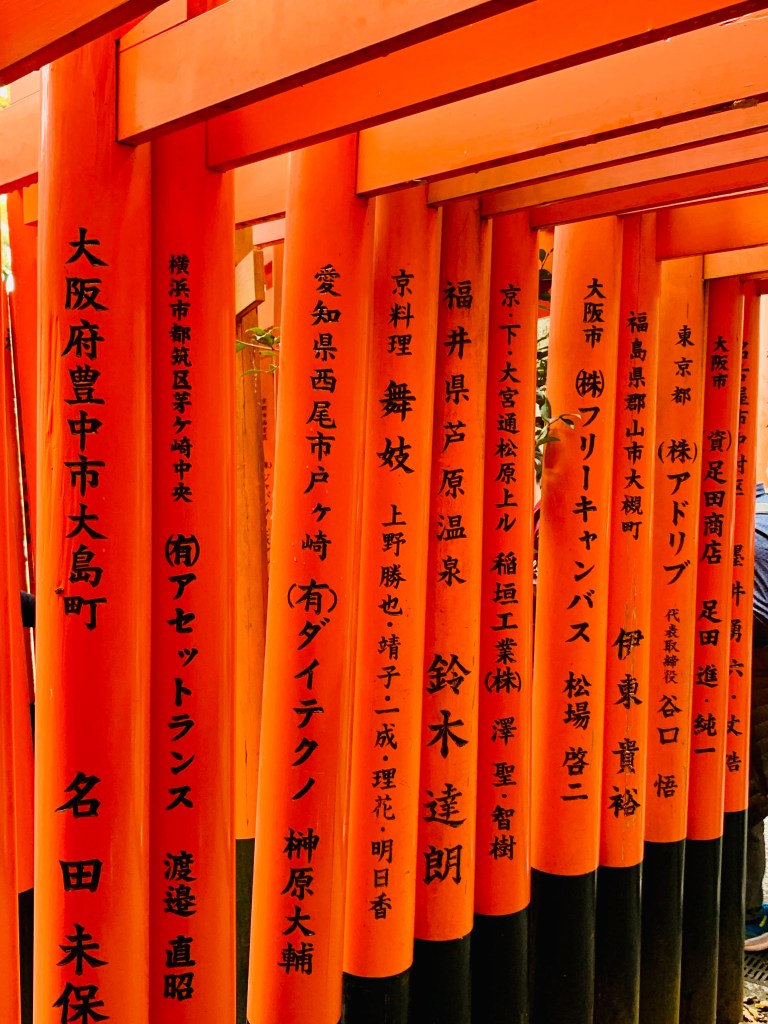
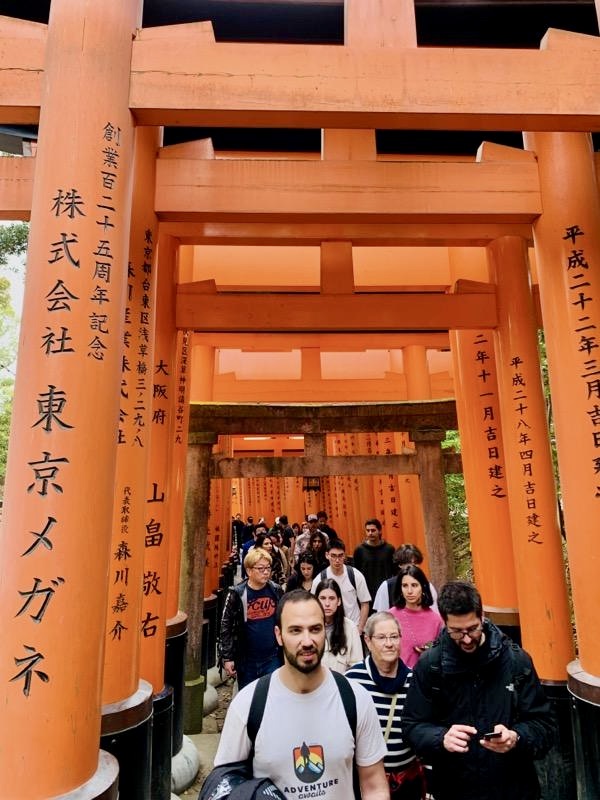
The Inari Shrine is a ten-minute train ride outside Kyoto, and rather than being a nuisance, with the right mindset, the crowds create a festive atmosphere. It’s a living, breathing exposure to Shinto, and it will be one of the highlights of your trip.
Happy Trails,
James & Terri
* Scenes from Memoirs of a Geisha were filmed here.

 GALLIVANCE
Great blog post and photos. I don’t actually know much about Shinto, therefore I really enjoyed reading about it here. Looks like Kyoto has some very interesting things to see and do, visiting this shrine would be top of my list. How many days would you recommend for a visit to Kyoto?
Thanks Gilda. When we visited Japan, in addition to Kyoto we stopped in Tokyo. There’s lots to see in Tokyo, but it’s absolutely huge with all the big city hassles that go with that size, so we only spent a few days there. Kyoto is considerably smaller and much more our cup of tea. We spent a week there and really enjoyed it. It’s very walkable, and even though some areas can get crowded, it’s always pleasant. Hope you and Brian are doing well. ~James
Fascinating information on a religion I know very little about. I like that it is an optimistic religion.
I agree Darlene. I love the concept of the inherent goodness of people. Our news today constantly bombards us with the bad things that happen, but I truly believe that the majority of people are kind, fair, and considerate of others. Otherwise, the globe would have collapsed into chaos hundreds of years ago. ~James
I agree with you there. My dad used to say, “If you look hard enough, You’ll find something good in everyone.” (obviously he didn’t mean serial killers or the likes of Hitler,which make up a small percentage of the world’s population)
Sounds like a good experience, James.
It was Jo. In addition to all the religious aspects, there was some great people-watching. 🙂 ~James
😁🩵
I remember studying Shinto a bit when I was in high school, but this post really brings it to life.
Peggy another aspect of Shinto that I found interesting is that anything, and everything, in nature can be a god: trees, rocks, the sun – literally anything. And I believe that prayers really are just a meditation. So believers have the chance to find peace in prayer just about anywhere. No wonder it’s such a popular religion. ~James
“How refreshing to see a religion that focuses on finding harmony with your current surroundings and living your best life in the present; no hoping for paradise or dreading purgatory.” The more I get older, the more I realize that to be a good person you don’t actually need to be enticed by heaven, or be threatened by hell. You do good things simply because those are the right things to do. No more, no less. I’m glad you enjoyed the Fushimi Inari Taisha. That place was so unique and interesting it inspired me to write a post about it with a different style, which I have never been able to replicate since then.
Bama, I’m with you 100%. I have absolutely no problems with any religion which gives people a moral compass; I just never felt like I needed that help myself. I feel that most people know in their heart the difference between good and bad, and the path they chose is a personal choice. Eastern religions spend a good deal of time talking about the role of ego in all the misery in the world, and without a doubt, these ideas are true.
And I’m curious about your post, so I’ll definitely check it out. ~James
“Shinto is an optimistic faith. Humans are thought to be fundamentally good” – I love this. People pretty much everywhere are good, but it is the evil people that stand out most of the time. How far did you hike up? I remember arriving there and being overwhelmed with the crowds, but they dissipated once it required exercise.
Jeff, I also feel strongly that most people are good, otherwise, the entire globe would be in constant chaos. I didn’t want the post to spin off into a religious discussion, but when I wrote this I was thinking about the Christian concept of original sin. Don’t get me started. ~James
Interestingly, it was Luther who gave me a way to begin appreciating Eastern traditions like Shinto. When I began reading his works, I discovered that he was opposed to dividing people into saints and sinners. Instead, he promoted the idea that every person is both; only the proportion differs, depending upon time and circumstance. Eventually, I made the leap, realizing that both Western and Eastern traditions had something to offer and that, even without realizing it, I’d incorporated aspects of both into my world view. It certainly opened me up to a deeper appreciation of religions that most people around me found ‘odd.’ In recent years, my experience of the natural world has been enlivened by Eastern perspectives.
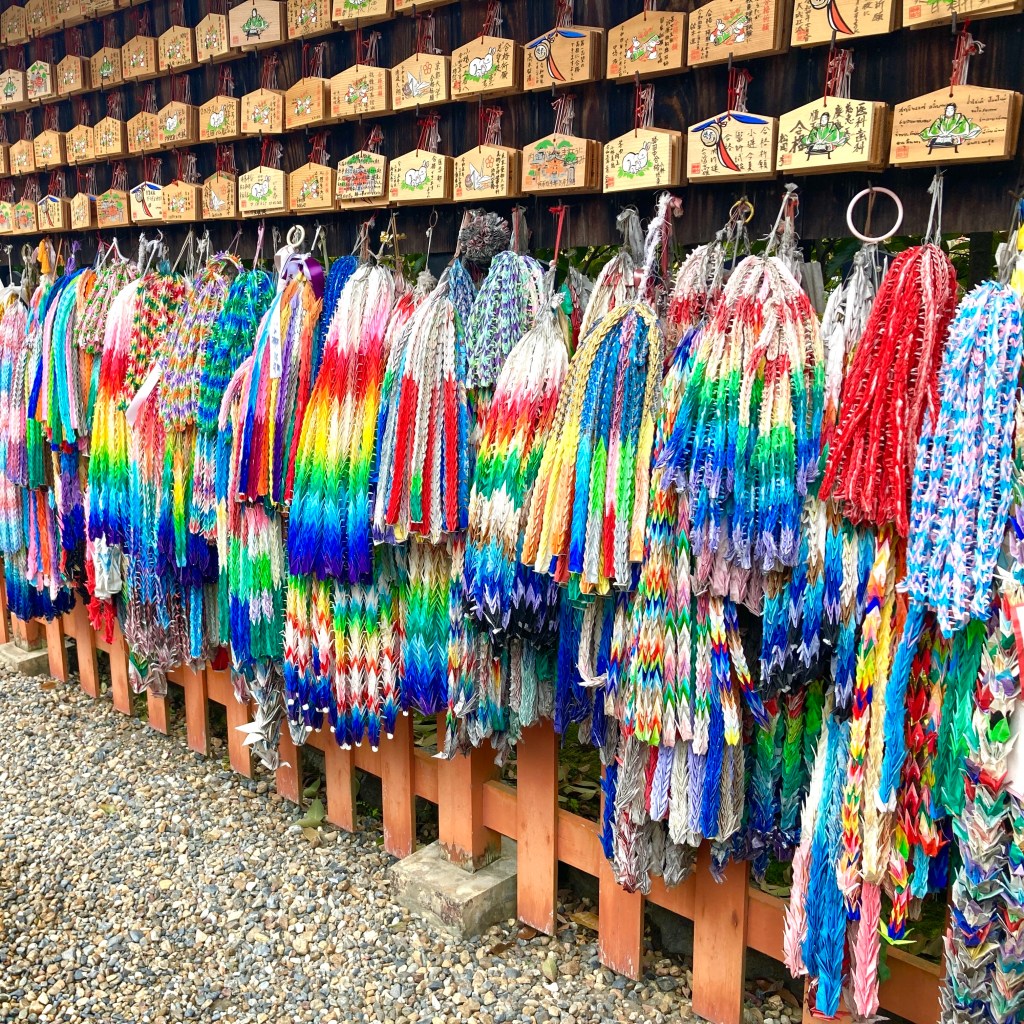
I am curious about your last photo. Are those akin to prayer flags?
Linda, thanks for a thoughtful comment. One of the fun things about blogging is seeing the interesting direction that the comments take. The turn toward religion in this post is a good example.
When I lived in London I got pretty heavy into meditation and Eastern religions as a pressure-relief valve for my corporate gig. Eastern religions, like those in the west, have some unusual ideas that I can’t go along with. But to use a term that I used in the post, if I can cherry-pick concepts there are many that are meaningful to me. And to use your perfect phrase, I incorporated them into my world view. I think that religion is about peace of mind, and if a concoction of ideas is what works, so be it.
As to the photo, if you zoom in on the lower right of the photo you can see that these are strings of paper cranes (what an amazing amount of work!). These are offerings made the gods for good luck and longevity. Here’s a good link for details.
Now that you’ve pointed them out, I remember seeing Origami cranes in the past. I also remember my attempts at an Origami star, which didn’t go so well! These are amazing.
Like you I love all the colours of religious sites across Asia. I love the use of bright red, which is something you don’t see in Western culture. Like you, I love the idea of living in the moment that Shinto teaches – a beautiful place to learn about a new religion.
Hannah, the minute I saw the first photo of these colorful torii gates, I knew we’d have to see this shrine … crowds or no. And some additional info you might be interested in, the orange/red color you see is called vermilion by the Japanese. It’s important because this color wards off the “kami” (evil spirits). If you notice closely there are red bandanas wrapped around the necks of the foxes, which is important for something else. Like western religions, everything has some symbolic significance in Shinto. ~James
Lovely post that brought back some wonderful memories. We started very early and did the whole hike without encountering crowds until we got back to the main shrine. I even got some photos of the Senbon Torii with no people there. It’s a really special place.
Alison
Alison, we’ve seen lots of temples, but I must admit, this is one of my favorites. The gate-lined path is wonderful and it’s juxtaposition with the green forest is a striking contrast. When we visited the crowds were totally wacky so the hike wasn’t really an option. But since I was one of those tourists cluttering up the path, I can’t complain. It’s a very cool place and one-of-a-kind. ~James
Do people live in the village?
Jean, this shrine is located in one of Kyoto’s suburban areas. We saw a couple of priests at the shrine leading prayers and attending the offerings areas. Not sure if they live on-site or not, but I wouldn’t be surprised. ~James
Thanks for reblogging our post on the Inari Shrine. ~James@Gallivance.net