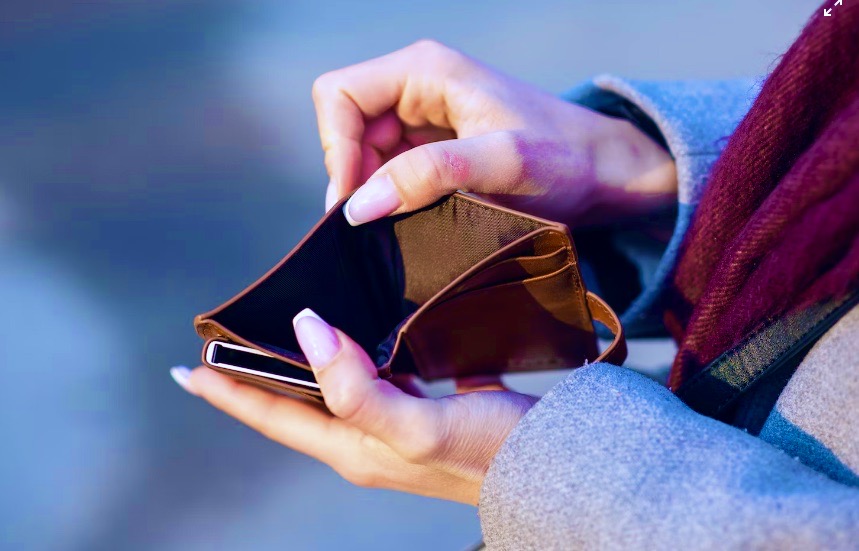
Credit cards, debit cards, Apple Pay, Google Pay, Venmo, Paypal, Swish* or Vipps* – If you want to buy something without using cash, you have umpteen options. We’ve all grown so accustomed to the convenience of cashless payments that most of us don’t even think about it anymore. But, just in case, squirreled away somewhere in our wallets are some good ol’ paper dollars, euros, pounds or krone – you know, in case of the Zombie Apocalypse.

Now imagine that paper money gone … being truly cashless, and not having the option of paying cash. On our most recent trip to Europe, we visited Sweden and Norway, which are the top two cashless countries in the world, and it was an eye-opening exposure to what a cashless economy really looks like.
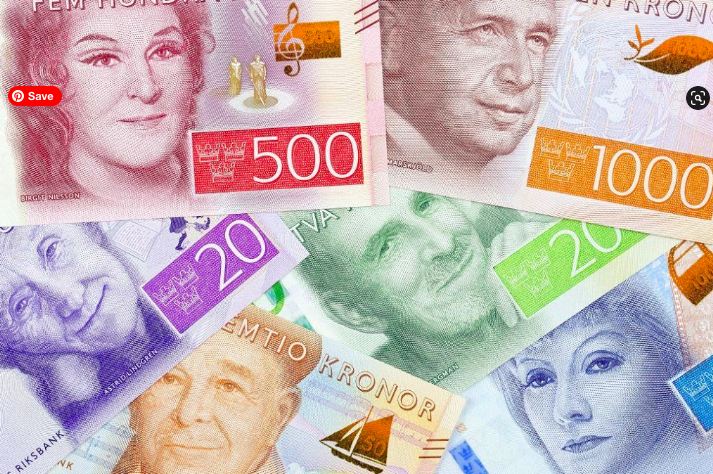
First some context, according to Britannica:
“A cashless society is one in which cash, in the form of physical banknotes and coins, is not accepted in any financial transaction. Instead, people and businesses transfer money to one another digitally—via credit or debit cards, electronic money transfers, cryptocurrency, or online and mobile payment services, such as Paypal and Apple Pay.”
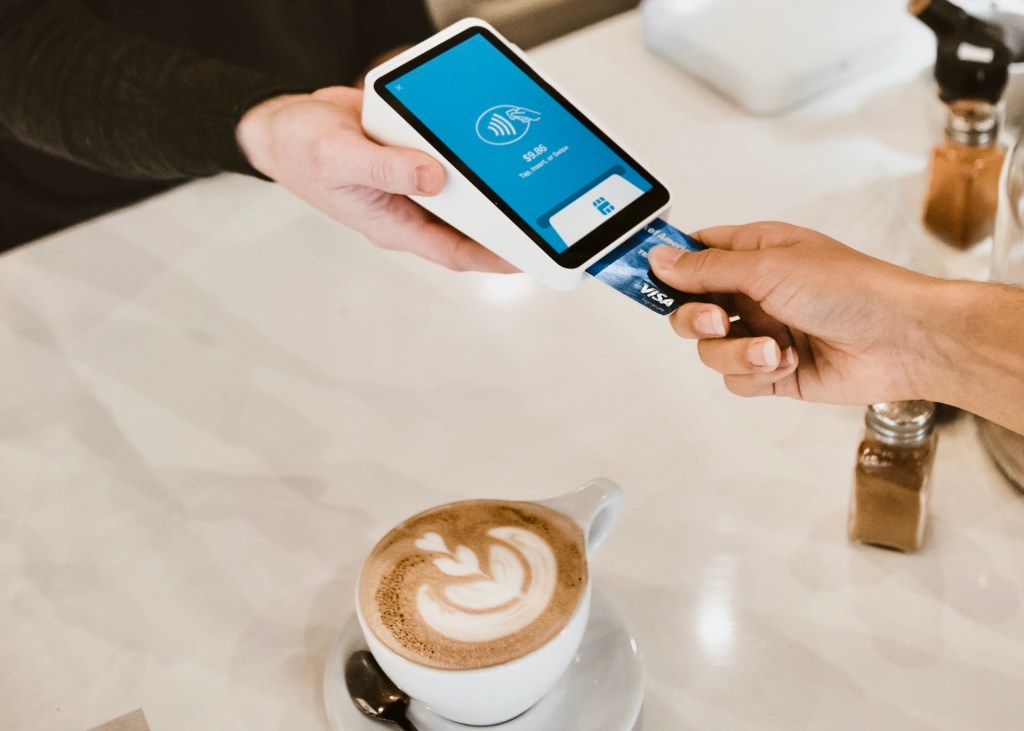
What this “immersion in cashlessness” meant on our one-month trip to Scandinavia was that from the time we left JFK in New York until our return, we didn’t use cash once. And in fact, the entire time we were in Sweden and Norway we didn’t see one instance of anyone actually paying with cash. Not once. What we did see were lots of signs warning “We don’t accept Cash Payments.”
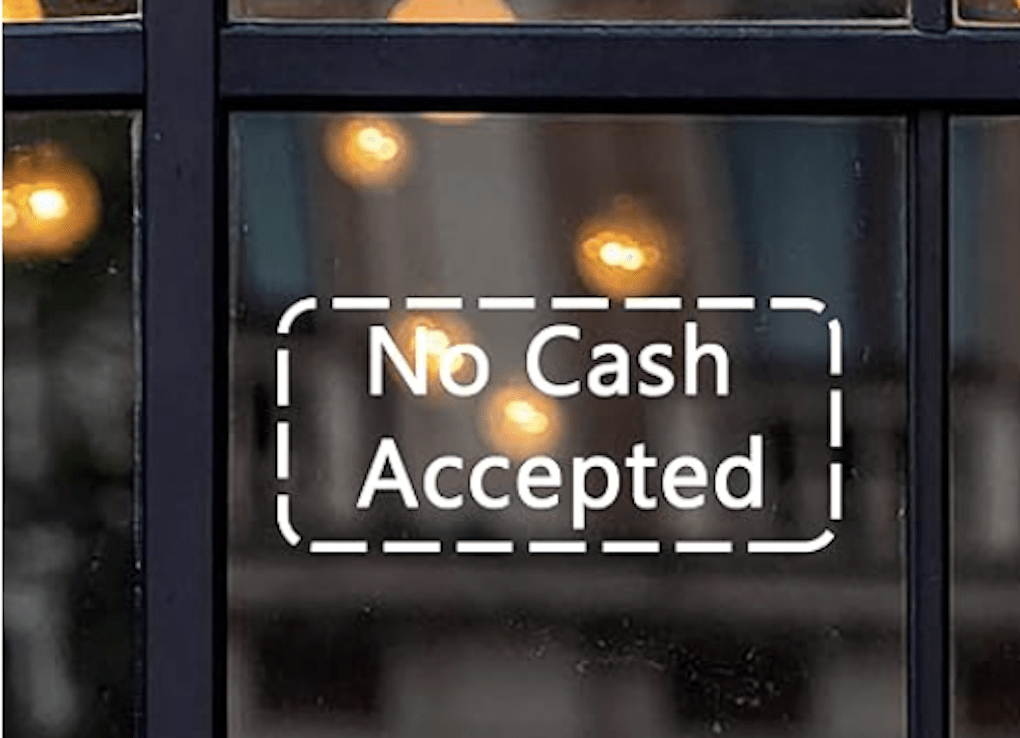
Like everyone, we depend on credit and debit cards when we travel, and from our trip research we knew that Sweden and Norway were the global winners in the 100% electronic payments game. But not having the choice or ability of paying cash is a new experience for us … and it took some mental adjustments.
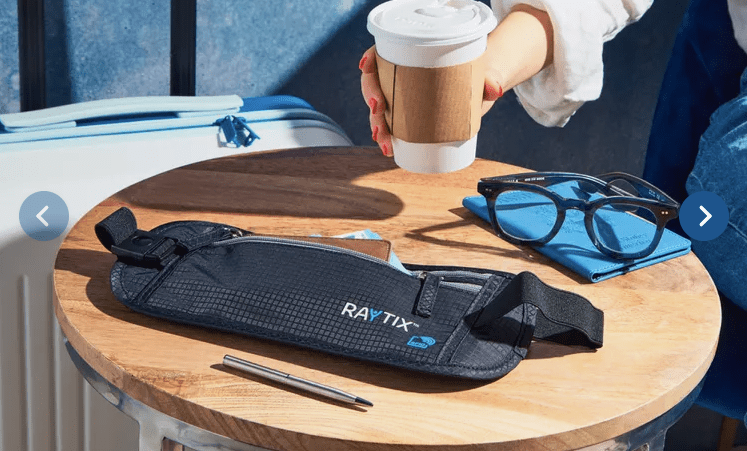
Over the years we’ve honed our travel finances, and we’re prepared for most places. Normally, we use credit cards for big expenses, like hotels and plane tickets, and ATM cards to access our US bank accounts for local currency to cover daily expenses. Our emergency stash of US dollars stays in our money belts, and in general, we don’t use credit cards for daily expenses. We’ve had credit card accounts hacked while traveling so frequent, unnecessary exposure seems like a risk. So in Scandinavia taking a credit card out for every purchase made us a bit nervous.
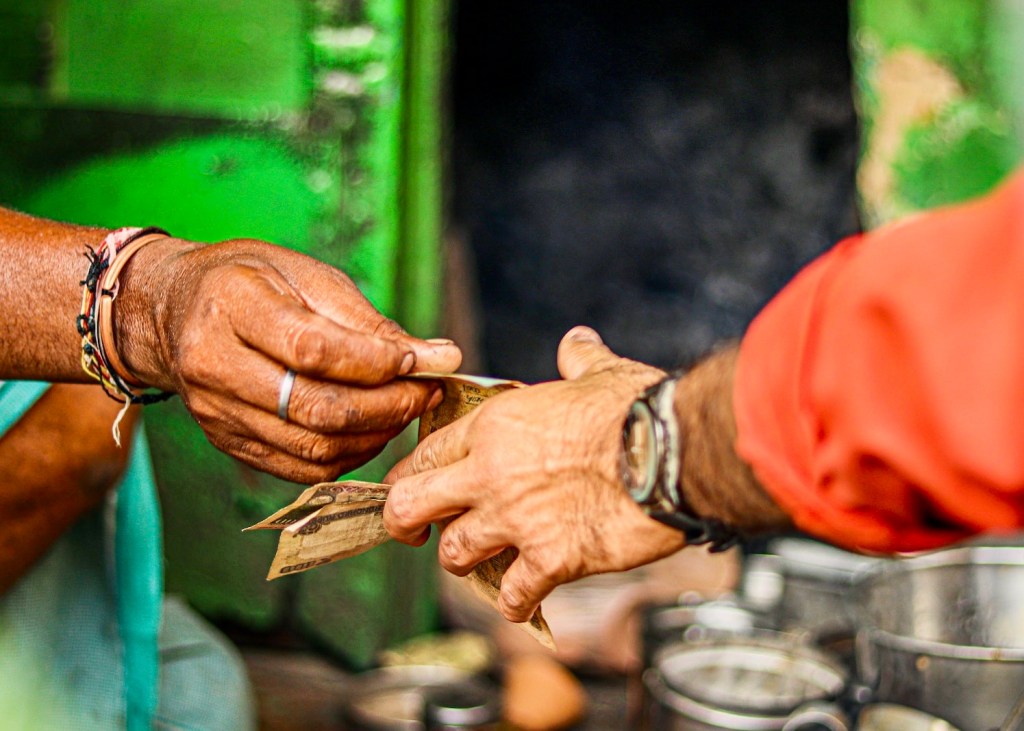
But remembering exactly what money is helps ease the transition. It’s nothing more than an idea based on trust. Whether it’s a government, an institution, or a person, this universal trust is what makes the system work. Yes, money can be a physical thing, but it doesn’t have to be. You go to the bank and hand over a stack of paper bills which are converted to a string of numbers in a computer. You trust the bank to put this electronic money into your account, and when you order those new make-you-slimmer pants online, you trust the bank to move that electronic money to Amazon as payment. Amazon, in turn, trusts both you and the bank and sends the pants. Everyone in this chain trusts everyone else because the deal is done with electronic funds that they all believe in.
Historians will tell you that this idea isn’t new. We’ve been cashless before, and it’s called barter. But since the idea of money was born it’s been cowrie shells, cocoa beans, and even glass beads. So why can’t it be electrons moving around a computer?

Some experts believe that the trend of cashless economies is unstoppable. Others see it more as a partial solution that some countries will never totally adopt. There are pros and cons on each side, but be that as it may, there’s no doubt that technology moves on. And it behooves each of us to make whatever changes are necessary to get comfortable with digital money – whether traveling to Singapore or the Starbucks on the corner.
And don’t misunderstand, we’re comfortable with the concept of money in the ether, and we’re happy to have had the chance to see totally cashless societies in action. Our travel in Scandinavia gave us a glimpse of what “cashless” really means in daily life, and it will help us plan for that reality in our lives. Love it or loathe it, it’s here to stay. Are you ready?
Happy Trails,
James & Terri
*Swish and Vipps are Sweden and Norway’s most popular mobile payment apps.
P.S. For the pros and cons of moving to a cashless society, check out this website.
Last Updated February 11, 2026
Photo Credits: 1. Emil Kalibradov 2. Henrik L. 3. CFI 4. Clay Banks 6. Travel+Leisure / Jessica Juliao 7. Swastik Arora 8. Razvan Narcis Ticu 9. Jp Valery

 GALLIVANCE
It’s exactly the opposite of Central Asia! Your wallet can’t hold all of the cash you need there.
Maggie, given the size and population of many parts of Asia, there will always be areas that rely exclusively on local currency. And interestingly, we ran into a need for cash in Japan – of all places. If your credit card isn’t issued by a Japanese bank you have to pay cash. Luckily, you also have the option of buying a re-chargeable “Suica” card. ~James
When we first moved to Portugal you needed cash everywhere but increasingly places accept cards so we’re midway in the process, I guess. Travelling, as we are at present, we pay cash for smaller items and put bigger ones on cards. If the bank isn’t happy with a transaction it will soon message you. Bon voyage 🤗🩵
Jo, one of the advantages of my personal credit cards is that I get immediate notifications on my phone of the transaction and the amount in dollars. This is great peace of mind knowing the charge and currency conversion instantly. This isn’t something I worry about too much in Europe, but in places known for fraudulent charges I like to keep a close watch. ~James
This is very interesting. You still need to be sure there is enough credit on your cards and enough cash in the bank. It’s cashless but not moneyless. What about children who don’t have a bank account or credit cards? What about homeless people who rely on the change thrown into their hats? Things to think about for sure.
Darlene, how the “unbanked” conduct their business is one of the major issues that cashless detractors bring up – and legitimately. There will always be people who can’t (or won’t) qualify for a bank account and credit cards. How do these folks get by? I’m not sure how this is handled in places like Sweden where they’re essentially 100% cashless. However, Sweden is a country with lots of public assistance programs, so I’m sure they have it handled. I’ll have to check into it. ~James
I’m meeting a friend from Norway, so I’ll ask her.
Great! Let me know what you find out.
I chatted to my Norwegian friend who said in Norway it is the law that any business must accept cash if that’s what the customer wants to use. They cannot refuse cash for a service or product. She couldn’t speak for Sweden but felt it was probably the same.
Thanks for the info Darlene. I researched the deal on Sweden, and what I found was a bit confusing. The law appears to be that businesses must accept case, except, if they have a sign posted that “No Cash Payments Accepted.” But as I said in the post, we didn’t see any cash once in our entire time there. So somehow, people have gotten the message. ~James
Here in Jakarta, a lot of people are used to doing cashless payments, whether through cards, QR codes, or as simple as fund transfers (which can be done instantly). However, two years ago when I came back to my hometown in Central Java which is right outside the city of Semarang I realized how cash was still king there. People gave me this puzzled look when I asked them if I could pay them not using cash.
Bama, as you know, with the proliferation of hand-held devices more and more people will have access to cashless payments. However, in countries with a larger population (like the US and Indonesia), I’m sure there will always be pockets that will only deal in cash, or some method of exchange. Also, here in the US, there are many individuals who are sensitive to privacy issues, and they don’t want the government sticking its nose into their private business. If you use cards and apps to pay for everything, someone somewhere can track your every move – at least that’s what the conspiracy folks think. ~James
It really does depend on the country and situation. We always used credit cards on our travels to foreign countries simply because they gave us a better exchange rate and we have “cash back” cards. Sometimes we wonder, however, as cyber hacking has become ever more sophisticated. But we start a trip today and will use the card.
However, in the U.S., where tipping is a significant part of wait-staff income, we carry cash so that they aren’t docked the transaction fee.
As an aside, in my first year law school class 57 years ago, we were told the U.S. would soon be a cashless society. “Soon” is taking longer than they thought, and some merchants combating inflation now are asking for cash or adding fees to avoid those same transaction costs.
Ray, my philosophy on all these new tech issues is to make sure the technology is working for ME, as opposed to using the tech just because it’s available. This is particularly the case with money issues when we travel. And you’re exactly right that financial conditions change with every country, and savvy travelers have to adapt.
As for cashless, small countries with lower populations are certainly better prepared to deal with all the implications of a cashless economy. This is particularly the case with Sweden and Norway, which both have a strong, well financed social system which is a good backstop for the lower income and marginalized folks. And I’d hate to predict what, when, and if cashless will ever happen in the US. Our country is so strongly divided right now it’s hard to get agreement that the sun rises in the east, let alone agreeing a major change in our economy like cashless. ~James
An interesting concept that we can get onboard with. We were used to paying with cards everywhere in the US and actually enjoyed the fact to not having to deal with cash. The maximum amount we had on us at all times was $20. And we liked receiving points/miles for the money spent on our cards.
Here in South America, it’s the opposite. We need cash for everything and credit cards are seldom accepted. Or, they need your ID, a signature, or help from the manager. In Ecuador, for example, using a credit card to spend over $50 on groceries at a modern supermarket, needed special approval and a bunch of paperwork!
Did you manage to use your US cards for all living expenses in Scandinavia?
Thanks for the report from South America Liesbet. What you’re finding there is indicative that considerations of going cashless are for wealthy, developed countries, like Sweden and Norway. So many economic dominoes have to fall into place to make it work that it’s beyond reach for many countries.
And yes, absolutely every penny we spent was paid on our US issued credit cards, and there were zero problems. In fact, it was so easy that it was almost addictive. Truthfully, I loved not having problems sorting out unfamiliar currency, dealing with the heavy coins that inevitably build up in my pocket, and finding ATMs for withdrawals. Also, I have notifications set on my CCs that let me know immediately how much the charge was in dollars. It’s great peace of mind knowing that the correct charge has been made. Also, like you, we get reward points. And BTW, I wonder where Belgium stands on cashless? They certainly seem to have an economy that would work. ~James
Hi James,
Good point about Belgium. Each time I go back, I notice that I barely spend any cash. A popular system there was to put money on “Proton” for a while. Basically meaning you add money onto your debit card at an ATM and then that digital money could be used for small expenses at the bakery, fruit shop, etc.
I just realized another advantage of going cash-less: no more ATM fees when taking foreign – or local – currency out. We have a bank that refunds us all the cash withdrawal fees (otherwise, this would cost us a fortune in Peru, where banks charge up to $10 to take a couple of hundred dollars worth of cash out of the machine), but imagine all that being gone…
Do you get any fees for foreign transactions?
We’ve managed to research and open CC accounts that have no international transaction fees. This applies to our primary travel card as well as our secondary and emergency cards. These fees are a ripoff and in today’s competitive CC market, with a bit of research, there’s no need to pay them. ~James
Talk about cashless!! We arrived in Stockholm before getting any cash and I immediately had to go to the restroom. I got there and saw that the only toilets were pay toilets. I motioned to the attendant that I didn’t have any money and he motioned that they took credit cards. That’s when I knew I didn’t have to worry about local currency.
Funny story Suzanne! We saw some of those CC bathrooms, and thought they were pretty funny. In fact, bloggers that we are, we took photos of one of them. I totally forgot about the photo or I would have included it in the post. 🙂 Hope you guys are doing well. ~James
We took the bus in to Stockholm and the restroom was in the main bus station. I sure was thankful that they took my credit card. I think it was about 2 dollars and I would have gladly paid more. It does make for a funny travel story.
We visited Stockholm years ago, and because it was November and really, really cold, we didn’t really appreciate it. This trip, the weather was wonderful, and we fell in love with the city. We even extended our trip to spend more time. We’d highly recommend it to anyone … credit card bathrooms and all. ~James
Are you ever concerned that the information about personal purchases like bathroom utilization could be available to the credit card company to resell?
In today’s world where everything is done directly and indirectly online, just about everything we do has the tradeoff between privacy, security, and convenience. I research a travel t-shirt on google, and in half a day I’m getting t-shirt videos on my Youtube feed. That’s a long winded answer for Yes, I’m always concerned, but ultimately I’ve had to prioritize what’s important, and always think about how and where the info I’m putting out there can be used. Of course, publishing a travel blog isn’t exactly hiding. 🙂 ~James
I’ll have to say, credit card privacy was not at the top of the list at the time. I just had to go and was super thankful that they took the card
I’m more than ready! My husband and I have both long been the types who have no cash in our wallets. I love the convenience of credit cards (and the points we can rack up), and I am a happy user of Venmo and all the other apps for sending and receiving money. I know some people freak out about moving money that way, but – knock on wood – it’s always worked out for us. For all the people who get upset at “No cash accepted” signs, there’s us and our annoyance with “Cash only” ones! Hope you guys had a wonderful trip!
Lexie, when I’m home, 99% of the time I go cashless. I love the convenience of credit cards and even pay the apartment rent with Zelle. In fact, I have to raid Terri’s purse for a fiver to go to the car wash. But when we were expats living in Sudan we got in the habit of carrying emergency cash anytime we traveled, and still do. Luckily, for Americans the US dollar still carries financial weight and can get stuff done. Also, as I said in the post, we use local currency for daily expenses. So Scandinavia was a change of habit for us and it presented all sorts of big and small considerations of going totally cashless (eg. what do buskers and panhandlers do, how do I pay to light a candle in church, what if I only want to buy a pack of gum?) It was a thought-provoking experience. Food for thought. ~James
I’m still a cash gal. I’ll have to train myself for Scandinavia.
Peggy, as we mentioned in the post, we always use local currency for daily expenses. And it took us a few days in Scandinavia to realize that we had not only NOT spent any cash, but we hadn’t seen a single instance of anyone spending cash. And strangely, we didn’t even see one Kroner bill of any sort on the whole trip. So Yep, if you go to Norway or Sweden prepare. ~James
The idea of money being an abstract concept based on trust is fundamental, and this piece highlights the evolving nature of currency. It inspires us to adapt to digital money and the convenience it offers, even if it takes some mental adjustment. 👍✅🏆
Thanks for the comment John and for dropping by the blog. “The evolving nature of currency”, is the perfect phrase and one I should have used. And to extend the analogy, globally some places will totally adapt and evolve to cashless, some partially, and some places not at all. But for much of the planet cashless is probably inevitable. ~James
👍
Yes on the trust! What are your thoughts about the increasing disconnect between the currency we use (digital money, cash, gold, etc.) and the amount of “value” we have to spend? I’m asking that in the context that casinos famously use chips instead of cash to create that disconnect, which “enables” folks to gamble without necessarily being as “aware” of the money being gambled?
👍
As I said to another commenter, this disconnect is one of the strong points made by detractors of cashless economies. No doubt the tactile experience of counting out $100 from your wallet leaves a stronger impression than one swipe of a credit card. But spending money, whether hard currency or digital, probably comes down to your personal experience with money and the psychology behind it all, hence the casino chips. I suspect that if one is prone to overspend they will overspend, whether cash or credit cards. ~James
I am in England and we can almost manage without cash. Sometimes I need a coin for a supermarket trolley or a carpark. I went to London recently and had to use the toilets in Hyde Park which only accept cards. I was waiting to see what would appear on my statement.
Anne, on our way to Sweden we made a quick stop in London to see the musical Mrs. Doubtfire. (It was great fun seeing British actors imitating American accents imitating British accents :)) Also, in our short time in London we didn’t spend any cash.
If you look at the official statistics the UK is number 5 or 6 on the list of most cashless countries, but from what we’ve seen on our past two trips it would be very easy to go totally cashless there. The difference is that in Sweden you don’t have the option of using cash, even if you want to. And BTW, we saw credit card loos as well. ~James
What an interesting post James. Like many have commented, I tend to use my credit card for larger purchases and cash for daily expenses when travelling. At home (Canada), I have actually gone back to having cash in my wallet and using that cash for a week’s expenses. I find it is just too easy to tap or swipe a card, thus spending more in general. When I use cash, I am way more aware of purchases made.
Lynn, if you read the published articles on going cashless you’ll see that you’re not the only person with this opinion. There’s no better way of tracking expenditures than the tactile experience of pulling those bills out of your wallet and watching the stack get smaller each time. These habits are ingrained in all of us, and it will take some re-training to overcome. Luckily, here in the US and Canada we still have a choice. But it was certainly interesting to be in a couple of countries and see what it’s like to have no choice. ~James
I’ve skimmed through some of the other comments and agree with the need for cash – for small businesses, for little craft stalls, and especially for people who can’t get a bank account, the marginalized. I think your article is a thoughtful article – for privileged white people. Harsh, I know, but it was my feeling the whole time I was reading.
Japan, eastern in heritage but western in politics and ethos, relies heavily on cash.
Also heard a story about supermarkets (a chain?) in France overnight going cashless. A quiet revolution was organized – several people went to each store, loaded their carts with a week’s groceries for a family and arrived at the checkout with cash. It was all the had on them. Apparently the managers were just a tad frazzled. Anyway the supermarket quickly changed back to accepting cash.
On an entirely different note – I’m having a little thing with Akismet so doing a little research.
Have you had any spam comments recently? Most people I’ve asked haven’t had any for weeks.
Could you look at your Akismet settings for me please. I think it has deliberately or by mistake been set to “silently delete all spam so that you never see them”. The other option is to see all spam for review. On my blog, and one other I know of, the setting had changed to silently delete and we definitely did not do that.
On your dashboard go to Jetpack, then choose Akismet settings and see what it’s set at. Thanks so much!
Alison
Alison, we were just in Japan and like you, we used cash most of the time. However, they have a number of chargeable cards, the one we used was called Suica. These cards are handy and can be used in a number of shops and for transport.
Re: privileged white people. There are countries all over the globe that, due to the state of their economy and the income levels of the residents, have no chance of ever going cashless. However, I think that the issue on going cashless is one of economics rather than race. Yes, in many western countries the whites are the most affluent, but there are many predominantly non-white countries that have the opposite situation. Also, no matter how wealthy a country is, there are always going to be people who are low income, marginalized or both. Small, socialistic countries like Sweden and Norway can take care of these folks, but in more populous countries they will fall through the cracks – sad but true. So my conclusion is that in the future there will be a patchwork of cashless vs cash economies, but due to rising affluence of the middle class and the technology push there will be a general rise in cashless economies.
Re: spam. We checked our spam settings and it’s exactly as you describe. In the recent past we always had spam in our comments folder until we emptied it. Now, our spam folder is empty and the “silently delete” tab has been checked. All of this happened without our knowledge, so it must have been something Jetpack did. ~James
Oh you are quite right James – it’s not race but economics. I hope we never go cashless if only because of the low income/marginalized people that in most countries are not taken care of well, or at all. Enough of them slip through the cracks as it is.
Thanks for looking at your spam folder for me. I’m still waiting on a few more replies before I get back to Akismet.
Alison
I’m not ready, and I’m not willing to move to cashless. I still use checks for things like rent and utilities, and my customers all pay with checks. I pay cash for groceries, and nearly everything else except gas. Because I’m not close to affluent and have to keep track of every dollar, it’s just too easy to get in trouble using credit for every little thing. I don’t have a debit card, and my local bank doesn’t support payment services like Zelle. On the other hand, I have used that ‘other’ way of going cashless: barter. In fact, one of my favorite stories involves trading one of my customers, a surgeon, a year’s worth of varnish work for a hysterectomy when I had no medical insurance. Needs will find a way!
I suppose part of it’s being old and with a particular history. When I was a child, I learned to ‘make change’ with paper coins, paper bills, and a miniature tin cash register. It’s no wonder I find this new world odd; today’s young ‘uns would find it hard to conceive of my young world, too.
Linda, I absolutely love your barter story. My parents grew up on a farm during the depression, so I’ve seen some barter in my time as well. Certainly nothing as colorful as your experience of course. That was a shrewd bit of negotiating on your part.
All technology changes generate some inertia which varies from person to person. Financial dealings are a very personal issue and the important fact is whether your technique works for you. We’re lucky to live in a country where there are so many choices for payments and financial transactions. But when traveling it’s “when in Rome.” On our recent RTW we were cash only in Japan because they pretty much only accept credit cards issued on Japanese banks. And as this post discusses, in places like Sweden and Norway it’s totally cashless. I had read all the predictions about cashless economies, but seeing it with my own eyes was a real eye-opener. ~James
It’s a great reminder that the very concept of money relies on trust in a wider system of shared interest and administration. Going cashless requires another level of trust in both the government system that underpin it and the financial/economic system of banks that run the mechanisms. It doesn’t surprise me that Nordic countries (and the Netherlands) are so far down the road to cashlessness, since they both have high levels of public trust. Extending that into other regions seems like a challenge.
Then, getting robbed and losing all the cash you have on you is a lesser incident than getting identity-thefted and losing everything. I think that will always weigh on people’s minds, especially in the more chaotic countries (which by no coincidence are also the ones with less trust in public systems).
In areas with extremely low trust in government, one can imagine an eventual shift in a parallel yet opposite direction to corporation-based currency. Amazon Doubloons or some such lunacy. That is a dark path I hope we never take. Paging Octavia Butler, we need you in the front office.
Thanks for this very thoughtful comment. You make many of the points that cashless-detractors complain of. I love the convenience of cashless and use it whenever possible, but I must admit that I will always want to have some US dollars in my wallet for emergencies.
And your point about alternative currencies to the government sanctioned currency is precisely why there’s such a healthy black market in US dollars in many developing nations. It’s all about faith that the piece of paper will have any value. There are many places that will never be able to go cashless, and there will always be counter-culture currencies.
I’m really happy to have seen totally cashless in action in Scandinavia to see what the day-to-day realities are. It certainly was a thought provoking glimpse of the future. ~James
Absolutely right, it is interesting to see the potential of it. Here in the Netherlands, it’s nice to not carry cash since it would be sopping wet when it came out of my pocket. Plastic doesn’t have that problem. 😉
PS. A North American client sent me a check and the Dutch banks looked at it like it belonged in a museum, unable to deposit it. I’ll have to hold it until I get back to the US to “cash” it.
This is an interesting and funny story. Personally, I still write checks but only when it’s absolutely necessary, and normally I don’t write more than 5-6 per year. ~James
It feels such a divisive issue.
The loudest voices here in Australia who talk about system outages & the potential for theft/fraud, also seem to be the cohort who prefer to be paid in cash so as to avoid paying taxes…
It’s certainly convenient to not have a wallet bulging with notes or coins.
Even in more developing countries, I’m finding it more and more prevalent, the option to pay via electronic means, so I am curious to see how it develops globally