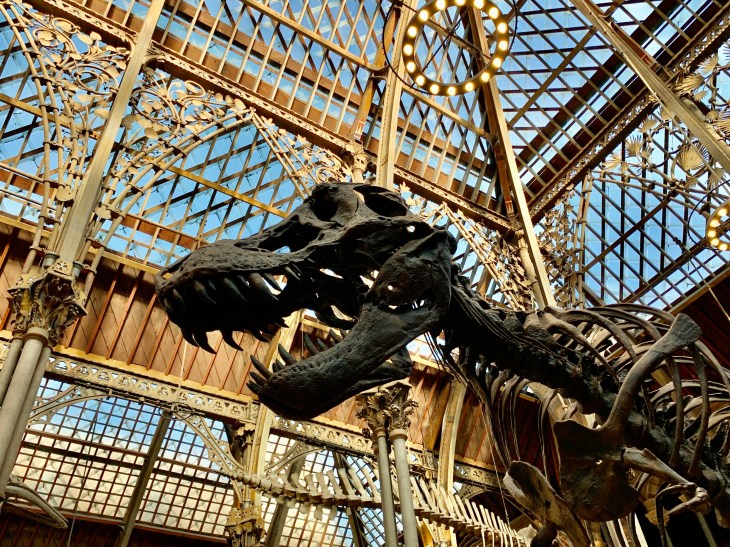
Museums come in all shapes and sizes: from a European aristocrat’s Cabinet of Curiosities to Washington’s sprawling Smithsonian complex. Some museums are nothing more than nondescript buildings designed to display and protect a collection of artifacts – a worthy endeavor no doubt. But the special ones that stick in my mind have a carefully curated collection which is creatively displayed in a building that enhances and thematically complements the exhibition. And for an outstanding example of one such museum, look no further than The Oxford University Museum of Natural History in the United Kingdom.

Opened in 1860, like many British buildings of the time it has a grandiose Victorian Neo-Gothic exterior.
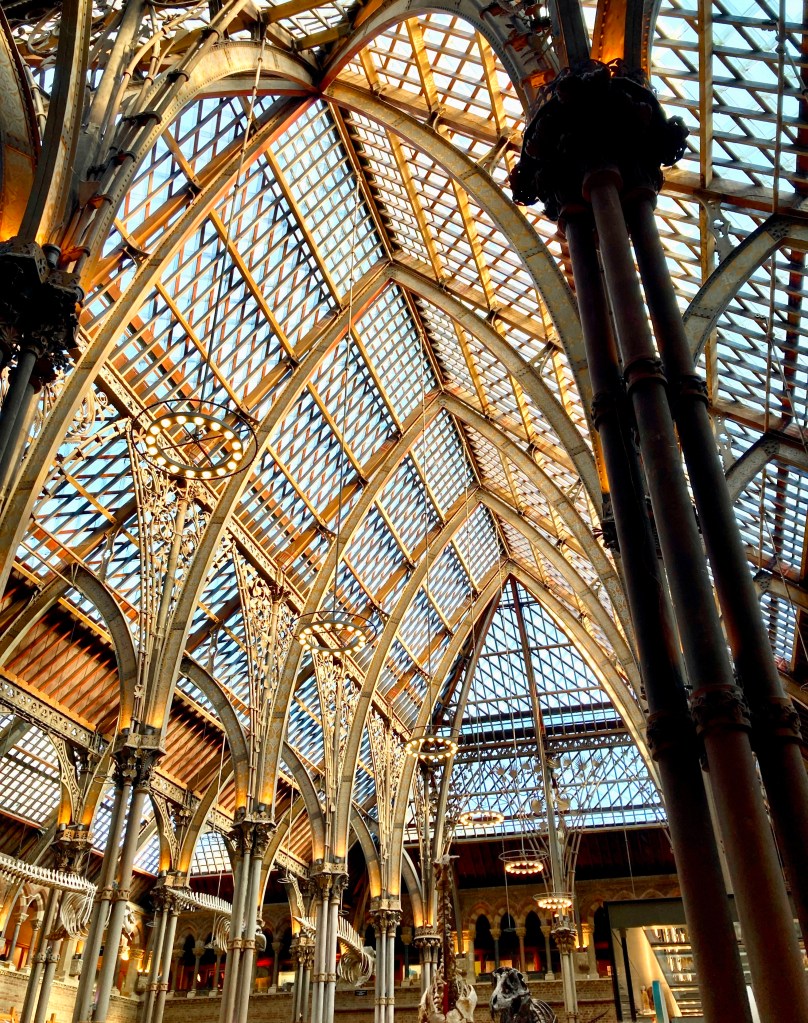
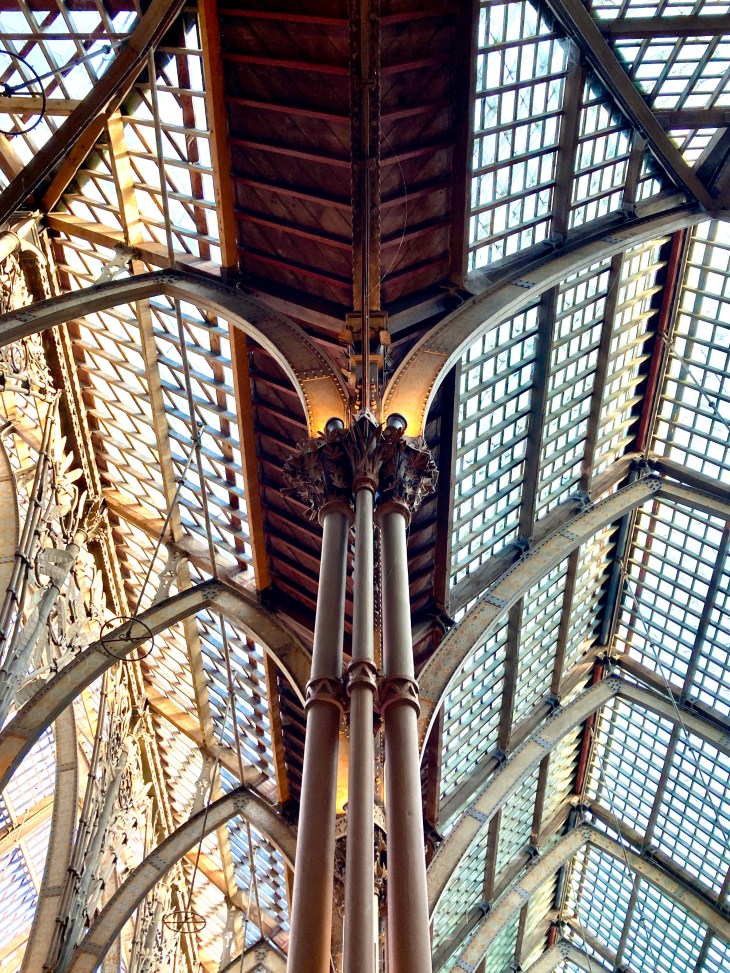
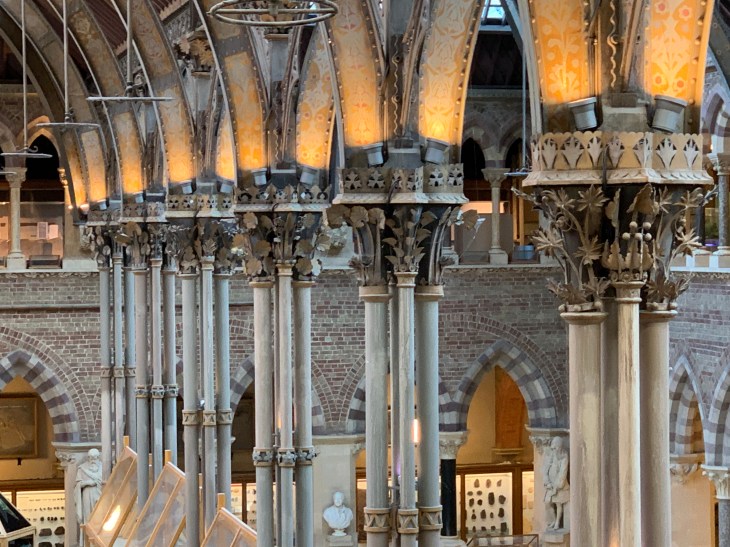
On the inside the museum boasts an internationally significant collection covering the earth’s history and the evolution of life. And of course, no natural history museum would be compete without every paleontologist’s and kid’s dream – the dinosaurs.
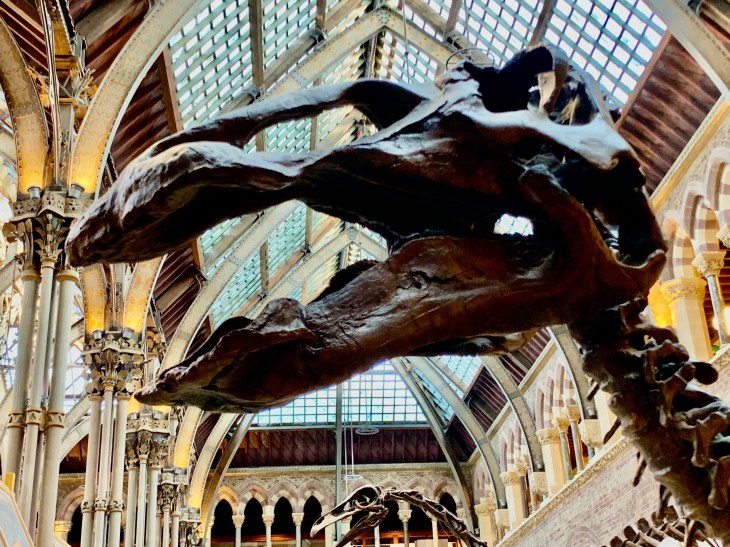
It probably sounds typical, but the Oxford Museum is much more than just another science museum. One of its other roles is as a focal point and catalyst for groundbreaking scientific research and an exchange of views.
In 1860 it hosted a pivotal debate on Charles Darwin’s theory of evolution just months after the Publication of On the Origin of Species, triggering an intellectual earthquake in both the scientific and religious communities. And more recently, an Oxford University team unearthed the “Dinosaur Highway” in Oxfordshire, UK.
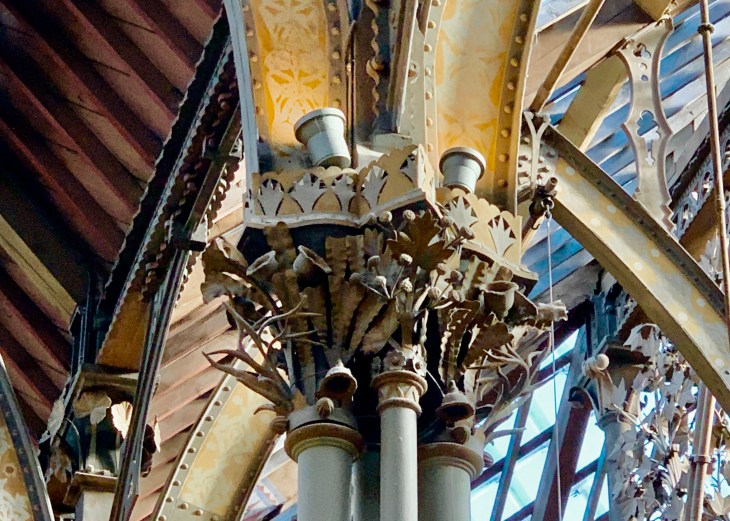
As a museum space, it’s simply outstanding. The glass roof soars over of the central court bringing in light, and the wrought iron ribs ornamented with delicate leaves and branches add another natural touch to the space. The hall is chock-full of displays and is expansive without being crowded or cavernous. I can’t imagine a better space for nature’s scientific show.
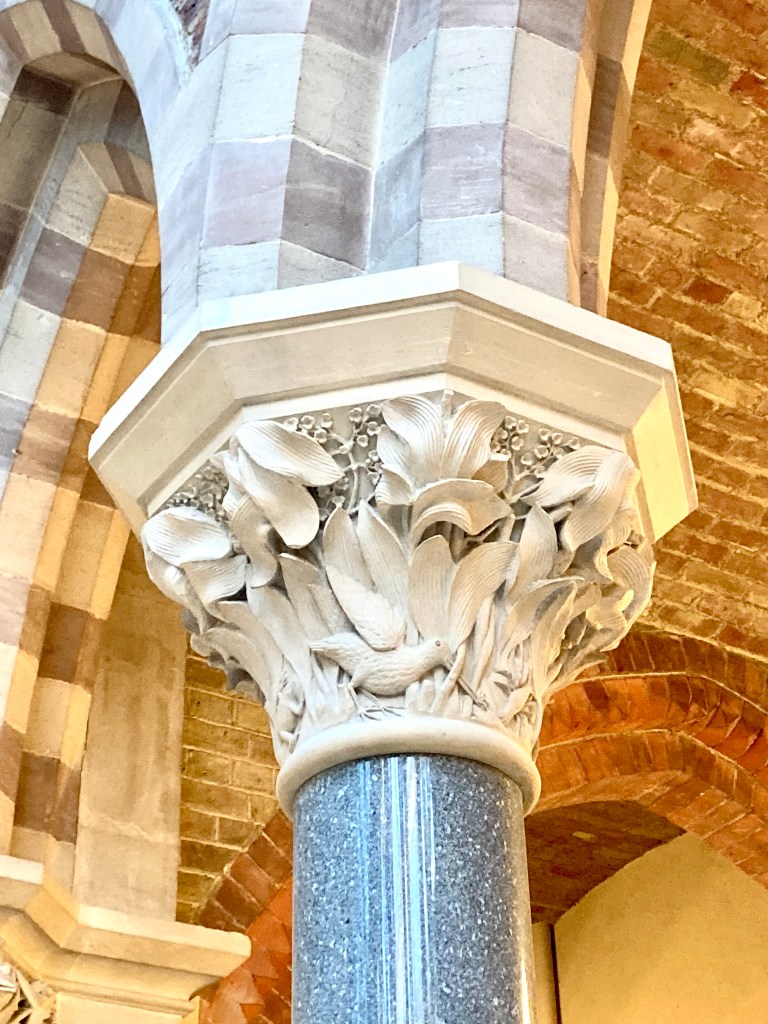
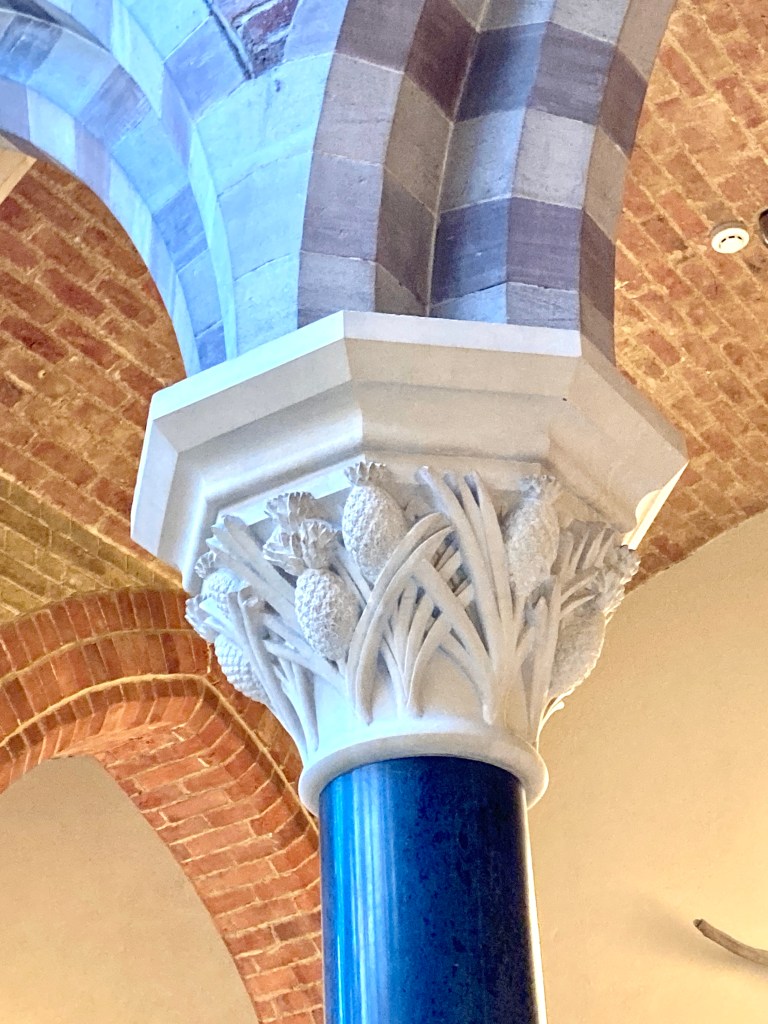
While strolling the colonnade or having a coffee in the low-key cafe on the second level the observant might notice a subtle teaching tool. Each smoothly carved column is made from a different native British stone with rock type and location labels provided. I can promise that some geology professor has these columns on their regular curriculum for an impromptu rock identification field trip.
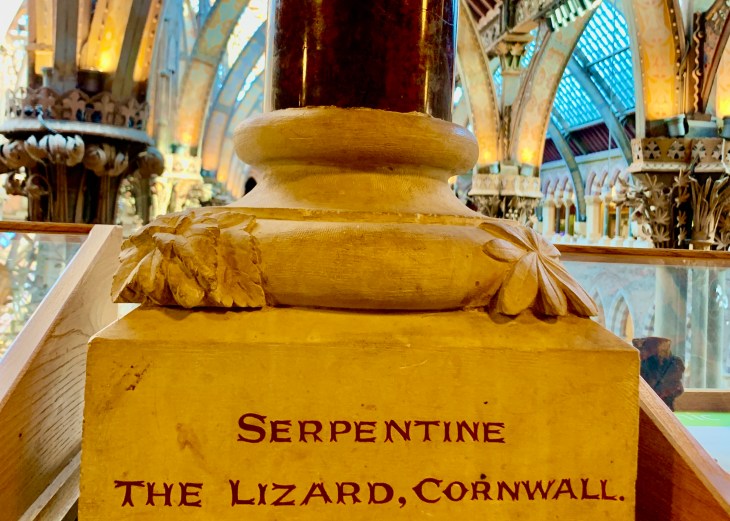
And don’t be fooled by the old-school, Hogwarts-style wood and glass display cases. The exhibits include intriguing vintage items as well as the latest ideas from cutting edge research … this is Oxford after all.
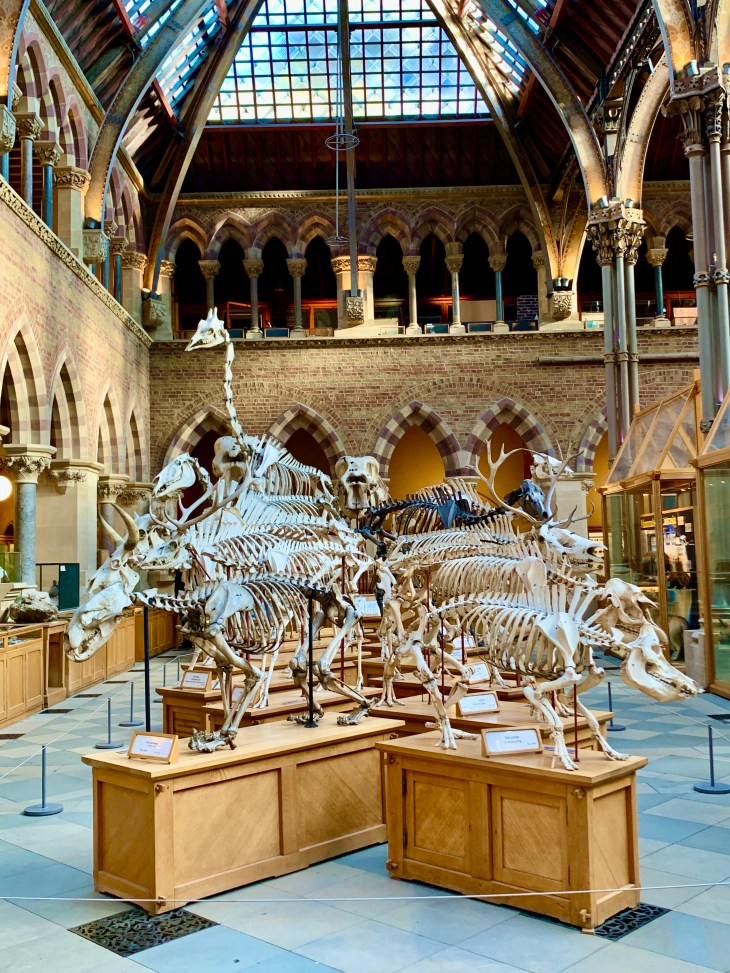
Clearly, lots of thought went into the design of the natural history museum’s building and exhibits. However given Oxford’s tradition of academic excellence it should come as no surprise, since thinking is sort of their raison d’être.
If you’re visiting London you’ll find enough world-class museums to keep you busy for weeks, but I recommend the one-hour train ride to the charming town of Oxford. The University’s Natural History Museum is clearly different and as many have done, it’s not a stretch to call it a “Temple of Science.”
Happy Trails,
James & Terri


 GALLIVANCE
As a lifelong amateur paleontologist, I would undoubtedly freak out over the dinosaur collection.
Christopher, as you probably know, the science of paleontology really got its start in the UK, so Oxford was right there at the beginning. And you also might know that the museum is home to the world’s first scientifically described dinosaur, Megalosaurus bucklandii. Impressive by any standards.
This particular museum wouldn’t have been high in my list of must sees, but your pictures make a visit sound delightful!
Annie, I’m biased to be sure. But I’ve dragged poor Terri to who knows how many of these science museums, and even she was impressed with this one. ~James
Natural History Museums are always fascinating and this one looks awesome. The building alone would be worth the visit. And we all love dinosaurs.
Darlene, you’re right that the building alone is worth the trip. And honestly, I felt my IQ increase a few points just walking around Oxford. 🙂 ~James
I felt the same when I visited Oxford. All the best to you and Terri for great travels in 2026!
Thanks Darlene. We just finished a month in Turkey and the Benelux, and luckily managed to get back home before all the government shutdown BS started. As usual, we’re staying close to home for the holidays. All the best to you for a happy Holiday Season. ~James
The natural history museum in Oxford looks quite interesting! I love the mixture of the dinosaurs and the interior architecture. Very cool!!
Nancy, it’s fantastic to hear from you!!! Thanks for the comment and for dropping by the blog. The attention to detail in the architecture of this museum, as well as the efforts to encourage interdisciplinary collaboration is impressive. The early planners did it right and it shows.
Hope that you and your family have a great holiday. Again, wonderful to hear from you. ~James
I’ll echo Annie Berger. Alie would have said, “you want to go where?” That is, she would have said it if I ever even thought about it. But we would go now just to see the architecture and everything else would be a bonus, a big bonus.
Ray, I’ve been to a lot of these types of museums over the years, and I have to say that this one is exceptional. In many cases, university museums are thrown-together collections to justify the professors’ summer field work, but Oxford University is different. It all goes back to the attitude of the planners, and faculty/staff has been serious about maintaining and updating it. It has made all the difference. ~James
A truly outstanding museum in every way. Thanks for sharing.
Thanks Peggy. The vision of the planners of this museum is amazing, and kudos to the university for carrying on the excellence. ~James
A Temple of Science, what an absolutely apt description. The Oxford museum looks and sounds amazing, definitely somewhere to get lost in. Fabulous post.
Thanks Miriam. London’s Natural History Museum is excellent, but it’s absolutely huge and has a totally different feel than the Oxford Museum. The smaller scale, artistic details, and bright grand hall make Oxford’s exhibits much easier to digest. Hard to explain, but I guess my inner geek made a real connection. Check it out when you get up that way. Hope all is going well for you in Oz. ~James
I think I’d go just for the architecture, especially the ceiling/roof!
Lexie, I fell in love with the openness of the great hall. If you dig into the details of the design, the planners believed that “architecture should be shaped by energies of the natural world,” which I certainly think they achieved. It’s a cool museum all-around. I hope you are well and wish you all the best for a fun and relaxing holiday.~James
I love a good museum. But even if I wasn’t interested in the artifacts, I would’ve definitely been drawn into the architecture of this “Temple of Science”. The incorporation of different stones for the columns is, well, genius! I can imagine how it helps students learn about all the different materials.
As you may remember Bama, I’m a geologist so I have some knowledge of how much work was involved in finding, quarrying, polishing, and installing these columns – amazing. When Terri and I see one of these types of buildings, I hate to sound old, but I always say: “They just don’t build them like they used to.” ~James
I believe that sentiment is also shared by many other people, including me.
Looks like a great museum in a beautiful building!
Hannah, it’s definitely worth the short train ride to Oxford. As I said to someone else. I feel my IQ go up a few points just walking around all those smart folks. 🙂 I hope you are doing well. ~James
That looks amazing! I would love it!
Pam, being of the scientific persuasion, I suspected this would be right up your alley. It’s a wonderful combination of the old classic and the new. Cool place. ~James
Thanks James and Terri. Oxford is a gem. Did the Inspector Morse tour there some time back. A different slant.
Thanks for the reminder Shane. I had forgotten that the Inspector Morse series (plus the prequel “Endeavour” and the follow-on Lewis) was set in Oxford. I’ll have to see if I can find an old adventure to see if I recognize anything. In fact, there might have been a caper based in the museum. Wouldn’t that be cool. Hope you are well, and all the best for a fun and relaxing holiday. ~James
Yes, James, Morse certainly toured the many colleges in Oxford. Can’t recall a museum caper, but it seems likely. Meanwhile, we are putting on the Christmas lights now. Click. Happy Christmas to yourself and Terri!
What an absolutely stunning building!
Worth visiting for that alone, before you even consider the contents.
In all my UK visits, I’ve never made it out to Oxford, so surely must add it to the (ever growing) list!
Hope you’re both well!
Chris & Sarah!
Chris, as you might expect, Oxford has a lot going for it. I’m a science nerd, so visiting this museum was like a trip to Mecca. However, the town has a wonderful vibe so I can definitely recommend it. ~James