
It’s 24,000 miles in case you’re wondering. With a well-planned route that avoids a lot of backtracking, this is the distance you’ll globetrot making a Round-the-World (RTW) Trip. And none of these miles will happen without decisions about planes, hotels, money, visas, and many other travel necessities; all of which take planning.
Whether your RTW is two months or two years, totally scheduled or flexible, there are countless decisions to make in advance. Here are 13 quick thoughts to get you started.

1. Decide where to go.
This may sound like a Duh point, but when you can literally go anywhere, it may not be as self-evident as it appears. As we said in our last post, follow your dreams. All travelers have bucket-list destinations, but when circumnavigating the globe, you have to narrow it down somehow. Staying in one hemisphere, whether north or south, can make a huge difference in flight distances, weather, and the cost of the trip. Also, to cut down on the long-haul blues you need some second-tier destinations along the way. These intermediate stops are a good way to experience new places and chop long flights into less-miserable bites.
2. Choose a fixed or flexible schedule.
When planning an RTW there are a couple of ways to schedule:
- Stay flexible and plan the stops, flights, and hotels on the fly
- Plan stops and make reservations in advance
You can buy an RTW ticket package from an individual airline and commit to specific dates, or purchase individual, one-way tickets either in advance or on the road. We’ve done it both ways, and far and away we prefer the flexibility of planning as we go.
However, what we found on our most recent trip is that with changes in immigration restrictions, many countries required a round-trip ticket back home or proof of onward travel before allowing entry.
In our case, we bought a series of one-way flights to complete our RTW. We made reservations and bought tickets in 2-3 stop increments which required longer term planning, so before entering each new country we had proof of a flight to our next destination. You can buy fully refundable tickets to get around these restrictions with the intention of canceling for a refund, or there are other ways to get around these requirements. There are online tips of how to do it, but these seemed a big hassle or too risky for us, and we decided against it. Some countries are very serious about this requirement, and in a couple of cases we saw some very sad travelers refused boarding because they didn’t have proof of onward travel. Caveat emptor.

3. Pick a direction of travel.
Assuming you don’t want to circle the globe over the poles, you’ll either fly east to west, or west to east. Both have advantages and disadvantages. For us, we’re less impacted by jet lag if we fly E to W, and because SE Asia was one of our stops, we wanted the challenging part of our journey early in the trip. Our thinking was that traveling around Vietnam would take more energy than relaxing on the French Riviera in Nice. And generally on a trip covering this much real estate, there will be weather considerations to take into account. But your priorities and preferences will be different, so consider direction of travel in your plans.
4. Search for flights like a pro.
As I said earlier, we hopscotched around the globe with a series of one-way flights. Primarily, we used Google Flights and Skyscanner to research flight options that worked best, and then bought the tickets from the specific airline company website. Sometimes slightly cheaper tickets are available elsewhere, but in our experience, if there are any problems or changes it’s easier to deal directly with the airline instead of through a third party.

5. Choose lodging you love.
When we travel we stay in both hotels and apartments. The internet is awash with hotel booking websites, but we’ve used booking.com for years and have never been disappointed. Their listings are very detailed with exactly what you’re getting, honest reviews, and clear-cut costs. You have to set up an account, and they have a tiered discount scheme that increases as your number of bookings goes up.

6. Educate yourself on entry requirements.
Every country has different requirements for foreigners seeking entry, and the requirements can change quickly – Covid taught us this. So do your research to discover the latest requirements and plan accordingly. Luckily, many countries that require visas have online applications, or a visa can be picked up at the airport. But there are always hoops to jump through, and sometimes the process can take time – so do your homework in advance. You don’t want the first person you meet to be a border agent with his finger pointed back toward the plane.
7. Consider Tech Carefully.
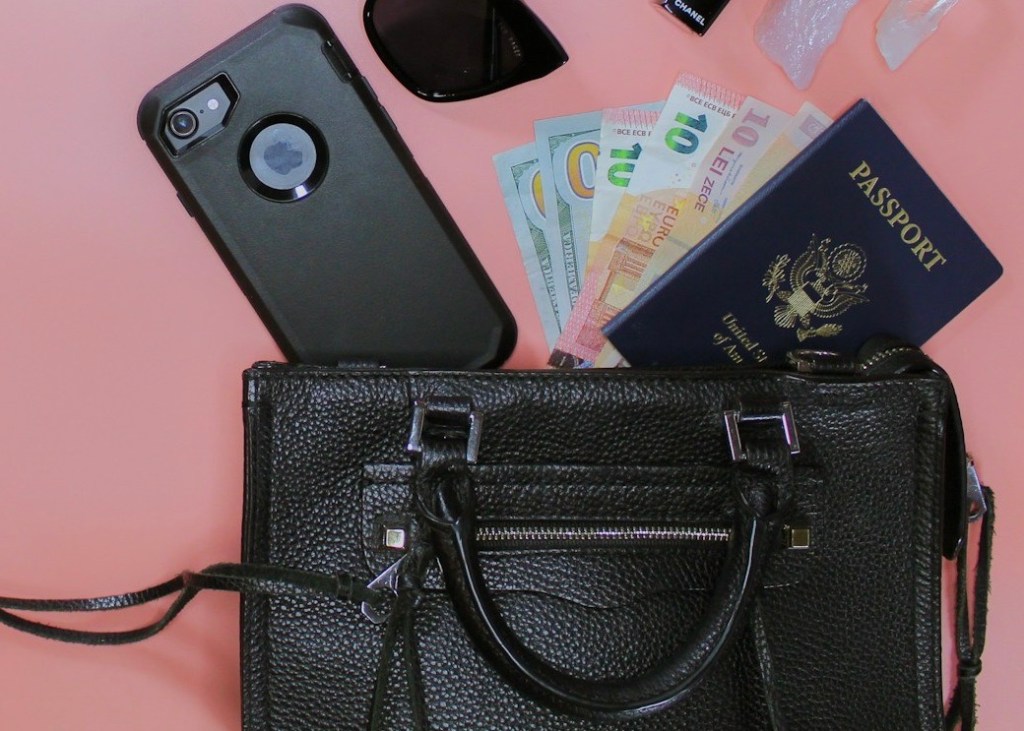
Whether you’re a hi-tech, low-tech, or something in between, your travel electronics will not only enhance your trip, but are essential. Our most recent RTW was #3 for us, and we’ve learned that ultra-light carry-on is the way to roll. Consequently, every item that goes into our backpack has to pass the weight/size/function test.
Some tech gear is inherently heavy, so our watchwords are: simple, lightweight, reliable, and multifunction. For us this means tablets and folding bluetooth keyboards instead of laptops; cellphones instead of cameras; and multipurpose charging cables and adapters. Every time you trudge that 2 miles to the train, or grit your teeth at another airport security checkpoint, you’ll be glad that you have less, not more tech gear.
And finally, a weightless item for the tech list is a VPN (Virtual Private Network) loaded on your devices that protects your privacy. Because every time you connect to public wifi (hotels, airports, coffeeshops), your personal and private data is at risk. There’s an entire industry out there anxious to steal your data … and money, so VPN services are cheap peace of mind for a long International trip. In addition, an added benefit is that you can continue binge-watching your favorite series from home.

8. Keep the home fires burning.
Unless you leave someone at home taking care of your affairs, you’ll need a plan to ensure your personal business runs smoothly while you’re gone. Nobody wants to come home to overdue bills and a Jungle Larry lawn. Online accounts and bill pay make this a lot easier when abroad (Use that VPN for security!), but the internet can’t water plants and take out the trash.

9. Get your meds, jabs, and travel insurance.
It’s a harsh reality that if you travel long enough, you will get sick. There’s the upset-tummy sick that, while not fun, will pass (no pun intended). But there are other diseases that you do not want, and these are the ones you need to know about and prepare for. Plan well ahead for vaccinations and oral meds because some of these may be hard to find locally. And be sure to consider travel insurance in case you experience a serious health problem.
10. Find the best source for bob, loonies, or dong.
We live in a global economy, but that doesn’t mean that every country has the same attitude toward payments. Some places are credit-card friendly, others not so much. And ATM rates and fees are all over the map. Regardless, there’s no doubt that you’ll need some cash, so you’ll do yourself a financial favor if you find out the best way and place to convert currency or access funds from your home bank account. ATMs and credit cards really are the best way to go, but sometimes local cash is a must. No Boy Scout ever leaves home without a money plan.

11. Don’t guess the budget.
Unless you have a rich uncle’s credit card, you’ll need to run the numbers on how much you’ll spend on the road. In our experience, for long-term travel, 2/3 of our overall travel budget goes to transport (planes, trains, etc) and lodging. You can use a sharper pencil for your calculations, but if you can estimate these two numbers you’re close to what the overall cost will be.
12. Figure out what bugs you, and deal with it in advance.
One of the joys of travel is the unexpected, but sometimes surprises are no fun … at all. For us the big question is What Bugs Us? Turns out it boils down to 3 things: lodging snafus, transportation challenges, and long-haul flights with no breaks. So our plan is to be proactive, and smooth out the bumps before we hit them.
On extended trips we love to stay in apartments instead of hotels, but we’re no longer willing to chase landlords across the city to get the keys. Now we reserve apartments that have a 24/7 reception so there’s someone there to give us the keys – no matter when we arrive.
Also, we research transportation options in advance, so that upon arrival in a new place we know if we’re looking for a bus, train, taxi, or tuk-tuk. No more guesswork. And we’ve solved the long flight issue by making more stops … and taking advantage of them. On the last trip instead of flying directly to Japan, we took advantage of a free stopover in Hawaii to explore the islands; not too shabby.

13. Prevent travelers’ burnout by planning downtime.
An RTW will be the trip of a lifetime, so you may try to do it ALL. This attitude is a classic formula for burnout, and when traveling on an RTW it’s a must to plan for days off the tourist merry-go-round. Our attitude is that we see what we see, and the rest, well … maybe next time. Quality over quantity wins every time.
If this planning sounds like a lot of work, it is. But if you want your travel time spent appreciating the places you’ve worked so hard to experience instead of solving problems, the planning is worth the effort.
There are eight billion people in the world getting on with life day-to-day, and you’ll get a chance to meet some of them. An RTW will forever change your perspective, and like all travel experiences, it’s a chance for a slice of humble pie. Except for leaving the planet in a rocket, there’s no travel experience to equal it. If you can make it happen, there won’t be a sorry bone in your body.
Happy Trails,
James & Terri

Photo Credits: 1. Illia Panasenko 2. Savvas Kalimeris 3. Torsten Dederichs 5. Valeriia Bugaiova 6. Global Residence Index 7. Nick Noel 8. Anna Stampfli 9. Madison Agardi 10. Christine Roy 11. Tyler Raye

 GALLIVANCE
Fabulous post with lots of really useful tips. I’m with you on the flexibility of travel and not having rigid dates however having the next place/destination planned is, I agree, a must do. Yes to those sites, Skycanner, Booking.com that make comparing prices, flights and places a breeze. And also to having a VPN is peace of mind. Not sure we’ll do a RTW in the very near future but the planning does sound intensive and, quite honestly, a lot of fun!
You’re right Miriam, planning an RTW is fun. Even after three RTWs, we still get excited about choosing places to stop. And as you know, the internet has made the process soooo much easier as well as increasing the quality of the experience, and opening up options that would have been unknown in the past.
And we had encountered the proof of onward travel issue in previous trips, but it has gotten much more serious. We really did see travelers turned down at check in because they didn’t have proof. I suspect that increases in sensitivity to illegal immigration has inspired the change, but whatever the reason, it’s a reality travelers must be prepared for. ~James
Great advice, though sadly I’m sure I won’t do a RTW.
Not to worry Jo. These tips work for just about any kind of travel planning. ~James
Great tips! Perfect for any travel planning!
I agree Pam. And all of these are tried-and-true, field tested tips. 🙂 ~James
Your post has great tips for RTW travels or shorter adventures. We’ve done both but never thought of getting a VPN. Thanks for suggesting that for upcoming trips.
Annie, we try to minimize our online financial transactions when we travel, but sometimes it’s unavoidable. And for these times a VPN is great peace of mind. There are tons of companies that offer the service, and if you commit to a couple of years and pay in advance, it’s not very expensive. Also, you don’t have to be in Mongolia to need a VPN. Your local Starbucks can also have some bad actors skulking around. ~James
All good to know as we’ve never given this a second thought in all our years of travel.
wow
Thanks Beth. ~James
All good tips. I second booking.com (and please, not AirBnB), a VPN and medical AND evacuation/repatriation insurance.
I’ve done four RTWs, two in each direction, and I tried to spend more time on the ground and less in the air. My 2004-5 trip featured 17,000 miles by train between northwest Scotland and Saigon – it was a circuitous route! Sadly you can’t do that right now, thanks to Russia’s invasion of Ukraine, but it was possible to do it in two weeks right before Covid if you timed it right. I took seven months, and then continued traveling in SE Asia and Australia/New Zealand.
Wow Kathy! 4 RTWs – very impressive. I’m sure a 17,000 mile train trip must have been wonderful (and long!). Our trips are usually a combination of air and overland. And in fact, we prefer to go overland if the distances aren’t too great and the trains and buses are decent. You get a much more thorough view of the country that way. But as you know, sometimes overland can take more effort that it’s worth. However, one of the highlights of the trip was a bullet train trip from Tokyo to Kyoto. I’m a sucker for high-speed trains. ~James
Great info for all travel. I would also add, be prepared that things won’t always work out. Have a plan B and don’t panic.
Good advice Darlene. In fact, it’s the rare trip where everything does work out, so Plan B is always a good idea. That’s why our philosophy is “we see what we see, and the rest, well maybe next time.” ~James
Great tips, even for seasoned travellers.
Peggy, given the travel that you’ve done, I can’t imagine we could give you much useful advice that you don’t already know about. But things do change in the world of travel. We were surprised by the emphasis on proof of onward travel. As I said, we’d run into it before when buying one-way tickets, but never as much as on our last RTW. I understand why it’s important for immigration control, but I can see why some people get surprised by the rules. ~James
The bottom line is to avoid the surprises.
Amen to that. As I said in the post, we try to smooth the bumps before we hit them. ~James
These are really good tips and I can attest to some of them. Like needing a return ticket (when we flew to Colombia and Argentina from the US, to begin and continue our RV travel in South America), which we solved by buying a cheap return ticket and canceling it within 24 hours (this might be tricky on a long flight, but once we received our boarding passes for the entire route, it was safe to cancel).
I’m also familiar with travel burnout. Since this is our lifestyle, we really have to watch for the symptoms and go a bit slower, staying longer at more comfortable camping spots to deal with it.
We have a bank card from a bank that reimburses all ATM fees abroad, which really helps with the financial burden. Other than in Argentina – where the inflation is crazy and you get a better exchange rate for crisp $100 bills – we find getting local money out of an ATM (fees reimbursed) is the best way to obtain local currency.
Liesbet, buying and cancelling onward tickets is definitely an option, but as you mention, in long international flights even with a refund it can be big bucks that are tied up. When we were in SE Asia we considered just buying the cheapest, short flight out of the country and just eating the cost. This is an option as well if there are really low-cost airlines in the market. We didn’t have to do this, but we certainly considered it.
Like you, we have a fees-reimbursed ATM card (Schwab) that we’ve used for years. Their service is excellent and reliable. And we always carry US currency (Crisp bills) for exchange, but we haven’t had to exchange cash much lately. We’ve had a couple of trips to Europe this year and found that cash is used less and less. After our years of living in Africa, we also carry US Dollars in case of emergency. A little paranoid perhaps, but we’ve seen problems blow up out of nowhere, and US dollars are welcome everywhere. ~James
I almost forgot that you have done this for three times! That’s impressive. Thanks for bringing up the topic about VPN. It’s something I should have thought of much earlier. One trend I’m not quite sure I’m comfortable with is the fact that you have to download some local apps to get from point A to point B, or just to make payments. I know some small businesses in Jakarta that only accept QR payment, which makes me think of foreigners who have to download certain apps first instead of being able to pay with cash or cards just to eat there or buy stuff from those places.
Thanks Bama. We know we’ve been lucky to travel so much and we never take it for granted. And as with most trips, we learn something new each time.
I was interested to hear of the QR code payment system. Of course we have QR codes in the US, and we’ve seen them in Europe, but they’re primarily used for links to websites for information about the shop or organization. We haven’t used them for payments. I did a bit of online research, and while they are secure in most instances, the code itself can be easily faked so your information is routed to a cybercriminal organization. Like you, I’d be concerned about the end-to-end security on transactions like these. However, I’m glad you brought it up so I can do more research, as I’m sure we will run into it at some point. Thanks. ~James
China has been in the forefront of QR payment. But as one of my business partners from Shanghai told me, the Chinese government is actually pushing for more merchants to accept card payment as well to cater to international travelers (both for business and leisure). Meanwhile, countries in Southeast Asia are beginning to allow cross-border QR transactions (for instance, Indonesians who are traveling in Thailand can scan Thai QR codes using Indonesian payment apps, and vice versa). But I have yet to try this myself. I still prefer paying with card though because in my experience it’s still faster than paying using QR.
Again Bama, thanks for bringing this to my attention. As avid travelers this is just the sort of thing we like to be aware of so we don’t run into surprises. From my reading I also see that this tech has benefits for the unbanked as well, which is always a good thing. Like you, we prefer credit cards for our transactions, and we have the whole security side worked out and we’re comfortable with it. But in the meantime, I look forward to learning more about this tech. ~James
thank you for the great tips
Thanks. I hope that you find them useful. ~James