It doesn’t take a meteorologist to recognize that two snowfalls on my unraked leaves are a clear signal that autumn is finished and winter has arrived. No amount of hoping for one of those 60° temperature spikes will make it so. As a cold-weather wimp, I have to look hard to find rosy reasons to get outdoors.
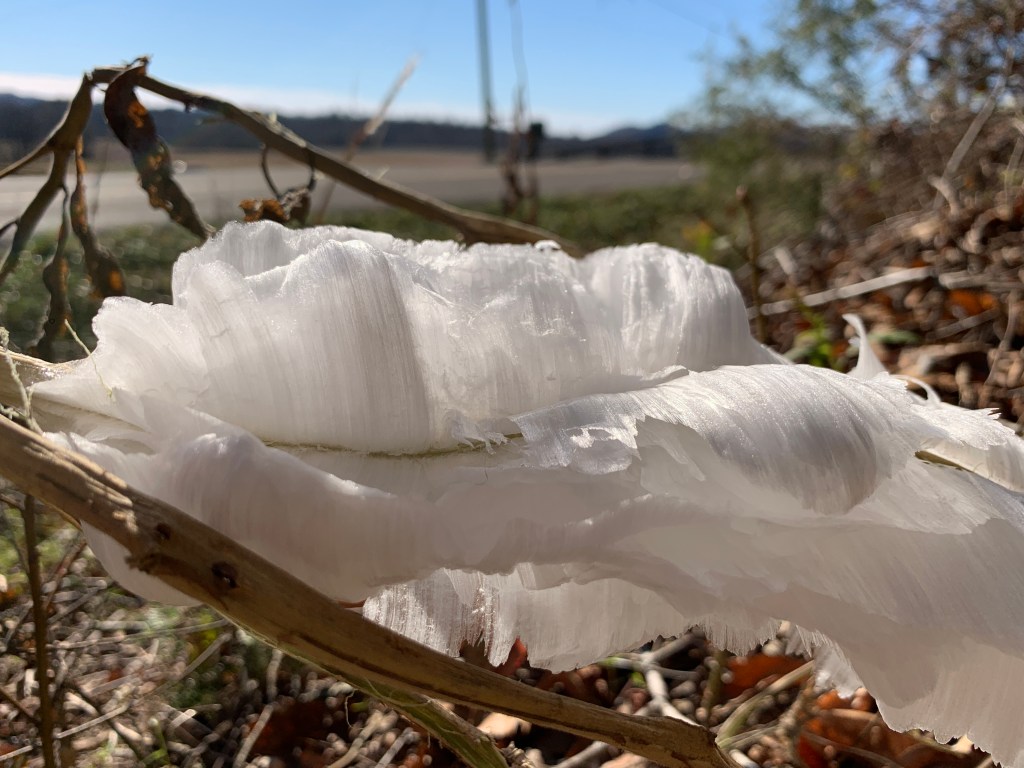
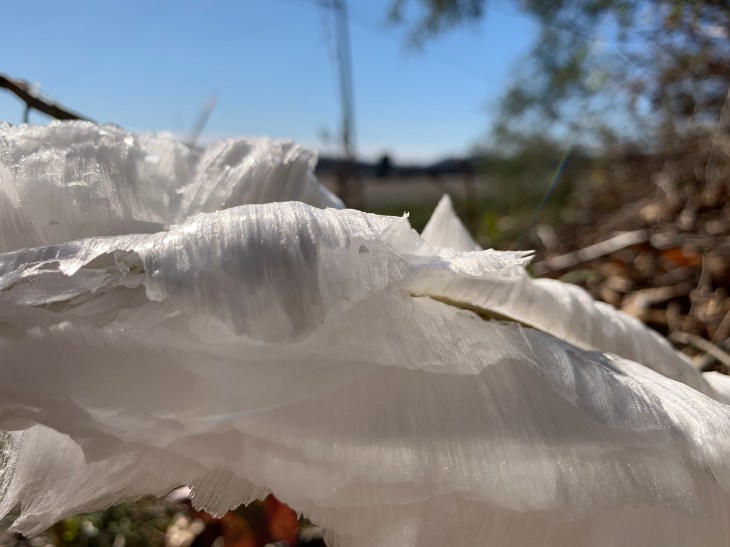
But on a recent trip visiting family in southern Kentucky, I spotted a rare winter phenomenon just outside my cozy, warm bedroom that can only be called exquisite, natural art: frost flowers. And for once, as I bolted from the door, I hardly noticed the sub-freezing temperatures.


Also known as “ice flowers or ice ribbons,” these delicate ice petals only form under very specific conditions, and it only took seven decades to get a glimpse of a few along the roadside. Nothing this rare and exquisite happens that often, and my scientific brain was churning to find an explanation. The National Weather Service came to the rescue:
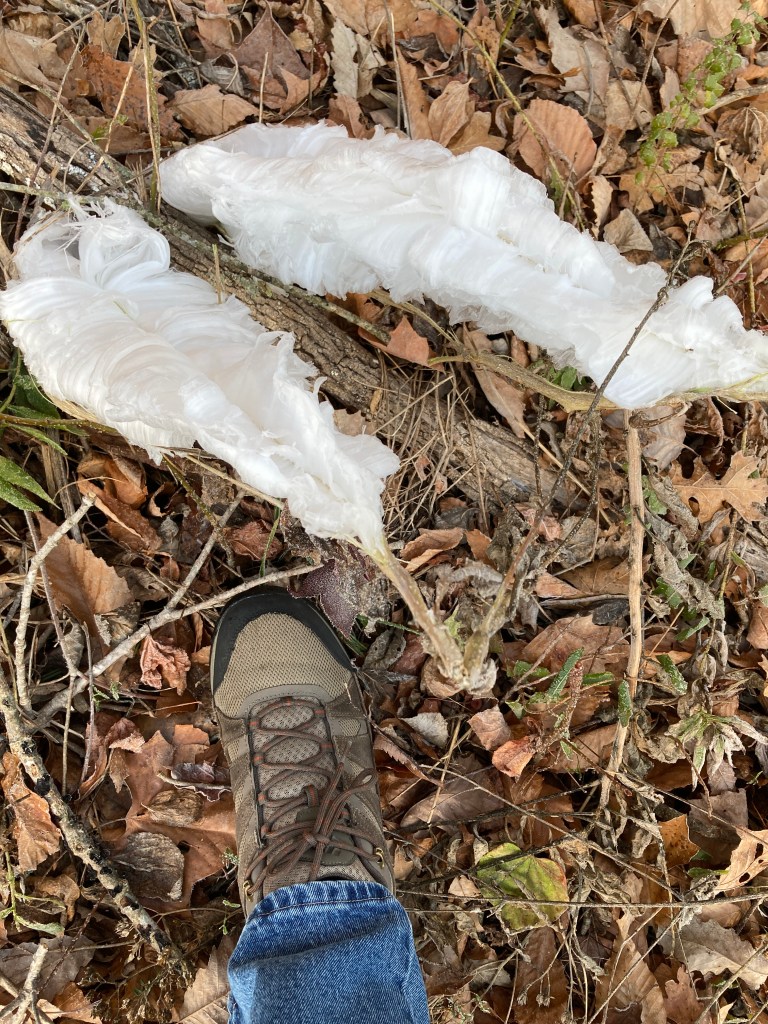
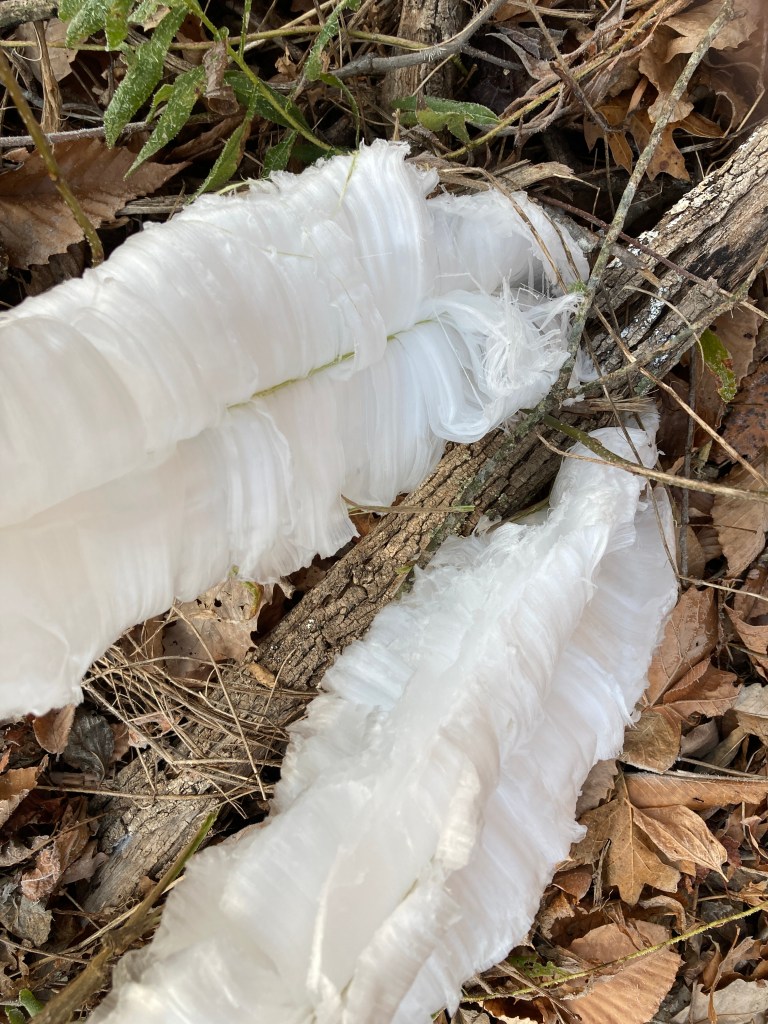
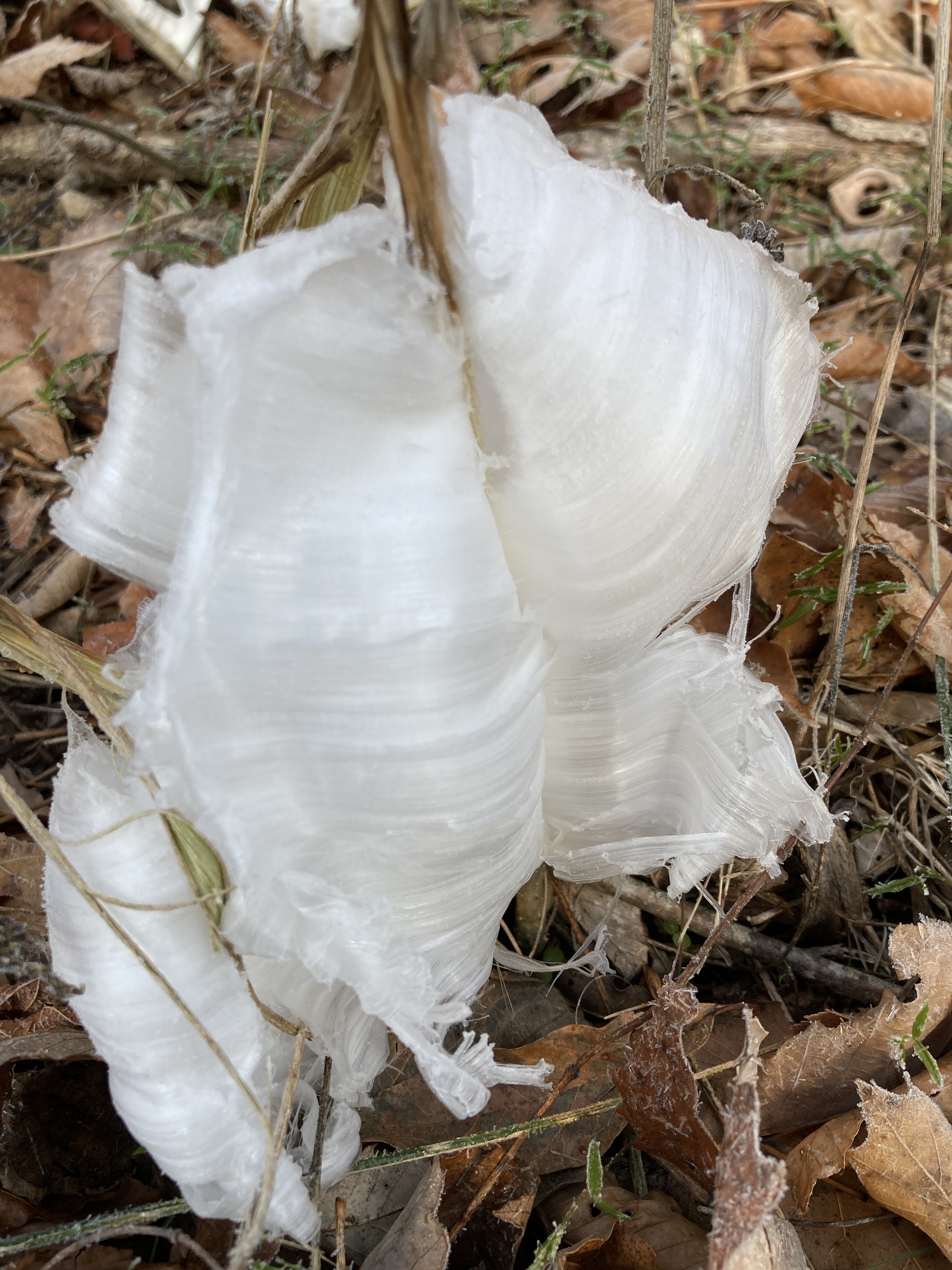
“Frost flowers are thin layers of ice that are extruded through slits from the stems of white or yellow wingstem plants, among others. Their formation requires freezing air temperature, soil that is moist or wet but not frozen, and a plant’s stem that has not been previously frozen. The water in the plant’s stem is drawn up from the ground by capillary action. It expands as it freezes and splits the stem vertically, and as more water is drawn up from the ground through the split, it freezes and extrudes a paper-thin ice layer through the stem.”

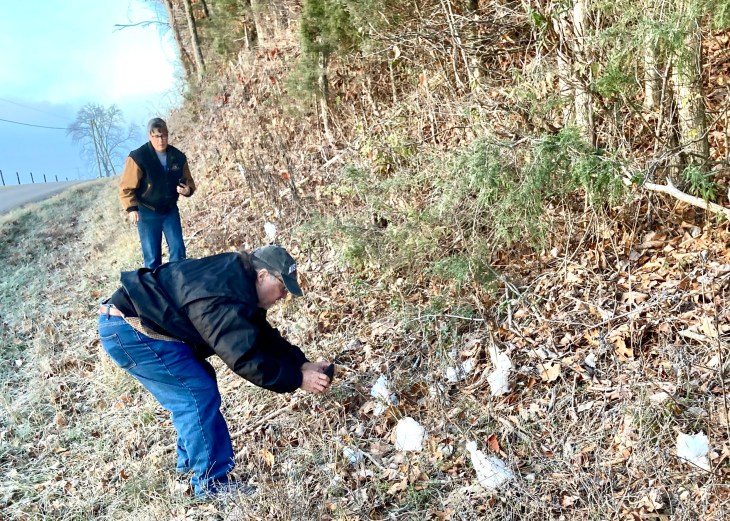
Nature’s magnificent handiwork never ceases to amaze. These flowers, like snowflakes, are unique and no two are alike. Funnily enough, when I first looked out the window, I fumed that some teenage prankster had unleashed a roll of toilet paper. But on closer inspection, I was dead chuffed to have my first frost flower sighting.
Maybe ice flowers are more common than I realize. I’m curious to hear: have you seen these winter wonders, and if so, where?
Happy Holidays,
James & Terri

 GALLIVANCE
Quite amazing! And no, I’ve never seen them here, nor even in the UK, where I shall be very briefly at Christmas. Taking this opportunity to wish you and Terri a happy festive season xx
Jo, as a scientist I’m always curious as to how and why these types of things happen. And to take a corny (but true) line from the movie “Jurassic Park” – “Nature finds a way.” We wish you a Happy Christmas as well. ~James
We don’t get cold enough to get these creations. Thanks for sharing.
Peggy, these sorts of natural surprises are always humbling for me. We humans are rather smug about our understanding of things, and then Mother Nature presents a seemingly impossible revelation. All the best for a fun and relaxing holiday. ~James
All I can do is echo your words with a little emphasis: AMAZING!
Ray, as a long-term blogger I’m always on the lookout for grist for the blogging mill. And when I see something this cool it just clicks. Very neat. Happy Holidays to you and Alie. ~James
how stunning
I couldn’t agree more Beth. Happy Holidays. ~James
Wow!!! That’s incredible! We’ve always wanted to see those. So happy you got the chance to see that special phenomenon!!! Great pics!
Thanks Pam. This is crystallography in mother nature’s lab. I hope you get a chance to see them someday. Happy Holidays. ~James
Glad you had a special nature’s moment! Happy holidays!
Nature never ceases to amaze me. How lucky for you to get to see them!
Lucky indeed Darlene. I still can’t believe I haven’t seen them before. My bro-in-law is a trail runner, and he’s seen them in the deep woods of Eastern KY. So they’re around, just not often. Happy Holidays to you there in Spain. ~James
Happy Holidays to you and Terri!!
Mother Nature sure is incredible! Living in Canada, I have been witness to some incredible winter vistas but not certain I have seen these specifically. Wishing you a wonderful holiday season❤️🎄
Lynn, I can believe that you’ve seen your share of winter wonders. Wind, water, and freezing temperatures can do some artistic things. I’m going out on a scientific limb here, but I suspect that the window to achieve frost flowers as far north as Canada would be very narrow. You have to catch the ground before it freezes so water can still move, but the air temp has to be cold enough to freeze the water as it exits the split stem of the plant. TMI I know, but I do find this fascinating. All the best for a fun and relaxing holiday. ~James
I’ve never even heard of this, let alone seen it. You got some nice photos of your sighting. Congratulations!
Thanks Tracey. It was a cold, crisp morning just after sun-up, so the conditions were just right for photos. But, given the cold, I didn’t linger too long :). All the best for a fun and relaxing holiday. ~James
Wow!! It looks almost like candyfloss!
Good description Hannah. It’s certainly strange looking stuff up close, but very cool as well. The curling lines of delicate ice crystals were unbelievable. Take care and have a wonderful holiday. ~James
Wow, these are incredible!!! I’d never heard of frost flowers, let anyone seen them. Of course, avoiding winter all together doesn’t help. 🙂 Happy holidays, you two!!!
Leisbet, I’ve spent a fair part of my life avoiding winter as well, so I know where you’re coming from. And honestly, I live as far north as I’m ever likely to. But in the meantime, the four seasons certainly provide lots of variety. Hope you and Mark are well and all the best for a fun and relaxing holiday. ~James
Wow! I’ve never seen anything like this!
Diana, it’s interesting that none of the commenters have mentioned seeing frost flowers before, so they may be as rare as I thought. We’ve had a few hard freezes in my neck of the woods so I suspect the ground is now too cold for much water movement which will be the end of frost flowers. Anyway I wish you and your family a happy, fun, and relaxing holiday. ~James
Happy holidays to you as well!
Mother Nature is quite the artist is t she. Though I’ve never seen anything quite like this. Exquisite and rare, what a beautiful combination. Thanks for sharing this. Sending you lots of warm happy wishes for the holidays.
Miriam I’m surprised and pleased to be able to see a natural display of cold-weather art without having to make to trip to the Arctic :). All the best to you for a happy and relaxing holiday. ~James
I’ve never heard of frost flowers. Thanks for telling us all about them and showing the exquisite pictures.
Annie, like you, I had never heard of or seen frost flowers, and what a wonderful surprise they were. I guess this is proof that nature has an unlimited number of surprises for the lucky to search out. All the best to you and your family for a Happy Holiday. ~James
Believe it or not, these are common enough here that I’ve seen them myself in the Texas hill country, and a friend who lives in Austin features them from time to time. He’s just far enough inland that he gets to see them more often than I do. You can see some of his photos here. We have a plant known for producing the effect; reasonably enough, it’s called frostweed (Verbesina virginica). I just looked on the maps, and discovered that it’s common in most of Kentucky, which is the northern boundary of its range. I wouldn’t be surprised if that wasn’t the plant you found!
Thanks so much for the informative comment. You’re the only reader that has heard of frost flowers, let alone seen them. Add to this the link to another blogger who has seen, photographed, and explained the artistic natural phenomenon. Additionally, I even learned a new word: Pareidolia – very cool. This I would say, makes your comment a prize winner.
From what I now know of the process, it makes sense that S. TX would have them periodically. The air temps have to be low enough to freeze the water, but high enough to not have yet frozen the ground water. Thanks again for a wonderful comment and all the best for a fun and relaxing holiday. ~James
As you now know, in reply to your question “have you seen these winter wonders, and if so, where?,” I’ll say that I’ve seen this phenomenon many times, though it took me three decades after I moved to Austin to learn about it. As far as I can tell, most people who live in places where it occurs remain unaware of it, just as I was for so long. My challenge in recent years has been to come up with new photographic takes. So far I’ve managed to keep doing that. The current weather forecast for this coming Tuesday morning is 34°, so I may have to go out in the cold again and ply my craft.
Steve, one thing that may make them so elusive is how quickly they melt and disappear. The morning I saw them was in the upper 20s, and I saw them immediately after sunrise. And even though the temps stayed below freezing, once the sun come up the flowers disappeared very quickly. Also, I saw them on the roadside of a quiet, country road and honestly, from a distance they looked just like trash. So best of luck in your endeavors to catch them on Tuesday. Happy Holidays. ~James
Yes, direct sunlight is the antagonist of frostweed ice. The frostweed plants I normally turn to for this phenomenon grow at the base of an embankment and are therefore shielded from the rising sun longer than they would otherwise be. I live half a mile uphill from there, and because cold air settles, even when our yard thermometer in the morning says 35° or 36°, I’ve often (but not always) found that down by the frostweed plants the temperature must have gotten a few degrees colder, because the plants have extruded ice.